Technology & Finance
126 位演讲者
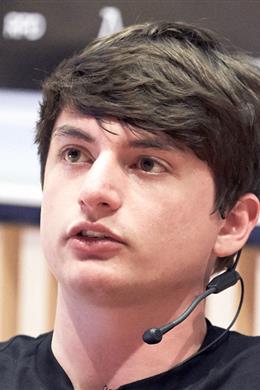
Josh Walman
Josh Walman is the founder and general manager of RPD International. This is an innovative enterprise with global operations that designs, develops, and manufactures products for companies seeking to leverage innovative ideas, cutting-edge processes, and international markets. At the age of 10, Walman designed his first robot. At the age of 13, he sent his design and \u00a3 500 in savings to a factory in China for parts production. At the age of 15, he became an engineering and supply chain freelance consultant and held conference calls with the Chinese side after school. Five years later, his company had over 60 employees worldwide and was a supplier to over 100 factories of multiple large manufacturing companies worldwide. RPD operates a global network of manpower and facilities, gathering the best design concepts. From heavy and precision engineering to sculptors and artists, manufacturers come from various fields. This distributed creative model gathers a variety of talents and experiences. The factory network means that RPD can produce prototypes as well as various parts including brackets and engines; Customers can be either airlines or hotels. From problem-solving to market disruption, manufacturing and supply chain processes, research and innovation, the Internet of Things, wearable technology, and the 3D printing revolution, Walman focuses on how the manufacturing industry is changing and how it is changing the world.
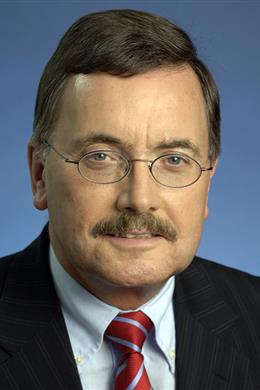
Jurgen Stark
Juergenstach is a renowned German economist who served as an important member of the ECB Executive Committee from 2006 to 2011, responsible for economic and monetary analysis. He is known as the Chief Economist of the European Central Bank, although this is not his official title. Jurgen left the European Central Bank due to fundamental differences with banks over the controversial government bond purchase plan, although the European Central Bank announced that his resignation was due to personal reasons. From 1978 to 1998, he was responsible for formulating important economic policies in the German federal government. From 1998 to 2006, he served as the Vice President of the Deutsche Bank for two consecutive terms, and in 2004, he served as the President of the bank. Jurgen excels in utilizing his extensive experience in the German Federal Government and the European Central Bank to express his views on the future of the euro, the European economy, financial stability, and the global economy.
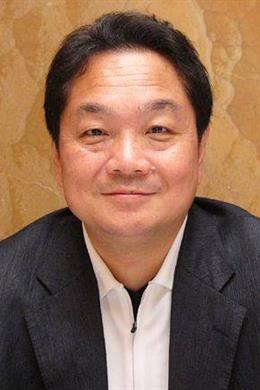
Ken Kutaragi
Mr. Kutara Ryuki is the father of PlayStation and can also be considered an industry legend. Until June 2011, he served as the honorary chairman of Sony Computer Entertainment. When inventing the PlayStation video game console, Mr. Kutara Ryuki was an engineer at Sony who drove the company to develop this product. In 1994, PlayStation was introduced to the market and quickly became the best-selling gaming console on the market. In 1999, Mr. Kudo Ryuki was appointed as the President and CEO of Sony Computer Entertainment, a wholly-owned subsidiary of Sony Consumer Products and Services Group responsible for PlayStation. Since October 2009, Mr. Kudo Ryuki has been serving as the President and CEO of Cyber AI Entertainment Inc. He is also a board member of Kadokawa Group Holdings, Inc., Nojima Corporation, and Rakuten, Inc. Since 2009, he has also served as a visiting professor at Ritsumeikan University. He also holds a degree in Electronic Engineering from Tokyo Electric University
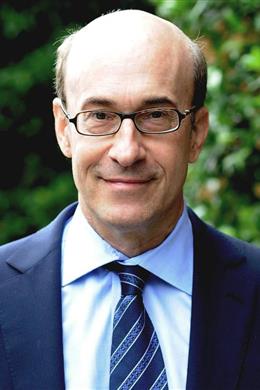
Ken-neth Rogoff
Kenneth Rogoff is a renowned contemporary American economist and professor of economics and public policy at Harvard University. Rogoff was born in 1953 in Rochester, New York, USA. In 1975, he obtained a bachelor's degree from Yale University and studied under Nobel laureate James Tobin in economics; Received a PhD in Economics from Massachusetts Institute of Technology in 1980. He has taught at Princeton University, the University of California, Berkeley, and the University of Wisconsin. From 2001 to 2003, Rogoff served as Chief Economist and Director of Research at the International Monetary Fund. His international macroeconomic discourse is based on standard research texts in the field of economics worldwide. He was successively elected as a member of the Econometric Society, an academician of the American Academy of Arts and Sciences, and an academician of the National Academy of Sciences. In 2011, he was awarded the Deutsche Bank Award. Rogoff publishes monthly analyses of global economic issues in media columns from over 50 countries. He has made outstanding contributions in macroeconomics, publishing multiple papers on central bank management, exchange rate decisions, sovereign debt, banking crises, and other areas, with significant academic influence. In addition to academic papers, Rogoff is very concerned about the new changes that have occurred in the world economy, and related commentary articles are frequently seen in the newspapers.
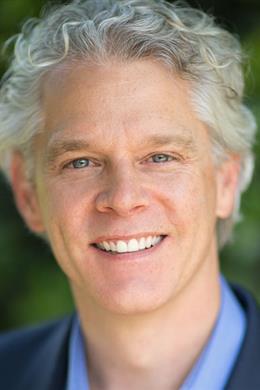
Kevin Ellis
Kevin Ellis is an experienced technology executive with extensive experience in entrepreneurship, high-speed growth, and international expansion. In 2007, Ellis became the President of LinkedIn Europe and was also the first employee of LinkedIn outside the United States. His main responsibility is to expand LinkedIn's business to Europe. In the following four years, he participated in leading the development and implementation of a high growth strategy, helping LinkedIn expand its business to five countries and hiring over 200 new team members in Europe, maintaining a year-on-year growth rate of over 150%. Although he led the high growth international strategy of SideStep and AltaVista International, his work experience at LinkedIn provided profound insights into the rapidly growing new world. Ellis is also the founding mentor of the UK government's Technology City program, which supports digital entrepreneurship in the UK by lowering the threshold for success and creating a prosperous ecosystem. He actively participates in youth education technology charity activities and is a board member of Apps for Good, a social enterprise committed to changing the way young people interact and understand technology. Ellis is a conscious leadership consultant for high growth enterprises and international expansion, a board member of Essentia Analytics, and an active angel investor.
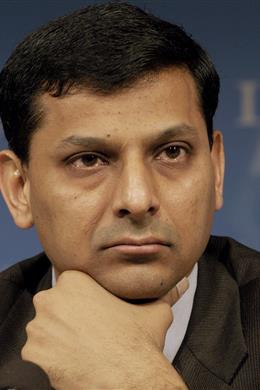
Laguram Rajan
Laguram Rajan is the 23rd Governor of the Reserve Bank of India. On September 4, 2013, he took over the institution of the Central Bank of India and currently serves as the Vice Chairman of the Bank for International Settlements. Lagulam is currently serving as Eric J. Glitzer's Distinguished Professor of Finance at the Booth School of Business at the University of Chicago. Prior to 2007, Laguram was the Chief Economist and Research Director of the International Monetary Fund. Afterwards, he became the Chairman of the Financial Industry Reform Commission of the Indian Government. Lagulam is interested in research areas such as banking, corporate finance, economic development, and particularly the role of finance in economic development. He has published articles in all top economic and financial journals, and has served on the editorial board of American Economic Review and Finance magazines. His work Fault Lines: How Hidden Cracks Still Threaten the World Economy won the Goldman Sachs Book of the Year award, and he also co authored with Luigi Zingales to save capitalism from the capitalists. He is a senior advisor to BDT Capital and Booz and Co, and currently serves on the International Advisory Board of Itau Unibanco, the largest private bank in Brazil. He is the Director of the Chicago Global Affairs Committee and the Auditor General of the US Advisory Board. Laguram is the President of the American Financial Association and a member of the American Academy of Arts and Sciences. In 2003, the American Financial Association awarded Laguram the Fischer Black Prize, the first edition of the Fischer Black Prize, which was awarded biennially to financial economists under the age of 40 who had made significant contributions to financial theory and practice,

Larry Downes
Larry Downes, a renowned internet industry analyst and speaker, is committed to improving business strategies in the constantly technological innovation era of the internet. His works on big bang innovation, disruptive laws, and unleashing killer applications are all super bestsellers. Downs has received key coverage from media such as The New York Times and Business Week. His book Liberate Killer Applied Harvard University Press has sold 200000 copies in 1998 and has been rated by The Wall Street Journal as one of the five most important books in the business and technology fields. His new book, \Big Bang Innovation,\ co authored with Paul Nunes, has become a bestseller. The book tells the story that Big Bang Disruption is the latest innovation method that transcends disruptive innovation. It is an innovation with enormous energy that can shake solid businesses within months or even days. Its terrifying speed and enormous influence stem from the disruptive technologies that have flooded the market, which are of better quality and cheaper prices than their predecessors. He often publishes articles in Harvard Business Review, Forbes Magazine, CNET, and The Washington Post, covering interdisciplinary fields such as technology, politics, and business. Tang Si obtained a Bachelor of Arts degree from Northwestern University in the United States, and later obtained a Doctor of Laws degree from the University of Chicago. I have taught at Northwestern University Law School, Booth School of Business at the University of Chicago, and Haas School of Business at the University of California, Berkeley. I have also served as a non resident researcher at the Internet and Social Studies Center at Stanford University Law School. He has also worked at well-known consulting firms such as Andersen, McKinsey, and CSCIndex. Currently, he is the project director of the Center for Business and Public Policy at Georgetown University and a researcher at the Accenture Institute of Excellence in Performance.
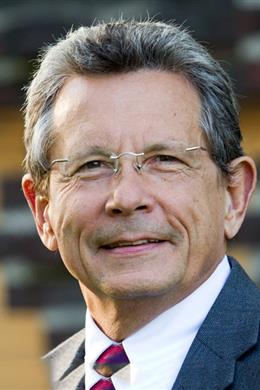
Larry Williams
Larry Williams is the founder of William Metrics and a renowned futures trader, writer, columnist, and asset management broker in the United States today. He has been trading for nearly 50 years and is one of the most respected short-term traders in the world. Williams has taught trading skills to thousands of people and has won multiple trading competitions. He is most praised for his trading performance when he won the championship of the Robbins Cup Futures Trading Championship. The Robbins Cup Futures Trading Championship is a real money trading futures competition that lasts for 12 months, with traders having an initial capital of $10000. In less than 12 months of the 1987 competition, Williams managed his account funds from $10000 to $1.14 million, becoming the championship with astonishing profits. Ten years later, his 16-year-old daughter also participated in the competition, with a final income and principal of $110000. She also successfully won the championship, which was the second best result in more than 20 years for the Robbins Futures Trading Championship, second only to Williams' own record, and subsequent championships were mostly won by Williams' students. During his time in trading, research, and development of trading tools, Williams was twice elected to the Senate and served as a director of the American Futures Industry Association. He has won numerous awards, including the First Futures Doctoral Award in the Futures Journal, the Omega Research Lifetime Achievement Award, and the Global Trader of the Year 2005 Trader Award. The mayor of San Diego named October 6, 2002 as Larry Williams Day. Williams is often invited to appear on CNBC and FOX news programs, and his articles are published in media such as The Wall Street Journal, Forbes, and Fortune. He is the most widely cited and sought after investment advisor in the past 30 years. Williams is the author of books on short-term trading secrets, stock selection to determine profits and losses, choosing the right time to buy the right stocks, dancing with wolves - stocks, revealing the COT of futures traders' position reports, and more. In 1966, he invented the William Index, which was used to study stock price fluctuations and determine buying and selling timing by analyzing the peaks and valleys in stock price fluctuations. It was publicly published in his 1973 book \How I Make Millions of US dollars\. The William Index still appears daily in financial newspapers and investment websites. The top ten survival strategies for Larry Williams' short-term trading are survival: whether it's rumors, insider trading, or even astrology, they cannot guarantee that speculators can survive in the investment market. The most important key for investors is self-discipline and proper asset management, in order to survive in the market for the long term. 2. Control emotions: Fear and greed are always the enemies of investors, so do not be insatiable and do not sell low due to fear. Take appropriate risks: Dare to buy stocks at a low price to become a winner. Williams admits that the more he dares to place orders, the more likely he is to win. Dare to buy stocks at a low price to become a winner. 4. Asset Management: Williams has repeatedly emphasized that his impressive achievements are not due to his exceptional trading skills, but rather his active pursuit of high-quality asset management and avoidance of excessive speculation. Never put all your eggs in one basket: whether it's Jesse Livermore, the speculative king of the early 20th century, or founding Value
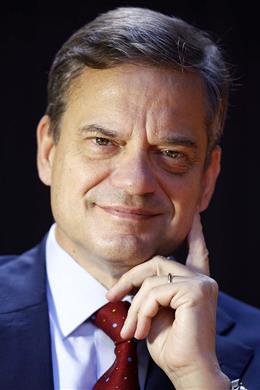
Lorenzo Bini Smaji
Lorenzo Binis Maggie was born in Florence on November 29, 1956. He is a renowned Italian economist and currently serves as the Chairman of Societe Generale in France. He is a visiting scholar at the Wessenhead Center for International Studies at Harvard University and a senior researcher at the Rome Institute of International Affairs. From June 2005 to November 2011, he was a member of the Executive Committee of the European Central Bank. In the Executive Committee of the European Central Bank, he is responsible for international and European relations, as well as the legal and administrative departments of the European Central Bank. During this period, he was the representative of the G7 and G20 eurozone. Smaghi graduated from Brussels High School in 1974. Graduated from the Catholic University of Leuven in Belgium in 1978 with a major in economics. In 1980, he obtained a Master's degree in Economics from the University of Southern California; Received a doctoral degree from the University of Chicago in 1988. Before joining the European Central Bank, he served as the Director General of International Financial Relations at the Italian Ministry of Economy and Finance. His earlier appointments included the Deputy Director of the Research Department of the European Central Bank, the Director of the Frankfurt Policy Department of the European Monetary Institute, and the Director of the Exchange Rate and International Trade Department of the Rome Research Department of the Italian Central Bank. He has published numerous articles on currency and international economics, and is also the Chief Commentator of the Financial Times. He resigned from the European Central Bank in November 2011.
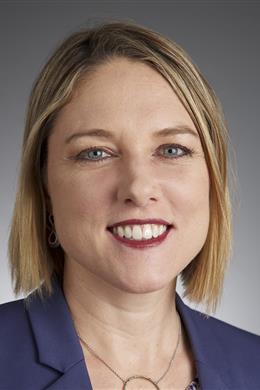
Lupin Meredith
Luo Ping is a former senior reporter for Bloomberg Television in Hong Kong, covering business and financial news throughout the Asia Pacific region. As a business journalist with ten years of rich experience in reporting on Asian and global economic trends, Luo Ping is also the author of the 2007 New York Times bestselling book \The Rise of China and India: A Global Impact. Before joining Bloomberg Television in January 2011, Luo Ping served as a senior editor for Forbes Asia, headquartered in Hong Kong. Luo Ping joined Forbes Magazine as the president of the Detroit branch in April 2000 and moved to Hong Kong in 2001. For Forbes, Lupin wrote cover stories about General Motors, Microsoft, Sony, Kodak, Toyota, Philips, Tata Group, Li&Fung, and Infosys. Before joining Forbes, Luo Ping reported on Detroit for the New York Times. She also wrote articles for today's United States and American bankers, whose reports on internal transactions in deposits and loans were seen as samples of such reports, leading to four congressional hearings and one revision of regulatory regulations for initial public offerings by Bank of America. Luo Ping obtained a literary degree in English literature from Boston University with excellent grades and studied the Knight Wallace Fellow program at Michigan Business School from 1998 to 1999.
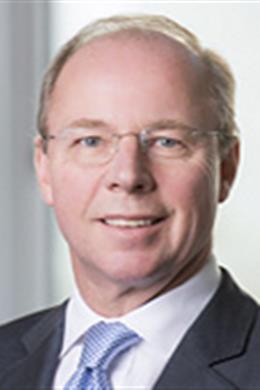
M ichael Heizer
Michael Heise primarily provides economic and strategic advice to the Allianz SE board of directors. He is responsible for analyzing and predicting the German and international economy, as well as financial markets and risk analysis. Heise graduated from the University of Cologne and has delivered speeches at the European Business School located in Oestrich Winkel and Johann Wolfgang Goethe University at Frankfurt am Main. He is also an honorary professor at Goethe University. Before joining the Allianz Group, Heise was the Secretary General of the German Council of Economic Experts, Chief Economist of DG Bank, and Chief Economist and Research Director of the German Central Cooperative Bank DZ Bank.
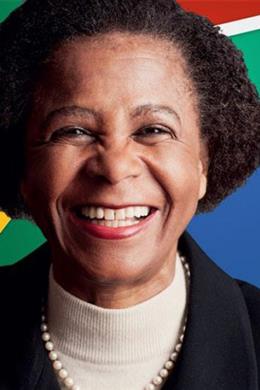
Mamphela Ramphele
Manfila Lanfiler, a South African, is the Executive Chairman of Circle Capital Ventures, a private equity investment company dedicated to revitalizing the black economy through the development of growth oriented enterprises and population investment. She holds board positions in multiple large enterprises. From May 2000 to July 2004, Manfila served as the Executive Director of the World Bank. As a member of the senior leadership team, she is responsible for managing the institution's human development activities in areas such as education, health, nutrition, population, and social protection, and providing learning and training to employees and clients of the World Bank Research Institute. In addition, she also provides supervision and guidance on knowledge, information and communication technology for the World Bank Group. From 2004 to 2005, she served as co chair of the Global Committee on International Migration GCIM. In 1996, Manfila Lanfeller became the Vice President of the University of Cape Town, becoming the first black woman among all universities in South Africa to hold this position. In 1986, she became a researcher at the University of Cape Town and was appointed as Vice President five years later. She has written many important works on major socio-economic issues in South Africa. Manfila Lanfiler has won numerous renowned national and international awards, honorary doctoral titles, and scholarships. She has played an important role in community service, addressing the development issues of vulnerable groups in South Africa, and promoting project implementation. In 1972, Manfila graduated from Natal University as a medical doctor. She holds a PhD in Social Anthropology from the University of Cape Town, a Bachelor's degree in Business Administration from the University of South Africa, and a degree certificate in Tropical Health and Hygiene Public Health from the University of Witwatersrand.
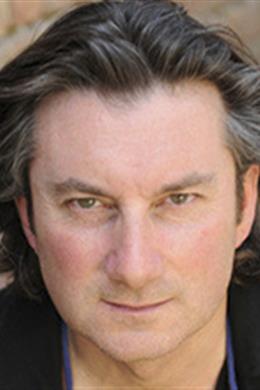
Marc Koska
Markkoska has helped save over 14 million lives. Despite years of repeated rejections, Koska has always insisted on developing his revolutionary disposable product - the iconic K-1 syringe. This is the first syringe with self destruct function in the world medical market. Koska constantly struggles with bureaucracy and the privileged class in every step of creating a successful and constantly evolving company. His only motivation is to eradicate the spread of deadly viruses to save people's lives. His spirit of not pursuing fame and fortune is very inspiring, which is commendable for successful entrepreneurs. According to the World Health Organization, approximately 3500 people die from unsafe injections every day. All injections using K1 syringes are sterile and safe. The K1 syringe cannot be reused - it will automatically lock and break after one use. Koska Koska designed this groundbreaking syringe in just three minutes, but the implementation plan faced 17 years of neglect, repeated rejections, and discouragement. Almost twenty years after inventing the k-1 syringe, Koska collaborated with the World Health Organization and led the organization to launch its third global health initiative. This is an order to ensure the safety of needles, which will put an end to the tragic situation where 1.3 million people die each year due to the use of dirty needles. By 2017, all health systems in the world will completely switch to using self destructing syringes. Koska has been awarded the International Prize Project Technology Innovation Health Award, which primarily recognizes innovators from around the world who use technology to benefit humanity. He also won the Economist Social and Economic Innovation Award and became one of the world's leading health innovators. In just one week, his event in India had an astonishing audience of 50.8 billion, setting a world record. The event raised the health awareness of the majority of Indian citizens through television, radio, movies, and newspaper articles, launching a groundbreaking health campaign to ensure that all medical injections are safe.
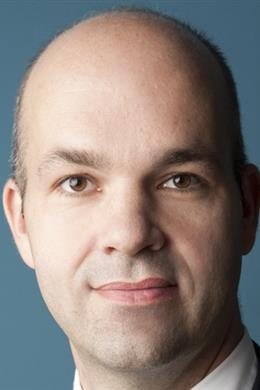
Marcel Frazier
Marcel Fritzzel has been named one of the most influential economists in Germany by the German Wall Street Journal, the German Business Daily. He is currently the Director of DIW at the German Institute for Economic Research, one of Europe's leading research institutions and think tanks. He is also a professor of macroeconomics and finance at Humboldt University in Berlin, as well as a doctoral student in international finance at the Department of Economics at the University of Frankfurt, Germany, and a member of the Advisory Committee of the German Ministry of Economy. His previous work experience included serving as the head of the International Policy Analysis Department of the European Central Bank from 2001 to 2012. He is mainly responsible for preparing the policy stance of the European Central Bank on global systemic economic and financial issues, emerging economies, and international monetary system issues. From 2000 to 2001, he was a visiting scholar at the Peterson Institute for International Economics in Washington, D.C. Prior to this and during the 1996-1998 Asian financial crisis, he worked in Indonesia as a macroeconomic policy analyst for the Department of Finance at Harvard University's Institute for International Development. He has also worked briefly at Mwaniki Associates in Kenya, the Asian Development Bank in the Philippines, and the World Bank in the United States. Frazier's research covers a wide range of topics in the fields of macroeconomics, international finance, monetary economics, and international policy coordination. He has recently been paying attention to issues such as the European crisis, financial stability and capital controls, the transmission mechanisms of global crises, and the reform of the EU and international monetary system. In 2007, he was awarded the Global Economic Affairs Excellence Award by the Kiel Institute of World Economics for his outstanding work in global financial linkages and monetary policy, and the Best Central Bank Research Paper Award in 2007 by the Economic Policy Research Center for his outstanding research work on asset price foam and global imbalances. Frazier delivers smart speeches on finance, crisis management, economics, and European themes to audiences around the world. He has organized several conferences, such as the European Central Bank roundtable seminar on the theme of the Eurozone sovereign debt crisis and the international monetary system held at the European Central Bank in 2012.
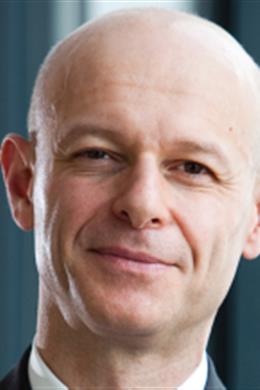
Marco Annonziata
Chief Economist and Executive Director of Global Market Insight at GE. I have written economics on financial crises and won the Rybczynski Award for Best Paper in Business Economics twice from the London Society for Business Economics. Prior to joining GE in 2010, he served as the Chief Economist of Unicredit and the Chief Economist of Deutsche Bank for Eastern Europe, Middle East, and Africa, covering emerging and developed economies.
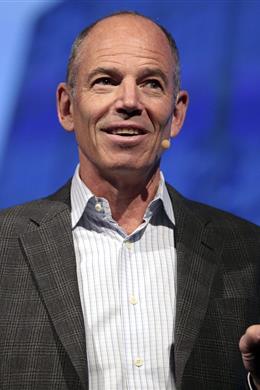
Mark Randolph
Mark Randolph is an experienced Silicon Valley entrepreneur, consultant, and investor. He is one of the founders and CEO of Netflix, an online film and television streaming service provider. Although Randolph is known for founding the Netflix company, as an entrepreneur, his career spans over forty years. He also founded more than six other successful startup companies, served as a mentor for hundreds or thousands of early entrepreneurs, and was an investor in numerous successful technology companies and even more failed ones. Randolph co founded the analysis software company Looker Data Sciences with others. At present, he also serves as a consultant for many other companies, or holds multiple positions as a mentor, CEO coach, or board member. He often gives speeches at industry events and extensively participates in youth entrepreneurship projects. He is also a trustee\/director of the non-profit organization National Outdoor Leadership School.
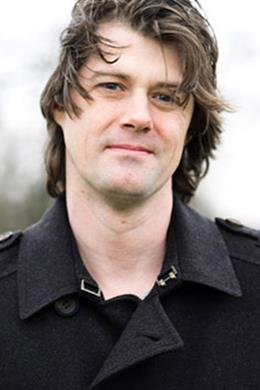
Mark Stevenson
Mark Stevenson has published two books, including the recently released book \Genius Changes the Future\ and the best-selling book \See the Future\. The latter has been translated into 10 languages and has been rated by Wired magazine as a coherent and enjoyable journey through the technological world of the future; The New Scientist magazine says it once again reminds people that the future always belongs to optimists. Stevenson is one of the most respected thinkers on technology and social trends worldwide. He helps people see the direction of the world and teaches them how to adapt to trends. He has served as a consultant for the Virgin Earth Challenge, Civilized Bank, Atlas of the Future, and the Society of Mechanical Engineers founded by Sir Richard Branson. As the founder of the cultural change agency wdtdcouk, he spends most of his time interacting with organizations in various industries around the world. He helps organizations understand how to play their role in creating a better future, or how to gracefully call the shots when needed. The company has a diverse range of customers, including government agencies, non-governmental organizations, enterprises, and art organizations. Stevenson is a contributor to The Times, The Wall Street Journal, The Guardian, Smart Life, The Irish Times, The Independent of Ireland, The Daily Telegraph, and New Politician. He can enable non professionals to understand complex and abstract concepts without making the topic trivial. Stevenson is also a temporary comedy writer, and his works have been exhibited on Radio 4. The drama Octopus Soup, co created by him and Jack Milner, will be released in London in January 2018. Customer feedback: Mark Stevenson taught a half day master class training course at our recent management conference, setting a record for the highest customer feedback in history and surpassing all speakers in the past few years. Mark's presentation vividly blends the solemnity of knowledge, thought-provoking thinking, and humor that attracts the audience\u2014\u2014 The industry benchmark Benchmark for Business Mark's speech was excellent and won a standing ovation from the audience for a long time. The audience in the room was completely attracted by his speech, and even the sound of a needle landing could be heard. It's so exciting\u2014\u2014 The US Space Foundation Mark is a cheerful and charming speaker with a rare talent for explaining complex topics in a simple and understandable manner without compromising the depth of the topic. Several viewers claimed that his speech struck a chord with people and had the power to create change. Mark is both pragmatic and inspiring - people who possess both qualities are often rare\u2014\u2014 RSA Mark, the Royal Society of the Arts in the UK, is a thought-provoking and enjoyable outstanding speaker who opens international conferences in our industry every year. He has extensive knowledge, is humorous, dares to challenge, and is very pleasant. His speech was well prepared, professional and proficient. We have received positive feedback. I admire him very much\u2014\u2014 James&Wells Intellectual Property; Wells Intelligent Property
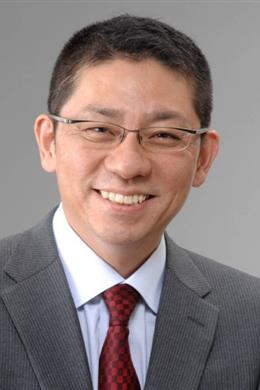
Masuke Kawaguchi
The book Geeky Girl Innovates Japanese Subculturalist Technology and Design Guidelines World Cheers Kawaguchi Seisuke is an innovation and competition strategist, futurist, and designer. He is the founder of Morinoske, a creative future laboratory headquartered in Tokyo. As the most important futurist in Japan, Kawaguchi serves as a strategic advisor to the Japanese government and some large global multinational corporations, many of which view Kawaguchi's future prediction series, Megatrends, as the foundation of their future strategies. Kawaguchi invented the Morinoske subculture driven innovation model and applied it to consulting work and educational activities. In this basic concept, he established the importance of subculture as a seed of innovation, designed its parameters, and demonstrated that it is indeed a feasible solution that creates value and helps implement industrial and national strategies. Kawaguchi is an award-winning writer whose books have had a profound impact on the fields of thinking and practice in Japan and even globally.
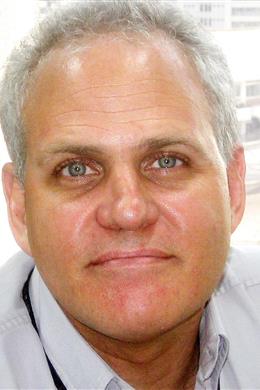
Matthew Freedman
Matthew Friedman is an international trafficking expert with over 25 years of experience as an activist, project designer, evaluator, and manager. He is currently the CEO and co founder of The Mekong Club, a Hong Kong based organization composed of business professionals from the private sector committed to taking joint action to combat human trafficking in Asia. He is the recipient of the Asia Public Affairs Network Annual Best Communicator Award and has delivered over 200 speeches to hundreds of companies worldwide in the past few short years. From 2006 to 2012, Friedman was the regional project manager for the United Nations Inter-Agency Mekong Subregion Anti Abduction Project (UNITAP) in Thailand, which linked the United Nations system with governments and civil society groups in China, Cambodia, Laos, Myanmar, Thailand, and Vietnam. From 1991 to 2006, Friedman worked for the United States Agency for International Development (USAID) in Thailand, Bangladesh, and Nepal. Friedman is a technical advisor to multiple governments committed to abolishing slavery. He often appears in media reports on human trafficking and slavery in Southeast Asia, including Forbes, BBC, CNN, and Bloomberg, and is invited to give speeches at major conferences worldwide. He has published 12 books on topics including human trafficking and ancient metal casting art in Bangladesh. Matthew Friedman, a former expert at the United States Agency for International Development and the United Nations, outlined the latest developments in human trafficking, which is often overlooked as a modern form of crime. Friedman has worked on the ground in over ten Asian countries for 25 years and possesses in-depth first-hand knowledge. He wrote that human trafficking exists in almost any country on Earth, and few people realize that there are tens of thousands of men, women, and children living a slave like life in the United States alone. Friedman interviewed hundreds of free slaves and imprisoned human traffickers in South and Southeast Asia. The slave industry has a market value of $1 billion and continues to grow without restraint. Slaves work in manufacturing industries such as brothels, fishing grounds, clothing, and chocolate. Based on his deep personal experience in combating illegal transactions, Friedman has provided relevant advice and guidance, providing valuable lessons for those who want to work in this industry. As a government worker, Friedman is committed to eliminating global apathy and bringing together more contemporary abolitionists. His latest TEDX speech supplemented the content of the book. Please refer to the following link for details https:\/\/wwwyoutubecom\/watch?v=rUR_yFYDtOo
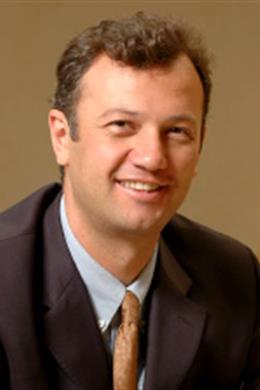
Michael Jordan
Michael Jordaan is a venture capitalist and wine enthusiast who resigned as CEO of First National Bank FNB in 2013 and turned to entrepreneurship. The bank is one of the largest banks in South Africa with a customer base of nearly 9 million. Jordan, formerly a banker, now runs a private investment company called Montegray Capital and holds strategic advisory positions in various companies, including serving as the Chairman of the South African Wine WoSA Association, the Chairman of the Consumer Data Administration Compuscan, and the Director of the Johannesburg Stock Exchange. Since 2014, he has established Montegray Capital and served as its CEO. Michael also actively participates in investments and serves as a partner of Angel Hub Ventures, a South African venture capital fund. In 2014, he co founded a coding apprenticeship project called ProjectcodeX, aimed at cultivating highly skilled software development talents to support the digital economy. Michael has over 20 years of work experience in the financial services industry and nearly a decade of banking management experience. He was responsible for the transformation of traditional banking business and led the First National Bank FNB to be recognized as the world's most innovative bank at the 2012 Global Banking Innovation Awards held in Washington, D.C. In 1990, Michael was an officer in the South African Navy. From 1991 to 1993, he began his career as a management trainee and corporate banker at Deutsche Bank Hamburg and Frankfurt branches, respectively. Then in 1994, he joined the investment banking department of the First Rand Group, the Rand Merchant Bank of South Africa, under the Class Of project of RMB. During his tenure at the First Rand Group, he held various CEO positions, including the emerging Origin Bank, which was later renamed as Rand Commercial Bank Private Bank, electronic currency eBucks, and First National Bank's local loan FNB HomeLoans. In 2002, he was in charge of the retail product business of First National Bank and was appointed as its CEO in 2004 at the age of only 36. During his tenure as CEO of First National Bank, Michael focused on cultivating a culture of innovation in the bank. Under his guidance, the bank launched the Innovator Program in 2004, and as of his resignation, the bank had implemented 7244 innovations. Encouraging independent innovation has greatly improved the bank's ability to respond to the global banking market enterprise change index rate. Michael is known for his position at the forefront of leadership, innovation, and technology in South Africa. He is the Sunday Times Sun of 2013