演讲者
704 位演讲者
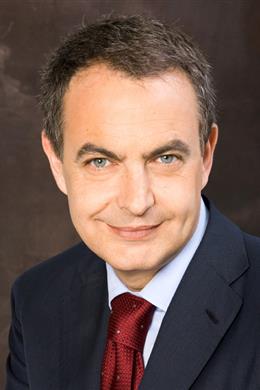
Jose Luis Zapatero
Jose Luis Zapatero graduated from the Law Department of the University of Leon in Spain with a Bachelor of Laws degree. Zapatero joined the Workers' Socialist Party (PSOE) in 1979 and became the youngest member of the House of Representatives in 1986. Since then, he has been elected four times in a row. Zapatero grew up in Leon and began receiving secondary education at the religious school Disc \u00ed pulas de Jes \u00fa s in September 1966. In September 1970, he entered Quot; Colegio Leon \u00e9 squeot; Reading was the only private boarding school in Leon at that time. He later entered the University of Leon to study law and graduated in 1982. After graduation, Zapatero served as a professor of constitutional law at the University of Leon. In 1986, he was elected as a member of parliament. Zapatero decided to run for party secretary general at the 35th party congress in June of that year. He proposed an updated and more central route policy, known as Nueva V \u00ed a. On June 25, 2000, Zapatero announced his intention to run for party secretary general in a speech in Leon, which included establishing a society that accepted all foreigners; Prioritize education and job creation; Give parents more time to take care of their children and the elderly; Vigorously promoting culture; Transforming Spain into a respected country and helping others in need; Help proactive and enterprising citizens, give more space for political diversity, and promote deeper values. These views have led to the title of Zapatero's dark horse candidate. His opponents accuse him of inexperience, but his supporters believe that it has the image of a reformer and that he is the only member of parliament among the candidates. Finally, Zapatero won by a small margin of 995 votes and obtained 414; Opponent Jos \u00e9 Bono received 405 votes. Zapatero won the 2004 general election and became the Prime Minister of Spain in April 2004. Afterwards, he won the 2008 general election and was re elected as Prime Minister of Spain. During his reign, he first withdrew Spanish troops from Iraq, reopened discussions on the issue of autonomous regions, and dealt a blow to the Spanish terrorist organization ETA. Secondly, he revised a series of social laws, such as the Marriage Law and the Same Sex Marriage Law. On July 3, 2005, Spain became the first country in the world to grant homosexuals the right to fully marry and adopt children.
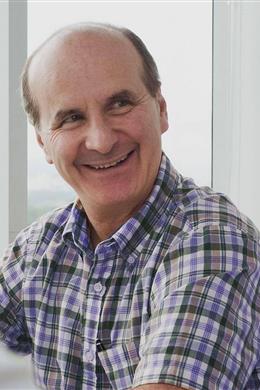
Jose Maria Figueres Olsen
From 1994 to 1998, Jos \u00e9 Maria Figueres served as the President of Costa Rica. When elected, he was only 39 years old and was the youngest president in modern Latin American countries. At present, his work mainly revolves around the issues of innovation and competitiveness as the main driving force of the new global economy. As the chairman of the Carbon Warfare Room, he helps develop market-oriented solutions to mitigate climate change conditions. He is also a member of the United Nations Secretary General's Advisory Group on Energy and Climate Change and serves as the head of the Organization of American States Electoral Observation Mission. Before becoming president, he served as Minister of Foreign Trade and Minister of Agriculture. He opened up the connection between sustainable development and technology. As President, with Intel's landmark $500 million investment in 1997, he led Costa Rica to rise as a world leader in environmental protection, ecotourism, and ICT services. After resigning as president, he helped create and lead the United Nations Information and Communication Technology ICT Task Force. In 2000, he joined the World Economic Forum and became its first CEO in 2003. Currently, Jos \u00e9 Maria Figueres has delivered speeches on the global challenges facing the world in business and international affairs, as well as how to make changes through innovation and effective leadership. Jose Maria Figueres is recognized as a world-class speaker and host. He has always been the keynote speaker of many world-renowned conferences and forums. He often provides insights on future trends in an educational and thought-provoking manner. His current positions include the Chairman of the Carbon Warfare Room, the Chairman of the Global Equity Action of the United Nations Secretary General's Climate and Energy Advisory Group, the Trustee of the International Relations and Dialogue Foundation, a member of the Clinton Global Initiative, and a member of the Earth Council Geneva.
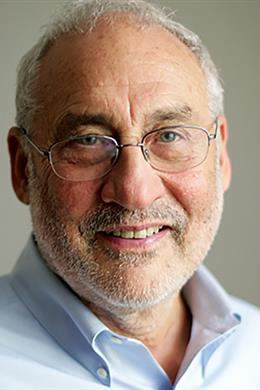
Joseph Stiglitz
Joseph Stiglitz, an American economist and winner of the 2001 Nobel Prize in Economics, was named one of the 100 most influential figures in the world in 2011 by the Times. Currently a professor at Columbia University in New York, co chair of the Columbia University Global Thought Committee, and co founder and chairman of the Columbia Policy Dialogue Initiative. In 1967, Joseph obtained a Ph.D. degree from Massachusetts Institute of Technology. In 1970, he became a full-time professor at Yale University. In 1979, he was awarded the John Bates Clark Medal, a biennial award awarded by the American Economic Association to economists under the age of 40 who have made outstanding contributions to economics. He has coached at Princeton University, Stanford University, and Massachusetts Institute of Technology, and is Professor Drummond and a researcher at All Souls College in Oxford. In 2001, he won the Nobel Prize in Economics for analyzing market information asymmetry. He was the main contributor to the 1995 IPCC report of the Intergovernmental Panel on Climate Change, which won the Nobel Peace Prize in 2007. From 1993 to 95, Joseph served as a member of the Clinton Administration's Economic Advisory Committee and as the Chairman of the CEA from 1995 to 97. From 1997 to 2000, he served as the Chief Economist and Senior Vice President of the World Bank. In 2008, at the request of French President Nicolas Sarkozy, he served as the Chairman of the Committee on Economic Performance and Social Progress Measurement, which released its final report in September 2009. In 2009, he was appointed as the Chairman of the Expert Committee on International Financial and Monetary System Reform by the President of the United Nations General Assembly and published a report in September of the same year. Joseph helped establish a new branch of economics - information economics. He explored the consequences of information asymmetry and pioneered key concepts such as adverse selection and moral hazard, which have become standard tools for theorists and policy analysts. He has made significant contributions to macroeconomics and monetary theory, development economics and trade theory, public and corporate finance, industrial and rural organization theory, welfare economics, and income distribution theory. His theory explains under what circumstances the market will operate poorly and how the government should improve performance through selective intervention. As a top global economic educator, Joseph's textbooks have been translated into over ten languages. He founded the leading economic journal Economic Outlook, and his works on Globalization and Its Discontents were translated into 35 languages by Norton Publishing in 2016, with global legitimate sales exceeding one million copies. In addition, he also authored numerous books such as the tumultuous 1990s, the New Paradigm of Monetary Economics and Bruce Greenwald's co authorship, the true cost of the three trillion dollar war in Iraq and the political science professor Linda Bilmes at Harvard University, and the cost of inequality: how today's divided society harms our future, published in June 2012.
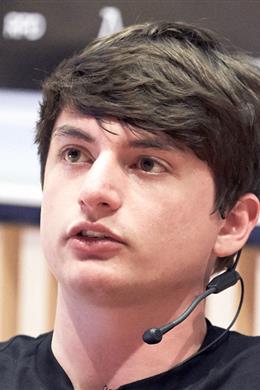
Josh Walman
Josh Walman is the founder and general manager of RPD International. This is an innovative enterprise with global operations that designs, develops, and manufactures products for companies seeking to leverage innovative ideas, cutting-edge processes, and international markets. At the age of 10, Walman designed his first robot. At the age of 13, he sent his design and \u00a3 500 in savings to a factory in China for parts production. At the age of 15, he became an engineering and supply chain freelance consultant and held conference calls with the Chinese side after school. Five years later, his company had over 60 employees worldwide and was a supplier to over 100 factories of multiple large manufacturing companies worldwide. RPD operates a global network of manpower and facilities, gathering the best design concepts. From heavy and precision engineering to sculptors and artists, manufacturers come from various fields. This distributed creative model gathers a variety of talents and experiences. The factory network means that RPD can produce prototypes as well as various parts including brackets and engines; Customers can be either airlines or hotels. From problem-solving to market disruption, manufacturing and supply chain processes, research and innovation, the Internet of Things, wearable technology, and the 3D printing revolution, Walman focuses on how the manufacturing industry is changing and how it is changing the world.
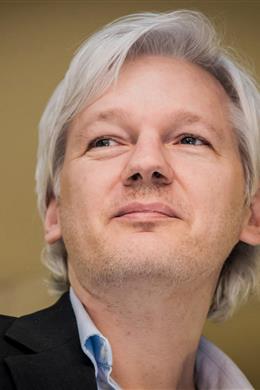
Julian Assange
Julian Assange is the founder of WikiLeaks and caused a global sensation by disclosing a series of confidential documents provided by Chelsea Manning in 2010. In 1993, Assange provided technical advice to the Child Exploration Unit of the Victoria Police Department to assist in litigation investigations. In the same year, he participated in the creation of Suburbia Public Access Network, one of the earliest internet service providers in Australia. Afterwards, he began programming and jointly developed port scanning program design based on the Transmission Control Protocol. In 2006, Assange established the WikiLeaks WikiLeaks website, believing that the free exchange of information could end illegal governance. In 2010, Assange was requested to be extradited to Sweden on charges of sexual assault. He denied the charges and expressed concern that he would be extradited from Sweden to the United States for leaking confidential US documents. In 2017, Swedish prosecutors stated that they would cease their investigation into Assange. In 2010, Assange surrendered to the London police, but his bail application was rejected. In 2012, he received political asylum in Ecuador. Afterwards, he stayed at the Ecuadorian Embassy in the UK and enjoyed the freedom to leave at any time, but would be arrested for violating the bail terms of the UK suspect. In 2011, the Sydney Peace Foundation awarded Assange the Sydney Peace Medal in recognition of his extraordinary courage in pursuing human rights. The recipients of this honor also include Nelson Mandela.
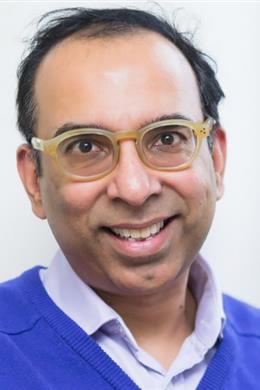
Junejia, Manish
Manish Juneja is a global health expert dedicated to exploring how to integrate emerging technologies to make the world a healthier and better place. Junejia not only understands technology, but also studies economic, political, and cultural trends. The topics he delved into in 2017 include new medical models, digital biomarkers, and how human-machine relationships will change with the intelligence of machines. He once gave a speech at TEDx in St. Petersburg, discussing how to use digital health technology to make Guernsey the best place to live on Earth. In 2013, he delivered another TEDx speech in Porto, discussing his vision for 7 billion citizen scientists. He also participated in the FutureMed event at Singularity University in Silicon Valley. In 2012, Junejia left GlaxoSmithKline to establish his own health consulting company. In the same year, he founded Health 20 London Chapter and developed it into the largest civilian health technology community in the UK. Over his 20 year career, Junejia has used data to help improve decision-making in numerous industries, including supporting UK government research at University College London, managing DunnHumby's Tesco database, and recently handling the world's largest US health insurance claims. He is also responsible for managing the European electronic health records database at GlaxoSmithKline Research and Development Center.
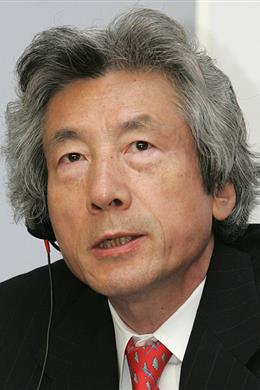
Junichiro Koizumi
Junichiro Koizumi is a Japanese politician who served as the Prime Minister of Japan from 2001 to 2006. In 2009, he retired after serving in parliament. As a maverick leader of the Liberal Democratic Party (LDP) in Japan, Junichiro Koizumi is hailed as an economic reformer, focusing on Japanese government debt and postal privatization reforms. In 2005, he led the Liberal Democratic Party to win the largest majority of seats in modern Japanese history for the first time. Junichiro Koizumi has received international attention for his deployment of the Japanese Self Defense Forces in Iraq. His visit to the Yasukuni Shrine has caused diplomatic tension between Japan, China, and South Korea. He is the third longest serving Prime Minister in Japanese history. Junichiro Koizumi was born into a political family and studied economics at Keio University. He joined politics in 1970 and became a member of the Liberal Democratic Party. Two years later, he was elected as a member of parliament. In 1988 and 1996-1997, he served as the Minister of Health and Social Security. As a grassroots leader in the Liberal Democratic Party, Junichiro Koizumi strongly opposes the deeply rooted conservative leadership within the party. In 2001, he was elected as the Chairman of the Liberal Democratic Party, and soon after, he took over as the Prime Minister of Japan from Mori Hiro. Junichiro Koizumi is an interesting political figure who promises to revive the Japanese economy, amend the constitution, privatize government enterprises, modernize the political system, improve relations with neighboring Asian countries, and eliminate fascism within the Liberal Democratic Party. However, achieving these goals was not an easy task, and his reforms were hindered by the deep-rooted bureaucratic class and internal interest groups within the Liberal Democratic Party. Soon, this government largely continued the governance style of previous prime ministers. But he did reduce public spending, relax regulations, and even visited North Korea in 2002, achieving the establishment of diplomatic relations between Japan and North Korea. In 2005, his postal privatization reform failed, partly due to members of the Liberal Democratic Party's parliament, which led to early elections. He obtained the vast majority of seats in the House of Representatives, and the reform plan was subsequently passed. In 2006, he resigned as Chairman of the Liberal Democratic Party and Prime Minister of Japan. The Japanese government he led was the third longest serving government after the war.
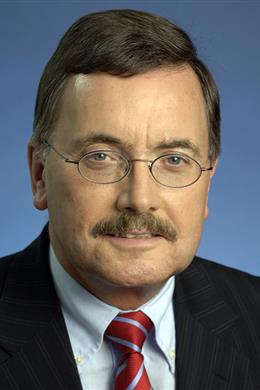
Jurgen Stark
Juergenstach is a renowned German economist who served as an important member of the ECB Executive Committee from 2006 to 2011, responsible for economic and monetary analysis. He is known as the Chief Economist of the European Central Bank, although this is not his official title. Jurgen left the European Central Bank due to fundamental differences with banks over the controversial government bond purchase plan, although the European Central Bank announced that his resignation was due to personal reasons. From 1978 to 1998, he was responsible for formulating important economic policies in the German federal government. From 1998 to 2006, he served as the Vice President of the Deutsche Bank for two consecutive terms, and in 2004, he served as the President of the bank. Jurgen excels in utilizing his extensive experience in the German Federal Government and the European Central Bank to express his views on the future of the euro, the European economy, financial stability, and the global economy.
Justin Cassell
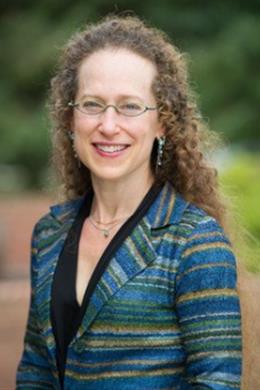
AI Queen, former President of the WEF Computer Global Future Council at the World Economic Forum, Vice Dean of the School of Computer Science at Carnegie Mellon University, Honorary Director of HCI at the School of Computer Science. Dean of the School of Computer Science at Carnegie Mellon University, ranking first in the world in the CMU computer program at Carnegie Mellon University. Former Chairman of the WEF Computer Global Future Council at the World Economic Forum. The WEF Artificial Intelligence Committee has the world's top experts in the field of artificial intelligence. In 2011, due to his outstanding contributions in this field, he was appointed as the Chairman of the WEF Artificial Intelligence and Robotics Committee. In 2013, he became the Chairman of the Computer Global Future Council and served as a speaker at the World Economic Forum in Davos for 8 consecutive years from 2012 to 2019., Kassel is the inventor of the Humanoid Conversational Agent (ECA) and the Embodied Conversational Agent. His research has had a profound impact in the industry, with his most famous achievements being the Social Perception Robot Assistant SARA exhibited at the World Economic Forum, as well as the Yahoo CMU Future Private Assistant Research Project. Kassel attempted to apply this technology to the field of children's education and developed systems such as SLS to help children learn language, becoming a pioneer in child interaction research. Invited multiple times by companies such as Google to share their cutting-edge research achievements
Justine Henin
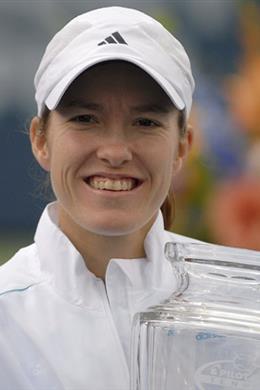
Justin Henning, a Belgian tennis player, is a former world number one and one of the greatest players in women's tennis. He is also the shortest player among all the world's top players. She held the world number one position with her iconic one-handed backhand, powerful attack, and excellent psychological qualities for 117 weeks. Standing at the pinnacle of WTA tennis, it created the Haining era of women's tennis. Haining is a rare all-round player in the women's tennis industry of her time, and her skills on the French Open clay are even more perfect, earning her the title of the clay queen. She has won women's singles championships 43 times in her career, including the 2004 Athens Olympics singles championship, 7 Grand Slam singles championships, and 2 WTA year-end finals singles championships. She ranked first in the WTA year-end world rankings in 2003, 2006, and 2007, respectively. In 2008, at the age of 25, Haining chose to retire when he had a huge advantage of over 2000 points in the world ranking. She is also the only professional athlete to retire despite being ranked first in the world. On February 11, 2016, Henin joined the team of Ukrainian star Svetonina and the two began working together as Svetonina's coach. Her impressive records include 43 WTA Tour victories, including 7 Grand Slams, 4 Roland Garros, 2 US Open, 1 Australian Open, 2 Masters, 1 Olympic gold medal, and 1 Federation Cup. Now retired, Haining is still very active, playing several roles simultaneously: entrepreneur, television consultant, speaker, and mother of two young children. She actively participates in the activities of the tennis club Justin Henning Club and shares her knowledge and experience with young people at school.
Karl Ziegler
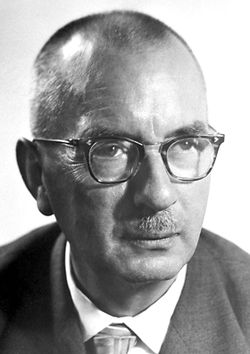
诺贝尔化学奖| (1935) | 1898-1973
Karum Chase
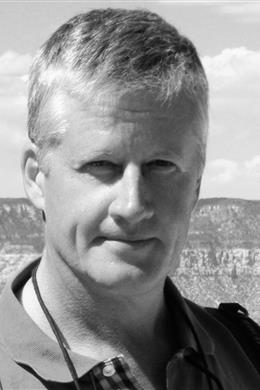
Karum Chase, a renowned artificial intelligence writer, focuses on the medium to long-term impact of artificial intelligence on individuals, society, and the economy. The Economic Singularity, a non fiction book, describes how technology will trigger large-scale unemployment in the future; In the book "The Fate of Humanity in the Era of Artificial Intelligence and Super Intelligence", Chase discusses the possibilities of strong artificial intelligence and super intelligence. He is Pandora's brain; The author of the book's Brain ', which is a technical horror film about First Super Intelligence. Chase has 30 years of experience in the media and business world, holding positions such as marketing, strategist, and CEO. He has a lasting interest in business and is the chairman and trainer of some growth oriented enterprises. In 2000, he co authored the Internet Entrepreneurship Bible, a best-selling commercial book published by Random House.
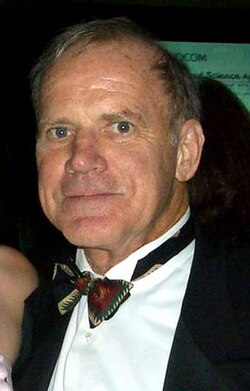
Kary Mullis
诺贝尔化学奖| (1990) | 1944-2019
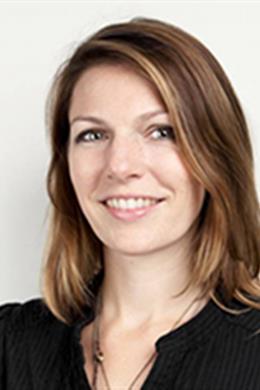
Kate Darling
At present, robots are playing an increasingly important role in life and business - they are no longer limited to the manufacturing industry, but have expanded to various aspects such as transportation, education, medicine, elderly care, offices, and homes. But morality and law have not kept up with the development of robots. Kate Darling is a pioneer in these research fields, and her work has helped accelerate this process. Leading robotics ethics expert Darling is a researcher at the MIT Media Laboratory at the Massachusetts Institute of Technology. She studies social robotics and conducts experimental research on human-machine interaction. Darling constantly explores the emotional connections between humans and some biomimetic inventions, hoping to influence technological design and policy direction. Her articles and research predict the challenges that legislators, engineers, and the general public must address in the development of human-machine relationships in the coming decades. Although Darling has a professional background in intellectual property, law, and economics, she is passionate about technology and robotics, and therefore works in interdisciplinary fields. She taught robotics ethics courses with renowned professor Lawrence Lessig at Harvard Law School, and later devoted herself to studying the intersection of law and robotics, focusing on legal and social issues. Darling is a researcher at the Berkman Center for Internet and Social Studies at Harvard University and the Information Society Program at Yale University, as well as a member of the Institute of Ethics and Emerging Technologies. Darling's work has been reported by various media outlets such as the BBC, The Guardian, Boston Globe, CBC, and Wired magazine. She has authored many academic publications and is a contributing author for the online communication platform Robohub and the IEEE Spectrum magazine Technology Overview. As a prominent and inspiring speaker, she often gives speeches and hosts seminars covering interesting developments in the field of robotics and future emerging fields.
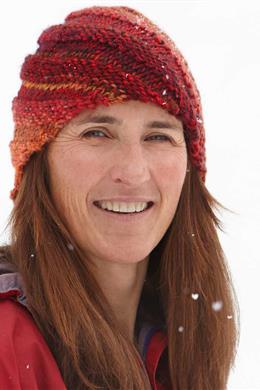
Kathy Odord
Cassio Dodd was the first female mountaineer in the world to climb the world's highest mountain, Mount Everest, from both north and south sides. Kathy Odord was born in Johannesburg, South Africa and has been hiking since leaving school. She holds a Master's degree in Media Studies from Rhodes University and is a university lecturer. At that time, she happened to see an advertisement for mountaineering recruitment in a newspaper, and after screening, she joined South Africa's first Everest expedition. Although Cathy was a newcomer to the team, she successfully reached the pinnacle on May 25, 1996. In 2000, she became the fourth woman in the world to reach the world's fourth highest peak, Mount Luozi. Cathy spent many years around Mount Everest, but for her, it was actually life. Cassio Dodd has written two books about his experience of climbing Mount Everest, Mount Everest: determined by heart and just for love, which have been translated into German. Cathy has always been an active adventurer. From exploring through the remote wilderness of Norway's Arctic using dog sleds to reaching the northernmost part of Europe, to crossing the steep rock walls of Yosemite National Park, she always has her own direction. She constantly shares some insights with corporate audiences about herself, individuals, and teams facing enormous challenges. She has been a professional speaker for ten years and has delivered speeches to companies in 35 countries on six continents.
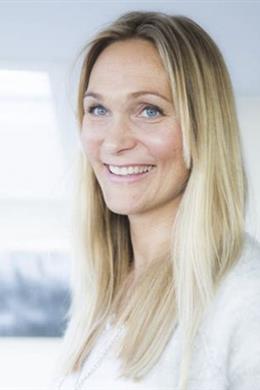
Katrina Holykim
Katrina Holekum was born on April 25, 1976, and is a full-time freestyle skier and designated skydiver in Norway. She is the first and only female athlete in the world to complete a ski jump, which combines freestyle skiing with high-altitude jumping. In addition, she is also a sponsor athlete of the internationally renowned outdoor brand Lesaffis THE NOTH FACE, which has strong economic strength and abundant outdoor resources around the world. Hollegim conveys the spirit and philosophy of TNF outdoor sports through her own career. Her main goal is to do her best to help and promote the development of this sport, and she also hopes to contribute to the advancement of women's designated skydiving to a higher level. In August 2006, she failed to land during a routine skydiving and suffered an almost fatal crash. She crashed into the ground at a speed of over 100 kilometers and 60 miles per hour, causing 21 fractures in her legs. Although the doctor said she would never be able to walk again, she recovered after 20 surgeries and returned to skiing in 2007. She travels around the world and also shoots films for the strongest industrial companies in this field. Her biographical film, with a 20 second thrill, won the Best Picture in the Snow Mountain Sports series and the People's Choice Award at the 2007 Banff Mountain Film Festival. In November 2011, Holykim and Junendar Publishing jointly published their autobiographical work \The Wonderful Feeling of Fear\.
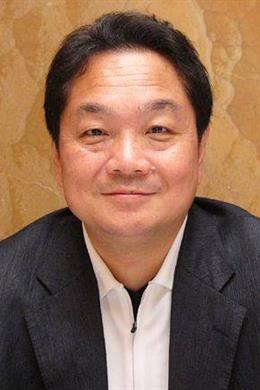
Ken Kutaragi
Mr. Kutara Ryuki is the father of PlayStation and can also be considered an industry legend. Until June 2011, he served as the honorary chairman of Sony Computer Entertainment. When inventing the PlayStation video game console, Mr. Kutara Ryuki was an engineer at Sony who drove the company to develop this product. In 1994, PlayStation was introduced to the market and quickly became the best-selling gaming console on the market. In 1999, Mr. Kudo Ryuki was appointed as the President and CEO of Sony Computer Entertainment, a wholly-owned subsidiary of Sony Consumer Products and Services Group responsible for PlayStation. Since October 2009, Mr. Kudo Ryuki has been serving as the President and CEO of Cyber AI Entertainment Inc. He is also a board member of Kadokawa Group Holdings, Inc., Nojima Corporation, and Rakuten, Inc. Since 2009, he has also served as a visiting professor at Ritsumeikan University. He also holds a degree in Electronic Engineering from Tokyo Electric University
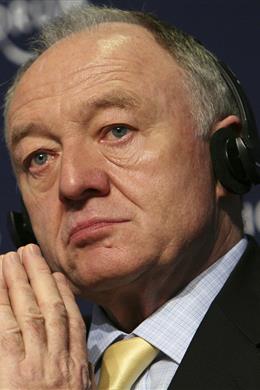
Ken Livingstone
Ken Livingstone was born in southern London in 1945 and is an authentic Londoner. Livingstone has always been an unconventional figure in British politics, known for being outspoken and outspoken. His unique left-wing style almost caused him to capsize in politics, and his relationship with Prime Minister Blair has always been tense and lax. But for decades, he remained the same. Livingstone joined the Labour Party in 1969 and began his political career, having been elected to parliament twice. In the Labour Party for more than 30 years, he has won the love of grassroots members, but is not allowed by the top leadership of the Labour Party. He is willing to engage in dialogue with the Sinn Fein Party and the Irish Republican Army, support gay organizations, support the European single currency policy, and call for the abolition of the monarchy, all of which are incompatible with the political mainstream in Britain. Due to his leftist stance, he is known as the Red Ken. Former Prime Minister Margaret Thatcher did not like him and regarded him as a troublemaker, while current Prime Minister Blair once described him as a disaster in London. From late 1999 to early 2000, there was a personal struggle between Livingstone and the Labour Party, as well as between Livingstone and Blair, surrounding his candidacy for mayor of London. Blair openly opposed Livingstone's election, saying that it was the extreme left policy he represented that kept the Labour Party out of office for 18 years. The old city of London, with a population of over 7 million, has never had its own mayor. In 1999, as soon as the ruling Labour government decided to allow democratic elections for mayor in London, Livingstone announced his readiness to run for mayor. The Labour government was concerned that Livingstone's election would run counter to the existing Labour line and hoped that he would show loyalty to the party and give up the election, but Livingstone remained unmoved. Livingstone's various signs of independence angered the Labour government, which ultimately nominated Health Minister Frank Dobson. This angered Livingstone, who decided to bypass the Labour Party and announce his candidacy as an independent candidate. After Livingstone announced his candidacy as an independent candidate, Blair simply expelled Livingstone from the Labour Party. Later, Livingstone claimed that running as an independent candidate was a political gamble he chose. Fortunately, he, who is adept at using the media to create momentum and possesses eloquence, actually won the bet without the support of political parties behind his back. After Livingstone was elected as the mayor of London in May 2000, he did not disappoint expectations and made bold reforms to London, the most important of which was to solve the transportation problems that had plagued London for many years. With the efforts of Livingstone, London has officially imposed a city entrance fee, with vehicles entering an 8-mile radius of central London being charged \u00a3 5. Although there were some opposing voices at the beginning of the announcement, it has been proven that the collection of entrance fees has indeed alleviated the long-standing traffic congestion in central London, providing a successful template for other cities to solve such problems. Due to his creative achievements in solving the traffic congestion problem in central London, Livingstone became one of the top 50 science and technology experts in 2003 among the many Nobel Prize winning Ivy League professors in the United States. During the London bombings in July 2005, his leadership skills were widely praised, and
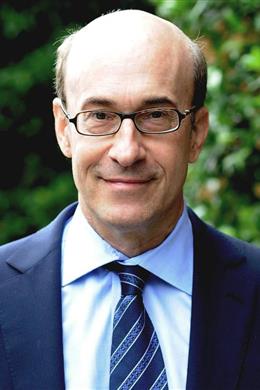
Ken-neth Rogoff
Kenneth Rogoff is a renowned contemporary American economist and professor of economics and public policy at Harvard University. Rogoff was born in 1953 in Rochester, New York, USA. In 1975, he obtained a bachelor's degree from Yale University and studied under Nobel laureate James Tobin in economics; Received a PhD in Economics from Massachusetts Institute of Technology in 1980. He has taught at Princeton University, the University of California, Berkeley, and the University of Wisconsin. From 2001 to 2003, Rogoff served as Chief Economist and Director of Research at the International Monetary Fund. His international macroeconomic discourse is based on standard research texts in the field of economics worldwide. He was successively elected as a member of the Econometric Society, an academician of the American Academy of Arts and Sciences, and an academician of the National Academy of Sciences. In 2011, he was awarded the Deutsche Bank Award. Rogoff publishes monthly analyses of global economic issues in media columns from over 50 countries. He has made outstanding contributions in macroeconomics, publishing multiple papers on central bank management, exchange rate decisions, sovereign debt, banking crises, and other areas, with significant academic influence. In addition to academic papers, Rogoff is very concerned about the new changes that have occurred in the world economy, and related commentary articles are frequently seen in the newspapers.
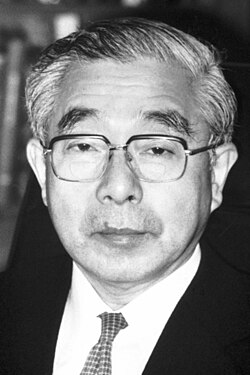
Kenichi Fukui
诺贝尔化学奖| (1981) | 1918-1998