演讲者
704 位演讲者

Emma Spencer
Emma Spencer was born on June 26, 1978, and is a famous British television host, horse racing journalist, and expert. In her early career, Emma Spencer was a jockey who won the amateur speed jockey championship twice. In 2001, she joined Channel 4 Racing Channel and quickly became one of the main hosts of the channel's speed race. The events she has reported on include Derby, Royal Ascot, Brilliant Goodwood, as well as numerous international competitions such as the Dubai World Cup, Prix de l Arc de Triomphe, and Melbourne Horse Festival Melbourne Cup. In 2014, Spencer joined 888sport as a resident horse racing expert. Spencer lives in Newmark, Suffolk County. In February 2005, she married Irish jockey Jamie Spencer, had three children, and divorced in 2010.
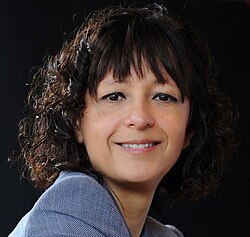
Emmanuelle Charpentier
诺贝尔化学奖| (2015) | b. 1968年
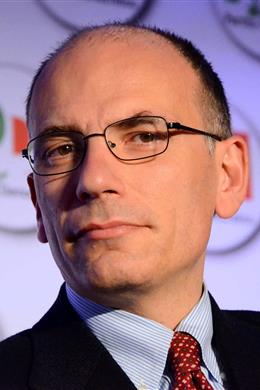
Enrique Letta
Enrico Letta, former Prime Minister of Italy from 2013 to 2014, served as the Deputy Leader of the Central Left Democratic Party and Minister of European Affairs in Italy. On April 24, 2013, Enrique Letta was appointed as the new Prime Minister of the Italian government by Italian President Napolitano. On February 13, 2014, Letta announced his resignation as Prime Minister of Italy. Leta demonstrated excellent political talent early on. He began serving as the Director of the Secretariat of the Italian Ministry of Foreign Affairs at the age of 27, transferred to the Secretary General of the Euro Commission of the Ministry of Finance at the age of 30, and was promoted to the position of EU Policy Minister at the age of 32, becoming the youngest cabinet member in Italy after the war. At the age of 33, he was transferred to the position of Minister of Industry and Trade of Italy; Under the age of 40, he served as the Secretary of State to Prime Minister Prodi. In 2008, Prodi stepped down and the Secretary of State was replaced by Jani. Afterwards, Letta was elected as the Deputy Secretary of the Italian Democratic Party until the political deadlock pushed him to the position of Prime Minister. EU affairs have always been the focus of Leta's work. In the 1990s, he led a committee of the Ministry of Finance to prepare for Italy's accession to the eurozone; Served in the European Parliament from 2004 to 2006. As the Italian Prime Minister, one of his tasks is to negotiate with the European Union and strive for greater budget flexibility for Italy, which is a position strongly supported by both the Democratic Party and Berlusconi's centre-right wing. On April 24, 2013, after several weeks of electoral deadlock, President Napolitano requested Enrique to form a new government. Since then, he has been stationed at the presidential residence, conducting a series of elections and appointments for various departmental ministers, and issuing statements on national reform. At this point, he became an internationally renowned Italian politician. Enrique also carried out reforms to the parliamentary system and Italian electoral law, reducing the number of representatives and aiming to make politics more stable. In December of the same year, the Italian Democratic Party took office as a charismatic young leader, Matteo Orenzi. In the following months, the new Democratic leader discussed the prospects of electoral reform with Silvio Berlusconi, and later publicly criticized Enrique's slow reform process for a few weeks, causing him to fall into growing isolation. Afterwards, Enrique had tense relations with his left-wing opponent Mateo and announced his resignation as prime minister. After stepping down, Enrique moved to Paris and taught courses in European politics and populism at the Paris Politburo University.
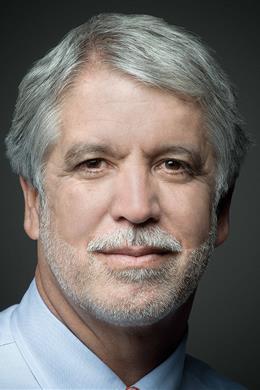
Enrique Panarosa
Enrique Panarosa, born on September 30, 1954 in Washington, D.C., is a Colombian politician. He served as the mayor of Bogota from 1998 to 2001, and was re elected as mayor in 2015 for a term of 2016-2019. He is also a journalist and urban and transportation policy advisor. In 2009, Panarosa was elected as the Chairman of the ITDP Board of Directors of the Institute for Transport and Development Policy, a non-profit organization headquartered in New York. In 2015, Panarosa resigned from the board of directors and became the mayor of Bogota again. Panarosa's father Enrique Panarosa Camago is a former United Nations Minister of Agriculture and Colombia's Permanent Ambassador to the United Nations. He attended a rural school in the Kingdom of Great Britain during his childhood, and at the age of 15, his family moved to the United States due to his father serving as Colombia's ambassador to the United Nations. He completed his Bachelor's degree in Economics at Duke University with a partial football scholarship and also minored in history. Panarosa's political career began while working for a state-owned water supply company and participating in the Bogota youth group organized by liberal presidential candidate Luis Carlos Galan. Afterwards, he supported the local political leader of Kundinamaka, Julio Cesar Sanchez; With the help of Sanchez, he was elected as the deputy director of the department. In 1986, he was selected by one of his father's friends, Virgilio Barco, to serve as an economic advisor. In 1990, he ran for Congress without the support of any politicians and received 22000 votes. He only held this position for a year, but during these 12 months, he put forward many initiatives and successfully passed the reform bill, becoming famous as a newcomer to Congress. In 1991, he decided to adopt the same strategy as running for Congress to run for the mayor of Bogota. Without the support of any politicians, Panarosa traveled the city on foot, by bike, or by public transportation, engaging in face-to-face communication with the people. As the mayor of Bogota with a population of 7 million, Panarosa profoundly changed the city. Under his leadership, Bogota transformed from a city without direction, self-esteem, and hope to an international city model with high quality of life, improved mobility, fairness, and sustainability. He has won many important international awards, including the Golden Lion Award at the Venice Biennale and the Stockholm Challenge Award. Panarosa is a leader in the field of urban development, and his vision and initiatives have had a significant impact on global policies. He focuses on consulting on sustainability, mobility, fairness, public space, and quality of life, and calls on organizations and leaders to translate ideas into practical projects. Panarosa has delivered speeches at numerous international forums, covering topics such as environment, urban design, policies, and universities. He has also served as an advisor to governments in Asia, Africa, Australia, Latin America, and the United States.
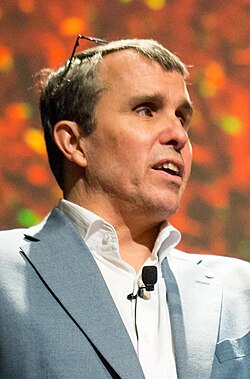
Eric Betzig
诺贝尔化学奖| (2015) | b. 1960年
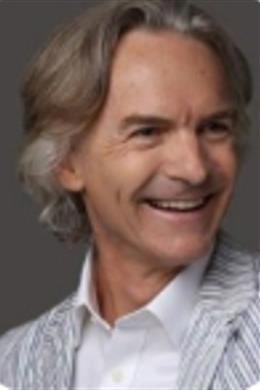
Eric Cassell
Professor Emeritus of Public Health at Will School of Medicine at Cornell University, Professor of Medicine at McGill University School of Medicine, and Professor of Medical Humanity at Baylor University. Founder of The Hastings Center. Currently, Professor Emeritus of Public Health at Will School of Medicine at Cornell University, ranked 18th in the 2018 QS Best Medical Schools in the United States, and Professor of Medicine at McGill University's top doctoral medical university in Canada, Baylor University ranked 21st as a professor of medical humanities in the 2018 QS Best Medical Schools in the United States, and New York Presbyterian Hospital ranked among the top ten attending physicians in the comprehensive ranking of the best hospitals in the United States. Member of the National Academy of Medicine and an expert at the American Medical Association. From 1997 to 2001, he served as a member of the National Bioethics Advisory Committee to the President of the United States. Doctor of Medicine, School of Medicine, New York University., Eric has conducted extensive research on medical ethics, doctor-patient communication, death care, and the essence of pain, and has published many related books, such as The Nature of Suffering And The Goals of Medicine, The Healers Art, and others. His series of books on communication between doctors and patients, titled \Talking With Patients: The Theory of Doctor Patient Communication\ and \Talking With Patients: ClinicalTechnique,\ consists of two volumes. In these two books, he analyzes doctor-patient communication issues and demonstrates how doctors use language to bring maximum benefits to patients. Eric emphasizes that patients are complex and constantly changing, and their conditions are physiological, But patients are also social, and their expressions reflect their own condition very well. He proposed that learning the art of listening and speaking is the best way to use language in medicine., Eric is also a founding academician of The Hastings Center, which was established in 1969 as the world's first bioethics research institution, studying ethical issues that arise in medicine and life science practice. This is a non-profit organization with numerous researchers from various disciplines, including philosophy, law, political science, and education, engaged in research on thorny issues such as population health, aging, and end-of-life care, as well as the risks and benefits of new technologies.
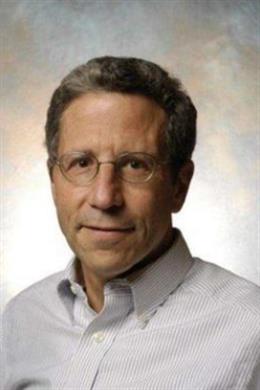
Eric Muskin
Professor at the Princeton Institute of Advanced Studies, winner of the 2007 Nobel Prize in Economics. Known as the \most respected master of international economics today\. In 2003, he became the President of the World Econometric Society. Maskin's theory is closely related to China's reform. In the mid-1980s, Chinese students who went abroad to study worshipped him, including Li Daokui, Qian Yingyi, Xu Chenggang, Bai Chong'en, and Wang Yijiang. In 2007, he was awarded the Nobel Prize in Economics for his contributions to \mechanism design theory\.
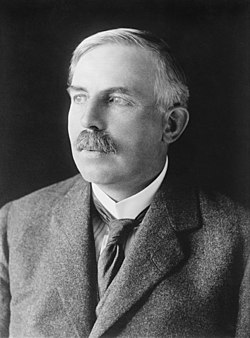
Ernest Rutherford
诺贝尔化学奖| (1904) | 1871-1937
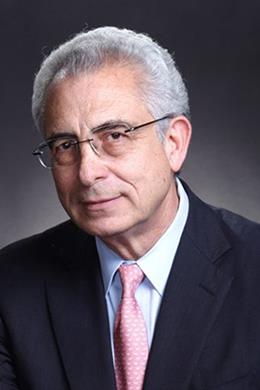
Ernesto Zedillo
Ernesto Cedillo is a Mexican economist and politician who served as the President of Mexico from 1994 to 2000. After stepping down, Cedillo became an authority on globalization, especially playing a positive role in handling the relationship between developed and developing countries. Cedillo's career began with the Bank of Mexico, the Bank of Mexico, and he was a member of the PRI, the Mexican Revolutionary Institutional Party, supporting macroeconomic policy reforms in Mexico. In 1987, he became the Deputy Minister of Planning and Budget in Mexico. In 1988, at the age of 36, Sedillo became the minister and implemented a series of scientific and technological reforms. In 1992, Cedillo was appointed as Minister of Education by then President Carlos Salinas. One year later, he resigned and ran for the presidency of Mexico with Luis Donado Carosi as a presidential candidate of the Revolutionary Institutional Party. When Cedillo first took office as president, Mexico was hit by the most severe economic crisis in history. Cedillo led Mexico through a series of reform actions, including completing measures such as the privatization of the national railway company, the Mexican Railway Authority, which ultimately helped Mexico successfully overcome the crisis. After stepping down, Cedillo served as an economic advisor in many international companies and institutions. Cedillo served as a lecturer and director at the Center for Globalization Studies at Yale University in the United States; Member of the Advisory Committee at the Millstein Center for Corporate Governance at Yale University School of Management; In 2005, he became the most influential member of the Washington financial advisory body at the G-30; Advisor to the Board of Directors of Stone Bridge International Company in the United States; In 2009, served as an external review of corporate governance for the World Bank Group; Served as a board member of Citibank in 2010; Board members of Procter&Gamble, Alcoa, Global Development Network, and Electronic Data Systems; Member of the Coca Cola International Advisory Committee; Director of United Pacific Railway Company, etc. After stepping down, Cedillo also participated in many organizations, such as joining the editorial board of the political journal of the American Quarterly to explore the relationship and development of the Western Hemisphere; Becoming a member of the Madrid Club; Serve as the Chairman of the Natural Resources Supervision Committee, etc. In July 2013, Sedillo joined The Elders, working with other global leaders to address world peace and human rights issues.
Ernst Haffin
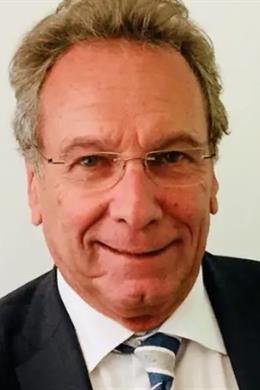
Ernst Hafen is a professor at the Institute of Molecular Systems Biology at the Federal Polytechnic University of Zurich, where Einstein graduated and previously taught. My main research expertise includes developmental biology, cell biology, genetic genetics, and more. He is the founder and president of Midata Company, Haffin, who has made many groundbreaking contributions to the development of biology and cell biology, including research on gene characterization, changes in cell and organ size during development, and more. Haffin also has a strong interest in human genetics and personalized medicine. He believes that personal control of health data can help establish better and more effective healthcare systems. Haffin is the founder and president of Midata, a company dedicated to helping citizens regain control of personal information, with a current focus on personal health data. Midata provides a non-profit collaborative access platform for citizens to securely store, manage, and control personal information. Citizens can freely choose whether to disclose personal data for medical research and clinical trials. In 2012, he and his colleagues jointly founded the Association Data and Health, which discusses legal, ethical, and social issues related to ownership of health data, The organization looks forward to developing a business model that allows individuals to benefit from personal data assets.

Ernst Otto Fischer
诺贝尔化学奖| (1973) | 1918-2007

Euler
Euler is a renowned entrepreneur who mainly serves as an internet analyst and management consultant for small and medium-sized enterprises and Fortune 500 companies, as well as a business promoter and growth partner for growing and developing companies. In 2014, he was honored as a key figure in the city by the Mayor of Miami for his contributions to corporate groups. In 1997, Euler, as one of the founders of Boxman, actively expanded into the European internet industry, making the company the largest e-commerce store in Europe to sell CDs online at that time. He was the vice president of the company's international operations at the time, responsible for promoting the company's international business and establishing local offices in markets across Europe. During his time at Boxman, Euler had the idea of creating a company that would help some companies achieve success in occupying one market after another in a way similar to the functions of record companies in the music industry. So, in 1999, Result was born, which is a company that can help companies in the telecommunications, internet, media, and entertainment industries achieve development and internationalization. From 1999 to 2008, Euler served as the CEO of Result Company, a corporate coaching internet company founded in Stockholm, Sweden. Result Company has helped countless companies achieve success in various countries by adopting new business methods and technologies. In 2008, he became the chairman of the company. So far, Result has participated in approximately 130 corporate promotion projects across Europe, the United States, and Asia. In 2005, Euler helped promote a large wireless network community FON company, mainly responsible for expanding FON company's presence in the Nordic and Russian markets. In addition, Ola and Result are also responsible for developing professional online network companies such as Qiaoxing Global in Scandinavia, Belgium, the Netherlands, Luxembourg, France, and Spain. Euler is also a frequent guest speaker at major conferences and industry events, with recent speech events including Le Web Paris, Menoka Island Technology Forum, Munich DLD Media Conference, Amsterdam Picnic, Seoul World Knowledge Forum, and restarting Copenhagen. At the same time, he is also the chairman and host of SIME, the largest internet media conference in northern Europe with a focus on digital opportunities. In 2014, the conference held events in Stockholm and Miami, respectively. Euler was named one of the top ten leading internet entrepreneurs in Europe by the Wall Street Journal in 1999, and was listed on similar lists published by Business Week and the Financial Times in 2000 and 2001, respectively. He was also invited to participate in the Davos World Economic Forum and selected as the future global leader.
Evan Rogers
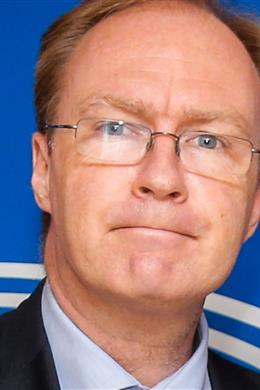
Sir Evan Rogers is a former senior civil servant in the UK and the UK Permanent Representative to the European Union from 2013 to 2017. Rogers previously served at the UK Treasury as the private secretary to Kenneth Clarke, the UK Chancellor of the Exchequer. Afterwards, he was seconded to the European Commission as the Chief Staff of Sir Leon Brittan. During the Gordon Brown administration, he served as the Director of European Strategy and Policy and the Director of the Department of Budget and Public Finance. In 2003, Rogers was elected as the Chief Private Secretary of Prime Minister Tony Blair. Three years later, Rogers resigned from the government department and became the head of Citigroup's UK Public Sector Group. In 2010, Rogers became the head of Barclays Capital's UK and Ireland Public Sector Industries Group. In 2012, Rogers returned to work in government departments and provided advisory services to the Prime Minister as the Director of the Secretariat for Europe and Global Issues. In 2013, he became a senior British diplomat for the European Union. After the Brexit referendum in June 2016, Rogers became one of the important government members of the Brexit faction.
Farah Pandith
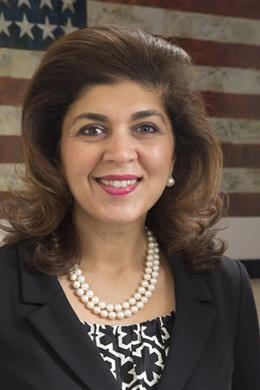
Farapandis is a pioneer in combating violent extremism. She is a foreign policy strategist, writer, and diplomatic entrepreneur who has served three US presidents. She is a member of the Advisory Committee of the United States Department of Homeland Security, a Senior Visiting Researcher at the Foreign Relations Committee, and a Senior Researcher at the Kennedy School of Government at Harvard University. In 2009, US Secretary of State Hillary Clinton appointed him as the first special representative of Muslim groups in the United States. During Hillary and Kerry's tenure as Secretary of State, Farah visited nearly 100 countries and initiated youth initiatives multiple times. She has visited thousands of Muslim youth at the grassroots level and created innovative platforms, activity initiatives, and networks for them. During his tenure in government departments, Farah received various awards, including the Outstanding Honor Award from the Secretary of State. She has served with the US National Security Council, the US Department of State, and the US Agency for International Development. She is the main founder of women's participation in public service projects, which was the first global movement launched by the US State Department in 2009 to promote women's participation in public service. Prior to the 9\/11 terrorist attacks, Farah served as the Vice President of the International Business Department of ML Strategy Co., Ltd. Farah is a senior advisor and commissioner for the CSIS New Comprehensive Strategy to Combat Violent Extremism at the Center for International Strategic Research in the United States. Her article has appeared multiple times in the New York Times, Washington Post, Bloomberg Consulting, The Guardian, and Boston Globe.

Fatima Bhutto
Fatima Bhutto gave extensive speeches on topics such as leadership, especially women, the role of violence in politics, democratic challenges, the Middle East, and South Asia. Bhutto was born in the Afghan capital Kabul in 1982, during a curfew period. Her father, Murtazar, was exiled abroad due to the execution of his grandfather, Zolfikar Ali Bhutto, the first democratically elected head of state in Pakistan, by the military government. She grew up in Syria and Pakistan. She has published articles in numerous publications such as the Financial Times, Granta, Vogue magazine in the UK and India, New Politician, Porter, National Daily, and Guardian. She has published a total of four books, and her latest non fiction book, The Song of Blood and Sword, tells the story of Pakistani politics and her family; The Shadow of the Moon novel won the 2014 Bailey Award and the 2014 Novelist Award. In 2012, she was selected as a global youth leader at the World Economic Forum, and 192 global youth leaders from 59 countries were awarded the award for their outstanding leadership, professional achievements, and social contributions.
Felicity Manz
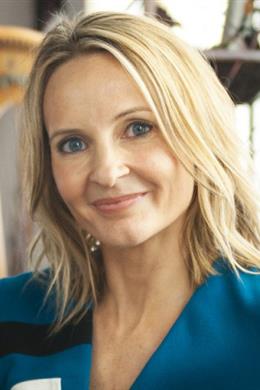
Felicity Temans is the founder and chief consultant of a cultural consulting company located in Singapore. The company is a diverse and inclusive consulting firm with expertise in cultural intelligence, unconscious biases, and global diversity management. Some of its well-known consulting partners include Visa, World Vision, Macquarie Bank, Network Investment Partners, Agile Logistics, Australian and New Zealand Certified Public Accountants, and Asian Women's Insurance Group. Felicity has over 15 years of work experience in the financial and professional services fields in Australia, the UK, and Singapore. Her recent role is as the head of Western Pacific Bank, a private bank in Singapore. At the bank, she led a multicultural team of bank personnel serving multinational clients and firsthand experienced that diversity is an essential factor in building successful leadership. Nowadays, Felicity utilizes its business acumen and cross-cultural expertise to help global organizations effectively respond to the opportunities and challenges brought by diverse labor forces and unknown markets, as well as the ever-changing competitive landscape. Felicity is the author of the upcoming book \The World: Leading the Global Market with Cultural Intelligence\ and frequently contributes to human resources and industry related publications. Since 1995, Felicity has been a member of registered accounting firms in Australia and New Zealand, holding a Bachelor's degree in Business and a Bachelor's degree in Psychology. Currently, Felicity, her husband, and two daughters have lived in Asia for up to nine years.
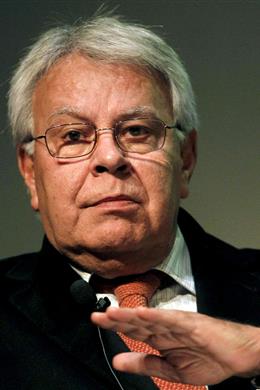
Felipe Gonzalez
Felipe Gonzalez, a Spanish politician, served as the Prime Minister of Spain from 1982 to 1996 and the First Secretary of the Spanish Socialist Party from 1974 to 1997. He is the longest serving Prime Minister in Spain to date. Gonzalez is the only child in his family to enter university and has attended law school and the Catholic University of Louvain in Belgium. Before transferring to law, he studied civil engineering at the University of Seville. After graduation, he began his legal career in Seville, specializing in defending workers' rights. In 1965, he moved to Madrid and was elected as the First Secretary of the Socialist Party in 1974. He was re elected in September 1979. He continuously expanded the party's appeal to the masses and voter base, achieving great success, making it stand out as the largest legitimate political party in the 1977 general election. Gonzalez 'gentle attitude and youthful and attractive public image helped the party achieve an overwhelming victory in the 1982 general election, following the first peaceful party rotation. At the age of 40, he became the youngest head of government in Europe, forming Spain's first left-wing government in 46 years. He was elected consecutively in 1986 and 1989, but his votes decreased. In 1993, the Socialist Workers' Party of Spain failed to obtain a parliamentary majority, but Gonzalez successfully formed a minority government. During his term as Prime Minister, he ceased Spain's participation in NATO operations, but in 1986, he supported his country's accession to the European Community. His pragmatic domestic policies were committed to reducing inflation, implementing free market policies, and promoting economic modernization. Through the promotion of economic integration between Spain and Europe through the European Community, and the transfer of several major powers to local governments in Spain, Spain's economy flourished rapidly after joining the Community, but growth slowed down after 1990, and by 1993, the unemployment rate had reached over 20%. Despite facing thorny economic problems, Gonzalez still maintained political stability and personal prestige. In 1996, he lost the general election and stepped down, transferring power to the right-wing Spanish People's Party, achieving a second peaceful political party rotation. Resigned as the first secretary of the Spanish Workers' Socialist Party in 1997. On May 22, 2007, Spain's Antena 3 selected the most important Spaniard in history, ranking him 10th.
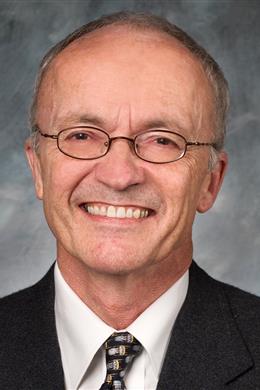
Finn E. Kydland
Finn Kidland, a Norwegian economist, was born in Norway in 1943 and graduated with a Bachelor's degree in Economics from the Norwegian School of Economics and Business Administration in 1968; I obtained a PhD in Economics from Carnegie Mellon University in Pittsburgh in 1973. He is currently a professor at Carnegie Mellon University and the University of California, Santa Barbara, as well as an associate researcher at the Delas Reserve Bank and the Cleveland Reserve Bank. Kidland's research focuses on economic cycles, monetary and fiscal policies, and labor economics. Currently, advanced economic analysis is offered to doctoral students at Carnegie Mellon University, while macroeconomics and quantitative economic analysis are taught to undergraduate students. Kidland and Prescott's innovative research analyzed the issue of economic policy formulation and the driving forces of business cycles, which not only changed economic research but also had a broad impact on economic policy, especially monetary policy formulation. In 2004, Kidland was awarded the Nobel Prize in Economics for his outstanding achievements in studying the compatibility of economic policies and the driving forces behind economic cycles. He has been a member of the Society for Economic Metrology since 1992, an editorial board member of the Journal of Dynamic Macroeconomics since 1996, a member of the Society for the Development of Economic Theory in 2012, and an academician of the Norwegian Academy of Sciences and Arts in 2005. His awards include the Alexander Henderson Award from Carnegie Mellon University in 1973 and the Outstanding Achievement Award from the Money Market Practitioners Association of New York University in 2005.

Fiona Graham
Fiona Graham is the first foreign geisha in Japan's 400 year history to be accepted. On December 19th, she officially debuted under the name Sayuki. Her major is social anthropology, which requires anthropologists to truly experience their research topics by personally participating in society. For the past year, she has been conducting anthropological field investigations at a geisha restaurant in Asakusa, one of the six oldest surviving geisha districts in Tokyo. She attended banquets as an intern and received multiple artistic training, particularly excelling at playing the Japanese flute. She obtained a PhD in Social Anthropology from Oxford University, specializing in Japanese social studies. She spent half of her life in Japan, where she studied and graduated from the oldest university in Japan - Keio University. She has given speeches in multiple universities around the world and published many works on Japanese culture. In addition, she is also an anthropological film director, and her works have been recognized by many international broadcasting companies. Pan Macmillan's book Sayuki Walking into the Willow World was published in Australia in 2008, and related documentaries are also being filmed. In 2011, Graham opened a kimono shop in Asakusa District, Tokyo. In July 2013, the Japanese Cultural Festival Hyper Japan was held in the UK, with Graham performing under the name Sayuki. In the same year, she also visited Dubai and Greece. In 2014, Graham opened a geisha bar in Kochian cho, Hokkaido, Japan. In April 2014, she was invited to participate in the annual Spring Rain Festival in Nagasaki with other geisha.
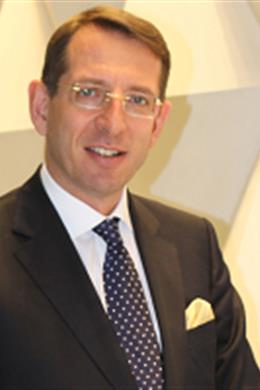
Fran Jurgen Richter
Frank Jurgen Richter, former Director of Asian Affairs at the World Economic Forum, Asian Economies, Globalization, Risk, and Future Vision. As a pivotal global figure in corporate globalization and Asian business, Dr. Fran \u00fc rgenricht's public remarks have had a profound impact on significant decisions made by businesses and governments. He founded the management consulting company Ouyasi, helping multinational companies formulate strategies and become one of the top global development companies. In his book \Tiger Leap Asian Enterprises Going Global\, he encourages institutions to achieve prosperity and development only by looking globally. He used Asia as a springboard for globalization in his early days. As a highly talented thinker and speaker, as well as a regular advisor to several major international companies, Richter is renowned worldwide for his ability to use clear future perspectives to explain his plans and proposals. Dr. Richter is the chairman of the Eurasian Global Vision Community. Ouyasi is an independent multinational organization dedicated to setting a vision for a sustainable future. The institution leverages its years of good partnerships with emerging market enterprises to create a strong cooperation platform for both emerging and developed markets. Its first-class events include the Eurasian Global Conference, as well as numerous regional forums held in China, India, Russia, and the Arab world. Before founding Eurasia, Richter was the head of the Asia Affairs Division of the World Economic Forum. Under his leadership, the Asia Summit Forum and the Davos Forum Asia Annual Conference have gradually developed into media for professional exchanges between leaders of businesses, governments, and civil society. In addition, he also has a brilliant career experience working in multinational companies in Asia and Europe. He has lived, studied, and worked in Asia for nearly ten years. He stayed in Tokyo and recently moved to Beijing, where he is responsible for managing the business of Chinese multinational corporations in Europe. Richter studied business management, economics, and mechanical engineering in Germany, France, Mexico, and Japan. He is also an active scholar who has written and edited many books on Asian economies and multinational corporations. Richter is an applied management scientist whose main areas of interest are international management and economic development. In addition, he also has a strong interest in political, economic, and geopolitical issues. Macroscopic understanding of economic institutions, especially at the corporate level, is the core topic of his public speeches. He has delivered keynote speeches at the Brookings Institution, Harvard University, the Asia Society, the Japan Society, the Royal Society for International Affairs, the Pacific Basin Economic Council, and many high-level CEO summits. His articles have been repeatedly featured in financial and regional media, such as the International Herald Tribune, Wall Street Journal, Far East Economic Review, Straits Times, China Southern Morning Post, and so on. He has interviewed multiple publishing houses and appeared in news reports such as CNN, BBC, CNBC, and VOA.