演讲者
704 位演讲者
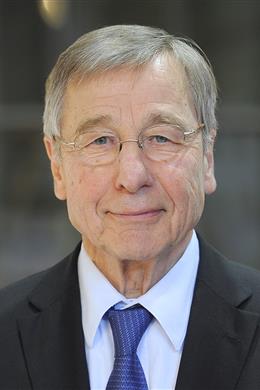
Wolfgang Clement
Wolfgang has served as an economic, labor, and political leader for many years, able to examine the labor market from a modern perspective and provide practical advice to global businesses and political leaders. Wolfgang was a famous economist with over forty years of work experience in the German government. From 1998 to 2002, he served as the governor of North Rhine Westphalia and from 2001 to 2005, he served as the Minister of Economy and Labour for former German Chancellor Gerhard Schroeder. During Schroeder's reign, he faced challenges in implementing the main employment reforms proposed by the Harts Committee. Despite losing his reputation in the Social Democratic Party, his resolute work style has been praised by many economists. Before entering politics, Wolfgang obtained legal qualifications and worked as a political journalist and editor for nearly 20 years, mainly reporting on major political and economic changes in Germany. As a pragmatic realist, Wolfgang is one of the most interesting figures in the cabinet, and he has been repeatedly designated as the only successor to Gerhard Schroeder. His frank and slightly arrogant nature made him a very popular political party leader in the media. Wolfgang served as a member of the Social Democratic Party for 38 years before withdrawing from the party in 2008. He has received multiple awards for his political activities, including the 2001 European Trade Award. Clement is currently a member of the RiverRock Advisory Committee, a London based asset management and securities brokerage firm.
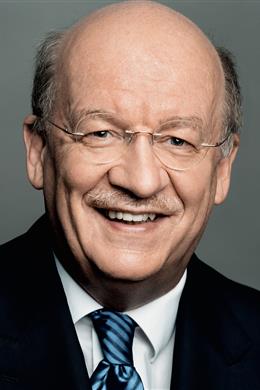
Wolfgang Walster
Wolfgang Walstein is the director and CEO of the German Artificial Intelligence Research Center (DFKI) and a professor of computer science at the University of Salzburg& Nbsp; He has published over 200 technical papers and 12 monographs, covering areas such as user modeling, spoken dialogue systems, mobile and multimodal user interfaces, semantic web, and the Internet of Things and services& Nbsp; In 2001, the President of Germany awarded Walter the highest personal science award, the German Future Prize, in recognition of his contributions to intelligent user interfaces& Nbsp; He is a foreign member of the Nobel Prize Evaluation Committee of the Royal Swedish Academy of Sciences (Stockholm) and an official member of the German National Academy of Sciences (Leopoldina), which was established in 1652& Nbsp; He is the executive director of the International Institute of Computer Science and EIT Digital at the University of California, Berkeley; Springer LNAI series editors and editorial board members of numerous top international CS journals. In 2013, Walter was awarded the Donald E. Walker award by the International Joint Conference on Artificial Intelligence (IJCAI) for his significant contributions to the field of artificial intelligence.
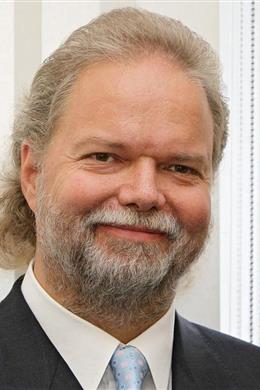
Woods Krassen
Woodcraft is Germany's most charismatic business leader and expert in turning losses. He has held executive positions in several of the most famous companies in various industries in Germany. He is currently the Chairman of the Supervisory Board of Syntellix AG, a member of the Supervisory Board of AWD Holdings AG, an Honorary Professor at the Institute of Control at the University of Hanover, and also a Professor of Management at the GISMA Business School, as well as a member of Consejo de Administration, RCD Mallorca SAD, and Palma. After graduating from the universities of Hanover and Oxford in economics, Woods began his career at McKinsey. Prior to serving as a director of SEAT Volkswagen Group, he worked at Ford Europe and later at Volkswagen, where he served as the R&D Director. In 2003, he worked at Mercedes Benz in Germany and was responsible for a major restructuring of the company. Subsequently, he worked for EnBW, the third largest energy company in Germany, which turned the company from losses to profits. He sold off a batch of the company's business, but relied on only 18000 employees to create an annual revenue of 18 billion euros. He has served as a senior manager in many other positions in the energy industry and briefly served as the chairman of Solar Millennium AG in 2010. Since 2001, he has been a professor at the University of Hanover and has been invited by German Chancellor Schr \u00f6 der to provide valuable suggestions for innovation in German industry.
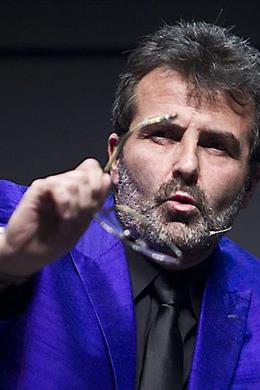
Xavier Sala I Martin
Xavier Sara I-Martin is one of the world's leading figures in economics. He is a professor of economics at Columbia University; Chief Economic Advisor, World Economic Forum, Davos; Founder and author of the Global Competitiveness Report; 40th President of Barcelona Football Club. As an economist, Sarah E. Martin is an authority on economic growth and development, macroeconomics, social security, public finance, monetary theory, and health economics. The annual Global Competitiveness Report released by the World Economic Forum is based on the Global Competitiveness Index designed by Sarah E. Martin in 2004, which measures a country's overall competitiveness from 12 aspects. Sarah E. Martin graduated from the Autonomous University of Barcelona in 1985, obtained a Master's degree in Literature from Harvard University in 1987, and a Ph.D. in Philosophy from Harvard University in 1990. Currently serving as a professor at Columbia University, he has been consistently selected by students as a No1 Outstanding Professor. He teaches macroeconomics to undergraduate students, innovation courses to MBA students, and economic growth and development to doctoral students. He is also a visiting professor at the University of Pompeii Fabra in Spain and has taught at Yale University and Harvard University. He has also served as an advisor to the International Monetary Fund and the World Bank, as well as a researcher at the European Policy Research Center. Since 2004, Sarah E. Martin has also served as a member of the Advisory Committee of the Spanish Association of Insurance Companies and the Spanish Telecommunications Company. Since 1991, he has been a researcher at the National Bureau of Economic Research (NBER) in the United States, and since 1995, he has been the deputy editor in chief of economic growth in international economic journals. Sara Yi Martin also served as a board member and financial director of Barcelona Football Club, and served as the club's president in 2006. In 2004, he planned to establish the Tomorrow Foundation for Africa, specifically to support the economic development of impoverished areas in Africa. He is also the founder of the non-profit organization CEO Without Borders. The book \Economic Growth\ co authored by Sarah E. Martin and her teacher Professor Robert J. Barrow in 1995 was the world's first textbook on economic growth. Since its release, this book has become a classic textbook and essential tool book in the field of economic growth. Economic growth has systematically reviewed and introduced all important growth models to date, presenting a history of the development of modern economic growth theory.

Yang Peishan
Yang Peishan, General Partner of 500 Mobile Collective Microfund, mainly focuses on investing in mobile, virtual reality, augmented reality, IoT, and consumer internet startups. Previously, Yang Peishan was the Vice President of Marketing and Business Development for Dolphin Browser, a mobile browser supported by Sequoia Capital with over 1.5 billion installations worldwide. She founded the seed investment company RightVentures, mainly investing in mobile and consumer internet companies. Yang Peishan is also a senior entrepreneur who has worked with companies including Siebel, Oracle, Autodesk, and AT&T. Her investment targets include Penrose, Cryworks, SIlk Labs, Piper, Apptopia, Mobile Action, Andy OS, Quickly, Powercore, Pack, Ingrain, Hooked, Switch, Bento, DayDayCook, Palantir, Fleksy acquired by Pinterest, and Human acquired by Mapbox.
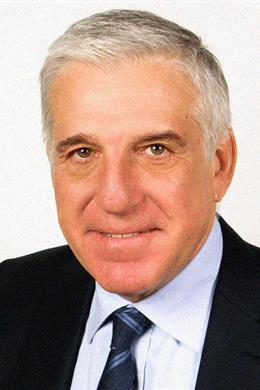
Yanos Papantoniu
Yanos Papantoniu studied economics at the University of Athens in Greece and the University of Wisconsin in the United States, and studied history at the Ecole des Hautes Etudes School of Advanced Research in France. He holds a PhD in economics from the University of Cambridge in the United Kingdom. From 1988 to 2007, Papantoniu served as a member of the Greek National Assembly; From 2001 to 2003, served as the Minister of National Defense; From 1996 to 2001, served as the Minister of National Economy and Finance; Served as the Minister of National Economy from 1994 to 1996; From 1993 to 94, served as the alternate minister of the national economy; In 1989, he was appointed as the Minister of Trade; From 1985 to 89, he was appointed as the Deputy Minister of the National Economy. During his tenure as Minister of Economy and Finance, he established a close partnership with the European Economic and Financial Affairs Council ECOFIN to prepare for the launch of the euro in Greece. In September 1998, the European currency magazine EUROMONEY gave him high praise, stating that he had successfully made Greece a candidate member of the European Union's single currency system. Prior to this, Papantonio worked at the Organization for Economic Cooperation and Development (OECD) in Paris. He was a member of the European Parliament and an advisor to the Greek Prime Minister on European Economic Community affairs and integration. In 1999, he was elected as the Chairman of the Board of Directors of the European Bank for Reconstruction and Development (EBRD). From 2009 to 2010, he was a senior researcher at the Greek Observatory at the European Institute of the London School of Economics. In 2013, he was a Bosch Public Policy Researcher at the Transatlantic Academy in Washington, D.C. Currently, Papantonio is the chairman of the Center for Progressive Policy Research, KEPP, an independent think tank headquartered in Athens. He has published numerous books and articles on political and economic development in Greece, Europe, and around the world.
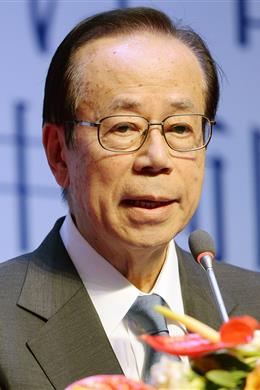
Yasuo Fukuda
72 year old Yasuo Fukuda is a political elite, and his father is Prime Minister Takeo Fukuda. When Yasuo Fukuda was selected to replace Shinzo Abe, everyone believed that he could use his peaceful hand to quell the turmoil caused by Abe. But his government has long been unpopular, and his proposals are often obstructed by the opposition controlled House of Lords. Undoubtedly, Mr. Kang Fu is facing a difficult struggle. On September 1st, the news of his dismissal announced at an emergency press conference late at night surprised analysts - among them Jeff Kingston from Tokyo Temple University stated that he was completely stunned. Despite receiving political education from a young age, Yasuo Fukuda did not show much interest in professional political science during his youth. He spent the first 17 years of his career working as a salaried employee at an oil company. Since the younger brother, who was raised by his father as an heir, became seriously ill, everything has changed. Kangfu became his father's assistant, and after his father abdicated, he became a member of parliament. As a widely supported senior member of the party, Kang Fu served as the Chief Cabinet Secretary and was the highest government spokesperson under the leadership of Abe's predecessor, Junichiro Koizumi. When he finally announced his candidacy for Prime Minister, all major ruling parties came forward to express their support. Mr. Konfu is seen as a dove of peace in foreign policy, avoiding Abe's ambitious policies such as revising Japan's peace constitution to promote overseas military deployment. He emphasized the necessity of maintaining friendly relations with China and received the first batch of Chinese dignitaries visiting Japan in a decade. He refused to visit the controversial Yasukuni Shrine, which Japan's neighbors consider a symbol of Japan's past militarism. He adopted a more flexible stance towards North Korea, resolving the controversy over Pyongyang's kidnapping of Japanese nationals in the late 1970s and early 1980s.
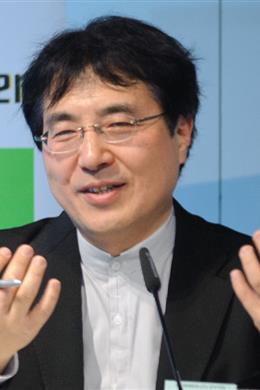
Yoshiya Iida
Dr. Satsuya Iida is the director of the Japan Institute for Sustainable Energy Policy, a non-profit independent research institution located in Tokyo that focuses on sustainable energy policies. He is a member of the Nuclear Accident Protection Committee and the Japanese Government Energy Research Committee. He is known as Mr. Nemoto in Japan and has been one of Japan's top opinion leaders for the past five years. He advocates for a new generation of energy policies, especially renewable energy. In addition to holding positions at the Sustainable Energy Policy Research Institute, he has also been appointed as a member of the Energy Policy and Renewable Energy Policy Committee of the Ministry of Economy, Industry and Trade; At the same time, he is also a member of the National Environmental Council of the Ministry of Environment. In September 2011, Zhe also established the Japan Renewable Energy Foundation, which gathered over 100 experts from around the world to analyze and promote the challenges faced by renewable energy, and provide policy recommendations for the new Japanese government. He has served as a researcher\/engineer in the Japanese nuclear industry, as well as a policy coordinator for the power supply and nuclear industries. His books include Nordic energy democracy and post nuclear Fukushima energy policies.
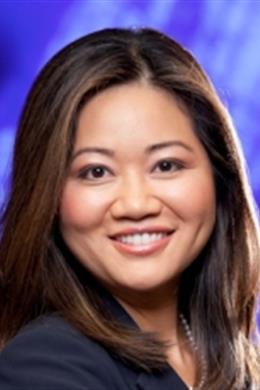
Yue Linda
Linda Yueh is the BBC's chief financial correspondent and host of Talking Business with Linda Yueh. She is considered a leading global expert on the Chinese economy. Linda is an adjunct Professor of Economics at St Edmund's College, Oxford and London Business School, and a visiting scholar at the School of Economics, Peking University. She runs the China Development Centre (CGC) at St Edmund's College, Oxford, and is a partner in the Centre for Economic Performance (CEP) and the Centre for International Affairs, Diplomacy and Strategic Studies (IDEAS) at the London School of Economics and Political Science. Prior to that, she was a corporate attorney at Bovis & Weiss, a leading law firm in the United States, where she was responsible for the New York, Beijing and Hong Kong markets. She was previously a financial editor at Bloomberg TV, where she hosted Economic Edge. Linda is an extensive author and editor of the Routledge Economic Growth and Development series, one of the world's most influential academic publishing houses. Her books include Macroeconomics, co-authored with Graeme Chamberlin, which is recommended by the UK government as an economics textbook; Globalisation and Economic Growth in China, with Yang Yao; Globalisation and economic Growth in China; The Law and Economics of Globalisation: New Challenges for a World in Flux, Ed. The Law and Economics of Globalisation: New Challenges for a world in Flux; The Future of Asian Trade and Growth: Economic Development with the Emergence of China, Editor-in-Chief; The future of Asian Trade and Growth: Economic Development with the Emergence of China; China and Globalisation: Critical Concepts in Economics, Ed. China and Globalisation: Critical Concepts in Economics; Enterprising China: Business, Economic, and Legal Developments Since 1979, 12 case studies; Enterprising China: Business, Economic, and Legal Developments since 1979, 12 case studies; And The award-winning Economy of China. Her latest book is Development in China: Making China an Economic Superpower #39. s Growth: The Making of an Economic Superpower. She is a member of the Advisory Board of OMFIF, the official forum of international monetary and financial institutions, and has long advised organizations including the World Bank, the European Commission, the Asian Development Bank, and the World Economic Forum. Linda is a member of JP Morgan Asian Investment Trust and Baillie Gifford #39; A non-executive director of s Scottish Mortgage Investment Trust, a board member of London Partners' official promotional agency in London, she is also an adviser to the British Chambers of Commerce BCC.
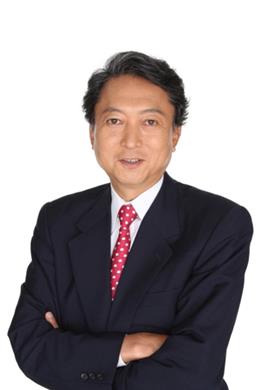
Yukio Hatoyama
Yukio Hatoyama was the first Democratic Prime Minister in modern Japan. Yukio Hatoyama pursued a foreign policy centered around Asia, committed to establishing more friendly relations with neighboring East Asian countries. He is also committed to deepening economic integration in East Asia, encouraging the establishment of a free trade zone by 2020, and proposing to use Haneda Airport as a 24-hour international flight hub. China Japan relations have also heated up under the efforts of Yukio Hatoyama. The Daily News reported that the two countries held high-level discussions on further mutual visits to promote reconciliation on historical issues. China aims to alleviate anti Japanese sentiment among the Chinese public. Yukio Hatoyama apologized for the crimes committed by Japanese soldiers during his visit to Nanjing during the Sino Japanese War. Yukio Hatoyama has promised to significantly reduce greenhouse gas emissions. He stated that compared to 1990, the target of reducing emissions by 25% will be achieved by 2020, which is the most ambitious emission reduction goal set by all industrialized countries. His speech was widely welcomed at the United Nations, highlighting his leadership role in climate change. Although he served as Prime Minister for less than a year, he had already achieved remarkable results when he left. The first principle of governance is friendly diplomacy. Hatoyama advocates that diplomacy should consider how to build relationships and enable countries with different values to achieve coexistence, mutual prosperity, and self-reliance. Secondly, amend the Constitution. Hatoyama is an active constitutional revisionist. He believes that the constitutional provisions deviate from political reality, depriving Japan of its realistic political choices, and losing the trust of the international community. Therefore, it is necessary to redefine the constitution in the new international environment. Thirdly, regarding the issue of Japanese war crimes, from 1999 to 2006, Hatoyama, along with members of the Communist Party and the Social Democratic Party, proposed the bill to establish the Permanent Peace Investigation Bureau four times in parliament, but all three times became invalid. To promote the bill, Hatoyama also led the establishment of a cross party parliamentary alliance. This bill requires the establishment of a permanent peace investigation bureau at the National Library of Congress to investigate the war crimes committed by Japan from the July 7th Incident to the surrender and defeat. Fourthly, regarding the issue of the Yasukuni Shrine, Hatoyama has always opposed the Prime Minister's visit to the shrine. Prior to the 2009 election, he once again made it clear that if he became the Prime Minister, he would never visit the shrine and would also constrain the visits of his colleagues. Yukio Hatoyama emphasized Japan's right to military self-defense, while criticizing Japan's current foreign policy for overly relying on Western allies such as the United States. Hatoyama Yukio once stated that although the Japan US security treaty remains the cornerstone of Japan's foreign policy, Japan cannot forget that it is located in Asia and must be committed to consolidating economic cooperation and security in the region. From January 15th to 18th, 2013, he visited China in his personal capacity and visited the Nanjing Massacre Memorial Hall, becoming the third Japanese politician to visit the museum. He also apologized twice for the atrocities committed by the Japanese army against China. He stated that he had visited the Nanjing Massacre Memorial Hall and personally faced numerous historical facts. From photos, he saw the Japanese army killing innocent civilians in the city and also read how the Japanese media praised these atrocities at that time. He said that as a Japanese civilian, I would like to express my apologies again. He believes that,
Yves Chauvin
诺贝尔化学奖| (2005) | 1930-2015
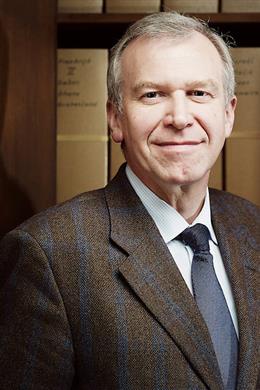
Yves Leterme
From 2008 to 11, Evelytem served as the Prime Minister of Belgium. He has extensive political, economic, and international relations experience, and has held many important domestic and international roles. After retiring from Belgian politics, Letterme was appointed as the Deputy Secretary General of the Organization for Economic Cooperation and Development (OECD) in Paris, where he held the position from 2011 to 2014. In 2014, he was appointed as the Secretary General of the International IDEA, an intergovernmental organization in Stockholm. In the early stages of his career, Letem held various positions in various departments of the Belgian government. After becoming a city councilor in his hometown of Ipur, he served as a member of the House of Representatives, chairman of the group, leader of the opposition party, and CDamp of the Flanders Democratic Party; Secretary General and Chairman of V, Chief Minister and Minister of Agriculture of the Flemish Government, Federal Senator, Deputy Prime Minister, Minister of Budget and Mobility, Minister of Foreign Affairs, and Prime Minister positions. During the Prime Minister's tenure, Belgium served as the rotating president of the European Union. Although Letterme gave a French name, he was proficient in Dutch, French, and English. Throughout his long political career, he has been fighting for the interests of Flanders and the Flemish language.
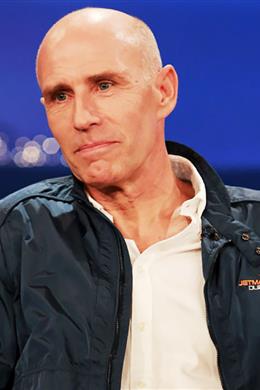
Yves Rossy
Ivrosi, also known as the Flying Man, was a Swiss pilot, explorer, and inventor. He is the only person in aviation history who flies with the wings of a jet plane. He used his incredible inventions to fly over the English Channel, the Grand Canyon, Rio de Janeiro, and Mount Fuji. Rossi invented a system that includes a semi rigid flying carbon fiber wing backpack. It is an engine system that spans about 24 meters and is improved from a large fuel material engine mode, driven by four P200 turbojet engines. He was able to fly at a high speed of 190 miles per hour, holding a throttle controlled jet suit in his hand, climbing 4000 meters and flying for up to 16 kilometers. He is currently developing a parachute, which will allow him to fly at a minimum altitude of 200 meters. Rossi's career began as a Swiss fighter pilot and later worked as a pilot for two Swiss airlines. In 1993, he began to consider the method of not using airplanes for flight. His dream at that time was to design a system that would allow him to fly in the most natural way possible. In 2008, Rossi made his first flight in Switzerland. He jumped up and down at an altitude of 8000 feet and used wings powered by four jet engines to propel him out for 5 minutes, flying over the Swiss Alps. In September 2008, he successfully flew from Calais to Dover, France, becoming the first person to cross the English Channel, flying the entire distance of 22 miles. In 2010, Rossi flew together with two aircraft formations for the first time. He jumped out of a Pilatus PC-6 at an altitude of 2500 meters and then approached the Boeing Steamans aircraft of two lark aerobatic squadrons. Rossi later completed his first flight in the United States, flying for 8 minutes at an altitude of 200 feet at the edge of the Grand Canyon in 2011. A year later, he once again created the miracle of flying from Mount Corcovado to landing on Copabana Beach in Rio de Janeiro. In 2013, he made his ninth leap over Mount Fuji. Rossi is adept at using the infinite energy he gains from experience and lessons to inspire the audience to achieve their goals, making people fly in his way. In his speech, he will talk about his unusual travels and how to achieve anything with a can do attitude. In his speech, he will mention his efforts in the air, full of drama, attracting the audience, and gaining inspiration from them.
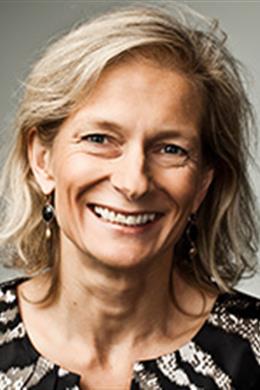
Zanny Minton Bandos
In February 2015, Zanny Minton Beddoes was appointed as the editor in chief of The Economist. She used to be the business editor of the magazine, responsible for editing the finance, economy, and technology sections. From 2007 to 2014, Minton Beddoes served as an economics editor in Washington, D.C., where he guided the magazine's global economic reporting. She has written special reports on the world economy, Germany, Latin American finance, global finance, and Central Asia. Minton Beddoes joined The Economist in 1994 after serving as an economist at the International Monetary Fund for two years. Previously, she served as an advisor to the Polish Minister of Finance and a member of a research group led by Professor Jeffrey Sachs of Harvard University. Minton Beddoes is a frequently invited commentator for television and radio programs on both sides of the Atlantic, including Bill Maher Show American Home Theater, HBO, Fareed Zakaria Navigation Fareed Zakaria GPS, CNN, News Night, BBC, Newsweek, PBS, NBC Finance Channel, and Public Interest National Public Radio, NPR, etc.
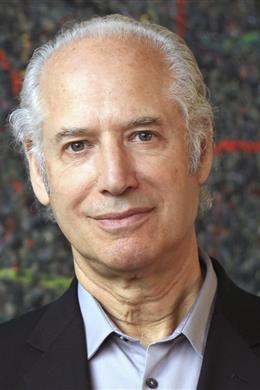
Zev Siegl
Jeff Siegel is the co founder of Starbucks Coffee Company, which has now become one of the world's most famous brands. In 1971, Sig, friend and mentor Jerry Baldwin, and author Gordon Bauk realized their passion for coffee and founded Starbucks Coffee Company. The inspiration for the company name comes from the novel Moby Dick, which evokes a romantic history of high sea adventures and early coffee traders' maritime traditions. Their mission is simple, as they offer customers some of the world's best freshly roasted coffee beans from their first store in the famous Pique Market in Seattle, in order to celebrate the rich tradition of coffee and create a sense of inheritance in the coffee shop. Sig used to be a history teacher, but later became the only employee employed by Starbucks Coffee Company in its early days. In 1980, Siege resigned from Starbucks after serving as Vice President for 10 years. At that time, the company had expanded and developed to have six stores and a large wholesale business in the Seattle area. After leaving Starbucks, Siege became a serial entrepreneur, opening Quartermaine Coffee Roasters in Washington, D.C., Peerless Pie in Seattle, and recently BuckleUp. He also established his own consulting firm, mainly serving small business owners and aspiring entrepreneurs, providing advice on the development needs, financial forecasts, planning, private equity issuance, and applying for bank loans for investing in new companies. From 2004 to 2012, Sige served as the Chief Advisor for the Small Business Development Center in Southwest Wang County, Seattle. During his eight years in office, he has provided development advice to over 500 entrepreneurs and numerous small business owners. Siege is passionate about motivating and cultivating young entrepreneurs. He shared his work experience as one of the founders of Starbucks and many other entrepreneurial stories, conveying many practical and profound insights on how to build a successful enterprise. Sige helps aspiring entrepreneurs open up a path to becoming successful business owners by setting a vision, identifying mentors and partners, obtaining funding, establishing a business, developing products, and launching products.
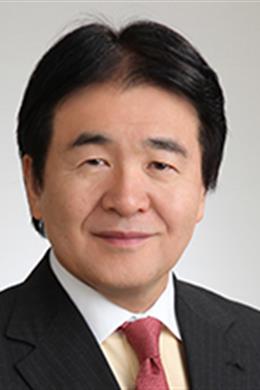
Zhuzhong Pingcang
Heizo Takenaka joined the government of Prime Minister Junichiro Koizumi in 2001. During this time, he served first as Minister of Economic and fiscal policy and then as Minister of Financial Services. He later served as Minister of Postal Service Privatization and Minister of the Interior and Communications. He is also a world-renowned economist. Takenaka worked closely with Prime Minister Koizumi on a series of Reform initiatives that they called the Koizumi Takenaka Reform Tokenaka Reform. During this period, he reformed and privatized Japanese Postal Saving Yucho, then the world's largest financial organization. Before that, he dealt with the nonperforming loan activities of some of Japan's major banks, which had hobbled the economy for more than a decade. During his tenure, real gross domestic product grew by an average of 22 per cent, while shares of Japanese companies rose by an average of more than 80 per cent on the back of positive investor sentiment. Takenaka worked hard to restructure the public finances, eventually leading to a dramatic improvement in the underlying fiscal balance, from a budget of Y28tn when he took office in 2002 to Y6tn in 2006. A nine percent increase in the total savings will be the same as in the consumption tax. Early in his career, he joined the Japan Development Bank and then began his academic career as a visiting scholar at Harvard University and the University of Pennsylvania. In 1998, Takenaka was appointed as a member of the Prime Minister's Economic Policy Advisory Board of the Economic Strategy Council. In 2000, he was appointed to the IT Policy Advisory Committee of the Prime Minister's IT Strategy Council. Takenaka returned to academia after serving as a minister. He is currently a professor at Keio University and appears frequently on television and radio. He is the director of the Global Security Research Institute. He also serves on several advisory panels and committees, including the Japan Center for Economic Research, JCER Senior Fellow, Academyhills Director and Pasona Group Inc Chairman.
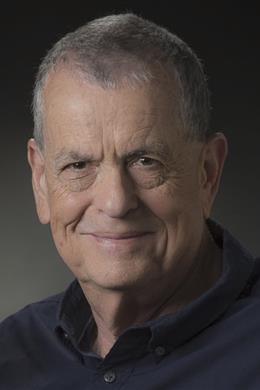
aaron ciechanover
Aaron Ciechanover was born in 1947 in Haifa, Israel and is currently an outstanding research professor at the Israel Institute of Technology in Haifa. He obtained a Master of Medicine degree from Hebrew University in Jerusalem in 1971 and a Doctor of Medicine degree in 1973. From 1973 to 1976, he entered the military and served as a military doctor. He then continued his academic career and obtained a PhD in Biological Sciences from the Medical Department of the Israel Institute of Technology in 1982. Here, as a graduate, he and Dr. Avram Hershko, as well as Dr. Irwin Rose from the Fox Chase Cancer Center in Philadelphia, USA, jointly discovered the covalent binding phenomenon between ubiquitin proteins and their corresponding target proteins during degradation. They cracked down on the principle of this binding, elaborated on the general protein lysis function of this mechanism, and also proposed a model to determine the occurrence of a specific protease based on this change. As a postdoctoral researcher, he and Dr. Harvey Lodish of the Massachusetts Institute of Technology continued their research on the ubiquitin system and made other important discoveries. During this period, he gradually realized that ubiquitin mediated protein hydrolysis plays an important role in many cellular physiological processes, and deviations in this system may form the pathogenesis of various diseases, including certain malignant tumors and neurodegenerative diseases. Later, the system became an important platform for drug development. Aaron Chehanovo has won multiple awards, including the 2000 Abelesk Prize, the 2003 Israel Prize, and the 2004 Nobel Prize in Chemistry; Obtained jointly with Hershko and Rose. Chehanovo is also a member of many societies, including the Israel Academy of Sciences and Humanities, foreign members of the American Academy of Arts and Sciences, the American Philosophical Society, the National Academy of Sciences, foreign associate members of the National Academy of Medicine, the Vatican Academy of Sciences, and CAS of the Chinese Academy of Sciences; Foreign members and foreign members of the Russian Academy of Sciences.
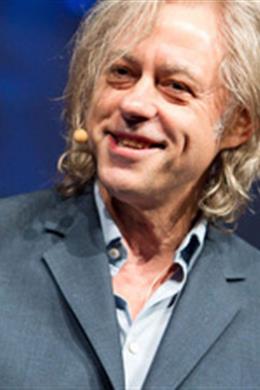
bob geldof
Bob Gildoff is from Ireland and is a member of the original rock band The Boomtown Rates. For most of the past 20 years, he has been dedicated to awakening people's awareness and understanding of impoverished Africa, calling for people to pay attention to and save African refugees struggling on the brink of death, and writing a compassionate single. Do they know that today is Christmas?, And raise funds for African disaster victims through charity sales. On July 13, 1985, at Bob's call, a massive LIVE8 charity concert was held simultaneously in London and Philadelphia, raising $80 million, and Bob was nominated for the 1986 Nobel Peace Prize. The largest charity concert in history, LIVE8, which ended in July 2005, set a record for being held simultaneously in ten major cities worldwide. Bob was also one of the initiators and main organizers of LIVE8, with the aim of creating a fairer global trade environment. Swedish parliamentary member Gene Simmonson said that Bob successfully drew attention to the problems of poor African countries and forced major country leaders to take action to declare war on poverty.
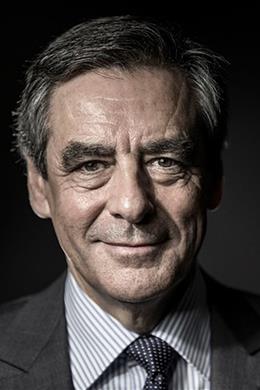
francois fillon
Fran \u00e7 ois Fillon was born on March 4, 1954 in the western city of Le Mans, France. He is a member of the ruling People's Movement Alliance and holds a doctoral degree in public law and political science. In 1981, he was first elected as a member of the National Assembly and was the youngest member of parliament at the time. He has since been re elected multiple times. In March 1993, Fillon first entered the French government and served as the Minister of Higher Education and Research within the government. In May 1995, he served as the Minister of Information Technology and Posts and Telecommunications. From November 1995 to June 1997, he served as the ministerial representative responsible for postal, telecommunications, and space issues at the Ministry of Industry, Postal, and Telecommunications. In May 2002, Fillon joined the Lafarlane government as Minister of Social Affairs, Labour, and Mutual Aid. As soon as he took office, he embarked on the reform of the French pension system. Due to the significant reform efforts, the reform he implemented is known as the Fillon Reform. From March 2004 to June 2005, Fei Yong served as the Minister of National Education, Higher Education, and Research. During his tenure, he made some reforms to the French education system. At the end of May 2005, the EU constitutional treaty was rejected in a French referendum, and then Prime Minister Raffarin resigned. Fillon also left the cabinet. After leaving the cabinet, Fillon began to devote himself to the preparation of the People's Movement Alliance led by Sarkozy for the 2007 presidential election and served as his political advisor. He actively supported Sarkozy's preparation for the presidential election and became the chief high candidate in his presidential campaign, contributing greatly to his victory in the election. In May 2007, French President Sarkozy appointed Fillon as Prime Minister. On June 18 of the same year, Fillon submitted his government resignation to President Sarkozy, who subsequently appointed him as the new Prime Minister. On November 14, 2010, Fillon, who resigned from his position as French Prime Minister, was reappointed as Prime Minister by President Sarkozy. Resignated in May 2012. Feiyong is known for its courage in reform and ability to engage in dialogue with various sectors of society. He enjoys literature, enjoys mountaineering activities, and has a passion for racing. The book 'France can withstand the truth' by him is quite a bestseller. In April 2017, Fillon represented the center right wing led by the Republican Party in the presidential election, ranking third with a vote rate of 2001%.
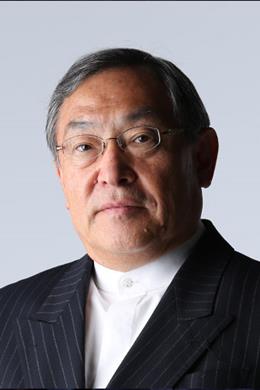
kenichi ohmae
Kenichi Ohmae has written over 100 books, including groundbreaking works on the ideas of strategists. He is renowned worldwide for serving as a global strategic advisor to foreign governments and dozens of multinational corporations, and the Economist ranks him as one of the world's top five management masters. His latest English book, \The Great Future of the Global Stage,\ explores the dynamics of new regional countries - the most powerful economic systems of the future - and provides practical strategic blueprints for businesses and governments to thrive in this new environment. His milestone work strategist's ideas provide a conceptual framework and practical recommendations for integrating 3C - customers, competitors, and companies, a strategic triangle that helps maintain competitive advantage. His works also include the end of a borderless world and a nation state. Kenichi Ota served as a partner at McKinsey for 23 years, co founding McKinsey's Strategic Management Practice and responsible for McKinsey's operations in Japan and the Asia Pacific region. In 2002, he was hired as a consultant in Liaoning Province and Tianjin City, China. Kenichi Ohmae is the founder and managing director of Ohmae Associates, and has also founded other businesses. He holds important positions in many universities around the world and is currently a professor of public policy at the School of Public and Social Studies at the University of California, Los Angeles.