演讲者
704 位演讲者
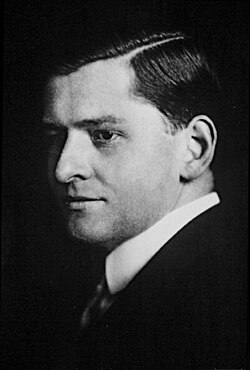
Richard Kuhn
诺贝尔化学奖| (1938) | 1900年-1967年
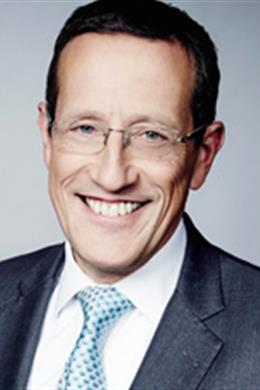
Richard Quest
Richard Quest is the chief host and renowned financial journalist of CNN International Channel, and he is the most well-known member of the CNN team. Quest's programs include Quest Means Business, CNN Business Traveler, CNN Business Traveler, CNN Marketplace EuropeCNN European Market Interpretation, and he has also hosted programs such as CNN Today and Quest. Quest Means Business breaks the monotony of commercial and financial programs, cleverly combining economics with television entertainment. Politicians and renowned entrepreneurs from various countries have appeared on the program, such as British Prime Minister Cameron, Czech Prime Minister Petnicas, European Commission President Barroso, IMF President Christina Lagarde, JPMorgan Chase CEO Jamie Damon, DreamWorks Animation CEO Jeffrey Cassenberg, Ford Motor CEO Alan Mulally, and others. Quest's unique style has made him a star figure in the field of commercial and financial broadcasting. He regularly reports on the G20 summit and attends the World Economic Forum in Davos every year. His coverage covers all financial centers and large securities markets worldwide, and he has covered all financial crises since Black Monday in 1987.
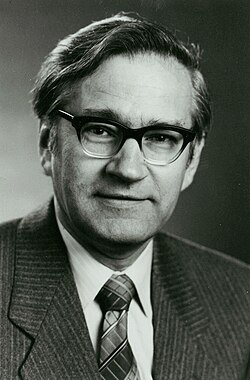
Richard R. Ernst
诺贝尔化学奖| (1985) | 1933-2021
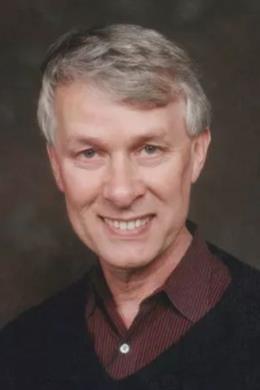
Richard Roberts
In 1993, the Nobel Prize winner in Physiology or Medicine was the Director of Research and Development at the New England Biology Laboratory, a member of the Royal Society. Richard Roberts is a biochemist and molecular biologist, a member of the Royal Academy of Sciences, and a member of the American Academy of Humanities and Sciences. He focused on the bioinformatics analysis of genomic sequences and the study of bacterial DNA methylation. He was awarded the Nobel Prize in Physiology or Medicine in 1993 for his discovery of broken genes and mRNA splicing. This discovery has changed scientists' previous understanding of evolution and played an important foundational role in the basic research of modern biology and the theory of biological evolution. It is also of special significance for medical oriented research on tumors and other genetic diseases. After obtaining a doctoral degree in organic chemistry from the University of Sheffield, Richard Roberts went to Harvard University as a postdoctoral researcher and eventually entered the Cold Spring Harbor Laboratory, where a total of seven Nobel laureates were born. It was here that he achieved his first success in limiting enzymes and was awarded the Nobel Prize. Afterwards, he joined the New England Biology Laboratory as the Director of Research and Development.
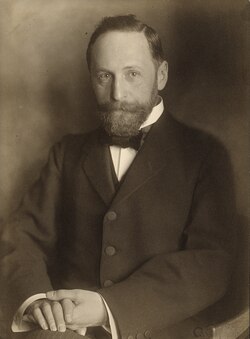
Richard Willstätter
诺贝尔化学奖| (1915) | 1872-1942

Richard Wiseman
Professor at the University of Hertfordshire and author of eccentric psychology, Richard Wiseman is a professor at the University of Hertfordshire in the UK with a PhD in psychology. He is hailed as a genius among psychologists, specializing in the exotic fields of psychology. His quirky psychology Quirkology, The Luck Factor, and 59 seconds all topped the bestseller list after publication. There are also up to 5 million fan comments on YouTube. His psychological research is most frequently cited in British media.
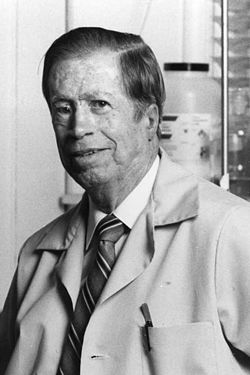
Robert Bruce Merrifield
诺贝尔化学奖| (1969) | 1921-2006
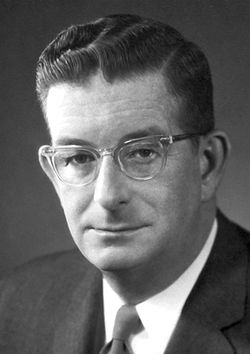
Robert Burns Woodward
诺贝尔化学奖| (1951) | 1917-1979
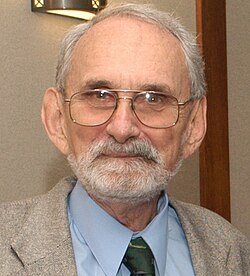
Robert Curl
诺贝尔化学奖| (1996) | 1933-2022
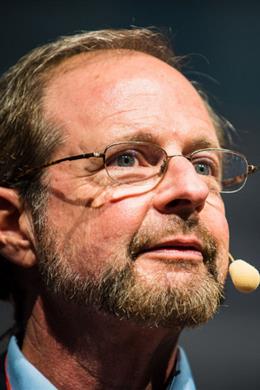
Robert Epstein
Robert Epstein is a senior research psychologist at the American Institute for Behavioral Research and Technology and former editor in chief of Psychology Today& Nbsp; Epstein has published 15 books and over 250 popular science articles on topics such as artificial intelligence, creativity, and stress management. In 2015, he published a report titled "Search Engine Manipulation Effect (SEME)" and its "Possible Impact on Elections" in the Proceedings of the National Academy of Sciences (PNAS) in the United States. The report was downloaded over 100000 times on the journal website& Nbsp; The search engine manipulation effect (SEME) is one of the largest behavioral effects discovered so far, which is less noticeable and therefore more dangerous. Epstein's research shows that the SEME effect currently determines more than 25% of national election results worldwide. In addition, he also found that this effect not only affects people's voting tendencies, but also has an impact on many factors such as attitudes, viewpoints, beliefs, and behaviors& Nbsp; Epstein also tested SEME's operant conditioning theory, which showed that daily searches make people believe that higher ranked search terms are essentially more realistic than lower ranked ones. The easier it is for people to believe this, the more likely their views on things they cannot decide on will change. In 2016, Epstein discovered that search suggestions can also be used to change public opinion and voting preferences, and he named this phenomenon the "Search Suggestion Effect"& Nbsp; Epstein is the founder and honorary director of the Cambridge Behavioral Research Center, as well as the founding director of the artificial intelligence competition "Loebner Prize", an annual Turing test that began in 1990 and is currently conducted annually.
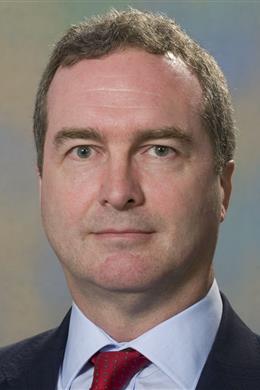
Robert Hannegan
From 2014 to 2017, Robert Hannigan served as a director of GCHQ, the largest intelligence and networking agency in the UK government. Hannigan has been working in cybersecurity and technology for a long time. He formulated the UK's first cybersecurity strategy, showcasing the UK government's ambition to create the safest living quarters and online business sector. Hannigan made great efforts to enhance the technical skills of the leadership team, and during his tenure as a director, he witnessed the biggest internal transformation of GCHQ after the Cold War. Hannigan served as the security advisor to the British Prime Minister from 2007 to 2010, providing advice on counter-terrorism and intelligence matters. As the head of intelligence, security, and recovery at the Cabinet Office of the UK government, he is responsible for providing funding and supervision to three UK intelligence agencies. For the past decade, Hannigan has lived in Belfast and, as Tony Blair's chief administrative advisor, has been involved in advancing the peace process in Northern Ireland. He is responsible for negotiating with various political parties and paramilitary personnel, and liaising with the United States, Ireland, and other governments. He is the only creative civil servant mentioned by Tony Blair in his autobiography. He has a special fondness for GCHQ's predecessor, Bletchley Park, which used to be a code cracking center and the birthplace of computers. On his first day in office at the State Administration of Communications, he criticized multiple social media companies and sparked international controversy. Hannigan made the work of GCHQ public to the media for the first time and was widely praised for uncovering the secret world of the Government Communications Administration. He has always advocated for diversity and inclusivity, which is also part of his broader campaign to improve online skills. He was the first intelligence agency leader to deliver a speech at the Stonewall Work Conference, during which he apologized to Alan Turing and other LGBT employees for their plight. Hannigan's efforts in promoting female participation in technology, BAME recruitment, and neurodiversity have been recognized. In addition, he also established the National Cyber Security Centre in the UK. As part of the Government Communications Administration, the center was officially authorized to open by Queen Elizabeth in 2017.
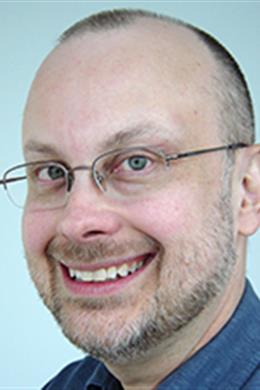
Robert J. Sawyer
Robert J Sawyer, recipient of the Order of Canada Governor General's Merit Award, is one of the only eight Canadians to have won the Hugo Award, Nebula Award, and John W Campbell Memorial Award for Best Science Fiction of the Year. He is also the only Canadian to receive this honor. Rob Rob was born in Ottawa in 1960 and first sold his work in 1980. In 1982, he became a salesperson at Bakka Books in Toronto. In the 1982-1983 academic year, he became a teaching assistant at the School of Radio and Television Arts at Ryerson School of Radio and Television Arts, and later became a full-time freelance writer since 1983. He holds a Bachelor's degree in Applied Arts from Ryerson University in Toronto's Department of Radio and Television Arts in 1982 and two honorary doctoral degrees from Laurentian University in Canada in 2007, and another from the University of Winnipeg in 2014. According to the Locus Index to Science Fiction Awards, his novels have won more awards than anyone else in the history of science fiction and fantasy. Rob Rob has sold 23 novels to some major New York publishers, including Future FlashForward, which is the basis for ABC's TV series of the same name. Quill Quire, a Canadian publishing industry magazine, describes him as one of the 30 most influential, innovative, and purely powerful individuals in the Canadian publishing industry. Rob Rob has published relevant works in two of the world's top scientific journals - Science Invited Editorial and Nature Short Stories. In addition, he is a member of the editorial team of the Writers Guild of Canada and Writers Guild of America, respectively. As a futurist and science fiction novelist who won the Hugo Award, Robert J Sawyer is also a popular speaker. Rob is very skilled in inferring the development of scientific, medical, and moral issues in the near future, and enabling any audience to better understand the upcoming earth shaking changes. He has delivered keynote speeches and speeches around the world, including the Library of Congress in Washington and Canada's presence in the East
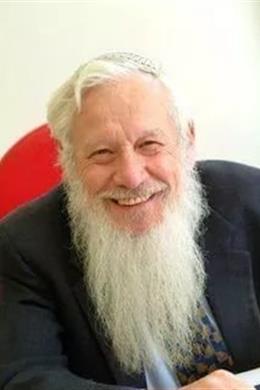
Robert John Aumann
The 2005 Nobel Prize winner in Economics is a representative figure in game theory. In 2005, he was awarded the Nobel Prize in Economics for his contributions to game theory. Jewish, possessing dual citizenship of Israel and the United States. Professor Oman obtained a PhD in Mathematics from Massachusetts Institute of Technology and currently teaches at Hebrew University in Jerusalem. He defined the relevant equilibrium concepts in game theory and placed great emphasis on the role of motivation in game theory. He has made great achievements in theory and is able to establish game models for life problems through the analysis of facts, resulting in practical problems. At the same time, as a Jewish believer, he has a unique way of dealing with religion and science, and has used mathematical methods to solve the problem of inheritance division in the Jewish Code of Law

Robert Phillips
Robert Phillips, co-founder of Jericho Chambers, a development strategy organization. Phillips has served as the CEO of Edelman, the world's largest independent public relations firm that provides public relations consulting services, and as a global director of the Public Engagement and Future Strategy Group. Phillips focuses on building trust, believing that trust is complex and fragile. He emphasized the possibility of building trust, but this was not achieved through simple formulas or new technologies. Leaders must have different thoughts and actions in order to establish their leadership, trust in the company, and brand. His second book on citizenship and business, World Gold Wrong, explains his understanding of trust. The content in this book is a classic case study of a new model of citizen state and collaborative production leadership. Phillips is currently a visiting professor at Cass Business School. He founded his own company during his college years at the age of 21 and later became the co founder of Jackie Cooper's public relations company. He has provided communication and strategic consulting services to multiple world-renowned multinational corporations, as well as their CEOs and executives. Phillips believes that the layout of the public relations and media industries lacks a sense of responsibility in terms of credibility and honor. After the democratic crisis in the banking economy, trust was undermined. New technologies and social media make trust more easily exposed. The establishment of trust is rapidly transitioning from institutions to the hands of citizens, and even expensive public debate cannot stop this trend. In his latest book, Believe Me, Public Relations is Dead, and Phillips ultimately stated that he doesn't believe anything. Everything will be subject to scrutiny, suspicion, and reconstruction. But this change is both simple and complex. Companies should focus more on doing the right thing, rather than constantly talking about themselves. Hire the right people with reasonable wages, avoid foolish bonuses, and stop spinning around. Don't say you will do it, but do it truthfully. Trust is not a message, but a practical action. The way to gain trust is to actively earn it.
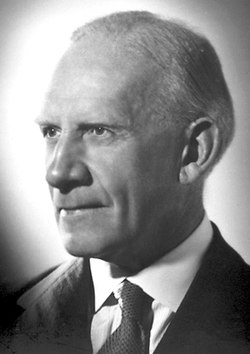
Robert Robinson
诺贝尔化学奖| (1927) | 1886-1975
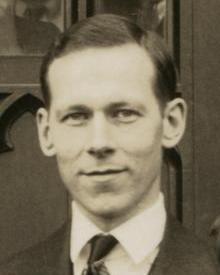
Robert S. Mulliken
诺贝尔化学奖| (1963) | 1896-1986

Robert Sayik
Robert Sayik is the founder of Agricultural Trends Group, a company currently under Trimble Navigation, a US based navigation company. He is also a professional soil scientist and certified agricultural consultant. As the founder of Agricultural Trends Group and during his tenure in the company's global business development department, SAIC has been involved in the development of many new business processes and has led the team to achieve multiple results in agricultural technology integration. For example, an agricultural data solution was developed that was awarded the 2002 Excellent E-commerce Project in Alberta, Canada, and the 2015 Agricultural Innovation Award at the Agricultural Trade Fair for its ability to manage farm data online. In addition to being a keen entrepreneur, Saik also possesses profound technical expertise in soil chemistry, plant physiology, and crop nutrition. Agricultural Trends Group was named one of the top 50 best management companies in Western Canada in 2012 and 2014, respectively, and was named one of the top 25 most innovative organizations in Alberta in 2013 by Enterprise Magazine. He founded the Agricultural Award Competition, which is an incentive competition to compete in agricultural skills. In addition, in July 2015, Agricultural Trends Group, in collaboration with John Deere of the United States and Glacier FarmMedia, jointly established the Canola 100 Agri Prize award. Sayik is the author of the 2014 Amazon bestseller \Agriculture Manifesto\ on the top 10 key factors affecting agricultural development over the next decade. He is also the publisher of AgADVANCE Daily and the 2014 Western Trade Journal. He is an executive producer who understands genetically modified organisms. This is a complete documentary film about the application of advanced technologies in the agricultural field. This global documentary with a quality comparable to that of a film festival will become an exciting topic of discussion about food. The film was released in spring 2016. He has extensively traveled to North America, South America, the European Union, Kenya, Uganda, Nigeria, Australia, New Zealand, the Middle East, as well as Russia, Ukraine, and Kazakhstan to work on technology integration and agricultural development.
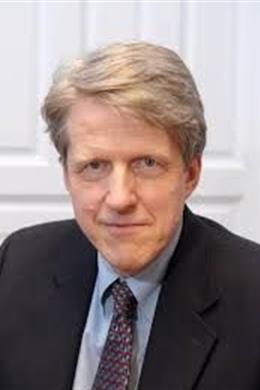
Robert Shiller
The 2013 Nobel Prize winner in Economics is a professor in the Department of Economics at Yale University, a member of the Yale School of Management's Financial International Center, a fellow at the National Bureau of Economic Research's NBER, and an academician of the American Academy of Arts and Sciences. He is also a professor and researcher in finance at the Yale School of Management's Financial International Center. Member of the Econometric Society, academic advisor to the Federal Reserve Bank of New York, and visiting professor at multiple academic institutions such as Cambridge University and Stanford University. Received the 2013 Nobel Prize in Economics for outstanding contributions in empirical analysis of asset prices., Professor Shiller is the main founder of contemporary behavioral finance and is considered a member of the emerging Keynesian school. He has authored several classic economic books such as "Irrational Exuberance" and "Animal Spirit", covering various aspects such as financial markets, financial innovation, behavioral economics, macroeconomics, real estate, statistical theory, as well as market moral judgment and public choice., He was the 1996 Samuelson Prize in Economics, the 2009 Deutsche Bank Award winner Professor Schiller, and the famous Standard&Poor's/Case Schiller House Price Index S& One of the creators of P/Case ShillerHPI.
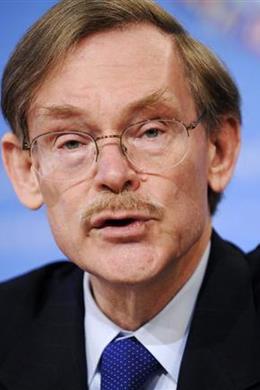
Robert Zoellick
Zoellick was born in Illinois in 1953. In 1975, he graduated from Swarthmore College in the town of Swarthmore, 17 km outside Philadelphia, Pennsylvania, USA. He graduated from Harvard University in 1981 with a Juris Doctor from Harvard Law School and a Master of Public Policy from the Kennedy School of Government. From 1985 to 1988, Zoellick served in the Treasury Department, including as counselor to Secretary James Baker, Executive Secretary of the Treasury, and Deputy Assistant Secretary for Financial Institutions Policy. He received the Alexander Hamilton Award, the highest award of the Treasury Department. He was the main negotiator at the 2+4 German Unification Conference, for which he received the Grand Cross of the Order of Chivalry from the German government. The governments of Mexico and Chile awarded him the Order of the Aztec Eagle and the Order of Merit, respectively, the highest honors available to foreign citizens. He was Professor of National Security Affairs at the United States Naval Academy during the 1997-1998 fiscal year. He became the United States Trade Representative in 2001. He has reactivated the U.S. free trade process, increasing the number of free trade agreements in the United States fivefold. He succeeded Armitage as deputy secretary of State in 2005. He participated in the negotiations on the reunification of Germany, China's accession to the World Trade Organization, and the Doha Round of World Trade Organization negotiations. During his tenure as Deputy Secretary of State, he devoted himself to developing China-Us relations and put forward a new diplomatic concept of treating China as a stakeholder, which won praise from the Bush administration and other parties around the world. During his visit to China, he embraced a giant panda in Sichuan Province and was dubbed by the US media as "Hugger Panda Pie". Zoellick resigned as deputy secretary of state in June 2006 to become an international vice president at Goldman Sachs, a prominent Wall Street investment bank, giving him the ability to manage a large international organization. Zoellick's extensive experience in economics and diplomacy was a key reason he was nominated by former U.S. President George W. Bush and eventually approved by the World Bank's executive board. From 2007 to 2012, Robert Zoellick served as the 11th President of the World Bank. Zoellick is one of the world's leading authorities on the global economy, international finance and foreign policy. As president of the World Bank, he turned around troubled situations, recapitalizing banks and providing assistance to developing countries during food, fuel and energy crises. He has modernised the bank to make it more accountable, flexible, fast and transparent, fighting corruption and encouraging good governance. Through the bank's International Finance Corporation, he has played a growing role in the private sector, and under his leadership, business has grown, equity investment has expanded, investment has become more flexible, and poor countries, especially in Africa, have received support from sovereign funds and pensions. He is currently chairman of the International Advisory Board of Goldman Sachs and serves on the international advisory boards of Temasek, Singapore's largest sovereign wealth fund, Lauride International University Alliance and Rolls-Royce. Zoellick is also a senior fellow at the Belfer Center for Science and International Affairs at Harvard's Kennedy School of Government and a board member of the National Endowment for Democracy and the Peterson Institute for International Economics.
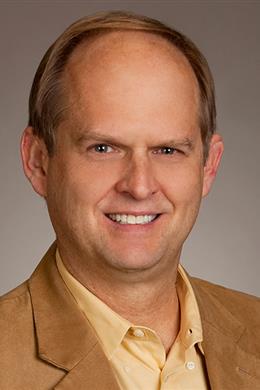
Robin Hanson
Robin Hansen is an associate professor of economics at George Mason University and a researcher at the Institute for the Future of Humanity at Oxford University. He holds a PhD in Sociology from California Institute of Technology and a Master's degree in Physics and Philosophy from the University of Chicago. He has worked as a research programmer at Lockheed Martin and NASA for nine years. Hansen's paper has been cited more than 2800 times, with a citation index of 25. He has published articles in over 60 academic journals, including Algorithmica, Applied Optics, ACM Communications, Economic Letters, Economics, Econometrics, Governance Economics, Fundamentals of Physics, Intelligent Systems Journal of the Electrical and Electronic Engineering Association, Frontiers of Information Systems, Innovation, International Artificial Intelligence Congress, Journal of Economic Behavior and Organization, Journal of Evolution and Technology, Journal of Legal Economics and Policy, Journal of Political Philosophy Journal of Predictive Markets, Journal of Public Economics, Maximum Entropy and Bayesian Methods, Medical Hypothesis, Journal of the Royal Society, Public Choice, Science, Social Epistemology, Social Philosophy and Policy, Theory and Decision. He published his first book, Work, Love, and Life in the Era of Robots when Robots ruled Earth in 2015, and later co created the elephant in the room with Kevin Simler. Professor Hansen has been reported by the media more than 400 times and has been invited to attend over 200 speeches. His blog OvercomingBiascom has received over 8 million views. Since 1988, Hansen has pioneered the prediction market, also known as the information market or concept futures. He elaborated in detail for the first time that people create subsidy markets in order to obtain better evaluations. He was the chief architect of Xanadu's first batch of internal markets in 1990, the first batch of online markets on the Fushai Exchange, Foresight Exchange since 1994, and the US Defense Advanced Research Projects Agency's DAPRA Policy Analysis Market from 2001 to 2003. He developed new technologies for conditional trading, portfolio trading, and intermediary trading, and studied violations such as insider trading and manipulation. He has published over 100 articles and speeches on the application of concept futures in business and policy, and provided advice for many venture capital projects. Hansen's research interests are diverse, and his published papers include topics such as space product competition, health incentive contracts, group insurance, product bans, evolutionary psychology and healthcare ethics, voter information incentive policies, Bayesian classification, approval and opposition, self deception in disagreements, probability heuristic, eavesdropping, image reconstruction, history of science awards, reversible computing, origin of life, human survival, long-term economic growth The growth and interstellar colonization brought about by machine intelligence.