演讲者
704 位演讲者
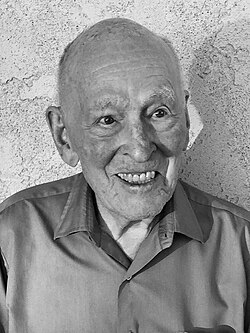
Paul D. Boyer
诺贝尔化学奖| (1955) | 1918-2018
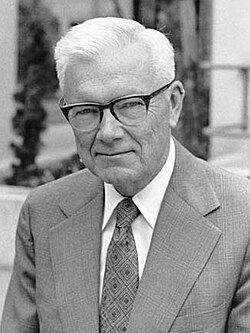
Paul Flory
诺贝尔化学奖| (1974) | 1910-1985
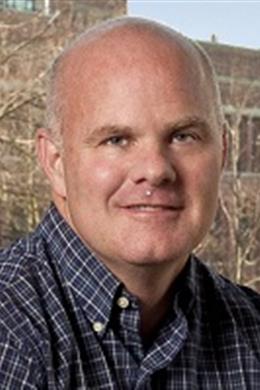
Paul Huemaker
Paul Shoemaker is the founding chairman of the International Social Enterprise Partnership - a global network organization composed of numerous innovators, entrepreneurs, philanthropists, and business and group elites, aiming to provide financial support for social changers in nearly 40 cities in 8 major countries around the world. His 17 years of professional experience have created a unique perspective on issues, making him a top expert in driving social change and a global thought leader in effectively promoting individual philanthropy. I have to do it to launch books. In 2011 and 2012, Huemaker was hailed as one of the 50 most influential figures in the public welfare industry by the non-profit era; In 2013, he was hailed as the philanthropist of the year. In 2015, he became the last person to receive the Microsoft Alumni Points Researcher Award.
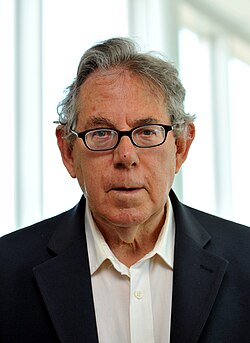
Paul J. Crutzen
诺贝尔化学奖| (1989) | 1933-2021
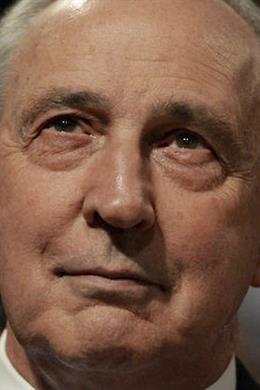
Paul Keating
Paul Keating was the former Prime Minister of Australia from 1991 to 1996. From 1983 to 1991, Keating was appointed as Minister of Finance. During his tenure, he implemented economic reforms that promoted the development of the Australian economy, including reforms in the financial sector, adjustments to the Australian dollar exchange rate, tax reform, and the abolition of a series of trade protectionism barriers. From December 1991 to March 1993, Keating was appointed as Prime Minister, marking the fifth time in the history of the Labour Party that he held this position. As Prime Minister, Keating continued to implement economic reforms, including the establishment of a national training institution, the establishment of a national pension plan to increase national savings, the establishment of a labor market, and training reforms to address Australia's long-standing unemployment problem. At the same time, the Keating government also issued laws recognizing the rights of indigenous Australians to land and enacting laws to protect the disappearing races. Keating advocates for institutional reforms to develop Australia. During his tenure, Keating established the Australian Mandatory Private Savings Plan Pension Plan, which increased savings from 400 million to 1 billion within a year. He founded the Asia Pacific Economic Organization Leaders' Meeting, which is an important component of the political architecture of the Asia Pacific region. The focus of the Keating administration's foreign policy is on the Asian region. Keating actively established the Asia Pacific Economic Organization and the Asia Pacific Economic Cooperation Forum, and initiated the Asia Pacific Economic Cooperation Leaders' Meeting to facilitate the achievement of regional trade opening agreements. In March 1996, following the Labour Party's defeat in the election, Keating was appointed to serve in parliament. He turned his interest to national and international affairs, and during his tenure, he frequently visited China and other Asian countries. Keating emphasized in his book that Australia's foreign policy and development have a significant impact in the Asia Pacific region. His works were translated into Japanese and Chinese and published by the Chinese Academy of Social Sciences. He is the main spokesperson at international business and economic conferences. As a political commentator, he also writes articles for newspapers and international journals, commenting on economic and social issues. Keating frequently visits China and the Asian region and is the main spokesperson for major domestic and international conferences. He has rich experience in international finance, politics, and diplomacy, and has a keen insight into contemporary global affairs. He also has a strong interest in architecture, urban design, and music.
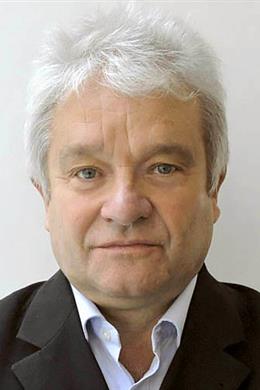
Paul Nurse
Paul Nass, British biochemist. He was awarded the Nobel Prize in Physiology or Medicine in 2001, along with Lilan Hartwell and Tim Hunt, for discovering key regulatory factors in the cell cycle. From 2010 to 2015, he served as the President of the Royal Society's National Academy of Sciences, including world-class scientists such as Hawking. In March 2017, Sir Paul began serving as the Chancellor of the University of Bristol, a top university in the UK, awarding degrees to students who graduate each year. In order to welcome Sir Paul's appointment, Buda raised a huge NASA lunar model in the Welsh Hall of the school. In January 1949, Nass was born into a working class family in England. His father was a mechanic and his mother was a cleaner. There were hardly any books at home, but at the age of 8, when he saw Soviet Sputnik 2 flying over London, he became obsessed with science. After graduating from high school, he was rejected by the university due to failing the French exam. Fortunately, a professor persuaded him to make an exception and enter the university. In 1970, Nass obtained a Bachelor's degree in Biochemistry from the University of Birmingham in the United Kingdom, and later transferred to research in yeast genetics and cell biology. In 1973, he obtained a doctoral degree from the University of East Anglia. He worked at the London laboratory of the Imperial Cancer Research Foundation and the University of Oxford, and his research team discovered the cyclic dependent kinase CDK that controls yeast cell division, indicating that humans have the same gene corresponding to this enzyme. The Karolinska School of Medicine commented that the findings of Hartwell, Nass, and Hunter have significant implications for studying cell development, especially for exploring new ways to treat cancer, as defects in cell cycle control can lead to chromosomal mutations in carcinogenic cells. This work allowed Nass and two other scientists to share the 2001 Nobel Prize in Physiology or Medicine. The research results of Paul and others will benefit most biomedical research fields. It will help to understand the instability of chromosomes in tumor cells, that is, how chromosomes or parts of chromosomes are rearranged, lost, or unevenly allocated to offspring cells. This change in chromosomes is likely caused by defects in the cell cycle regulation process. Previous research has shown that CDK molecules and cyclin genes are functionally equivalent to oncogenes that can cause tumors. Moreover, in cell cycle regulation, CDK molecules and cyclins can also act in opposition to tumor suppressor genes and oncogenes. They can inhibit excessive cell proliferation and prevent tumor formation, hence the synergistic effect of tumor suppressor gene products such as p53 and RB. These achievements in the field of cell cycle research will undoubtedly be applied to tumor diagnosis. In human tumors such as breast cancer and brain tumor, the level of CDK molecule and cyclin will sometimes increase. In the long run, this will also open up new avenues for cancer treatment, as people can design drugs that control cell growth and division based on cell cycle regulators to prevent the proliferation of cancer cells. Clinical trials using CDK molecular inhibitors for tumor treatment are currently underway.
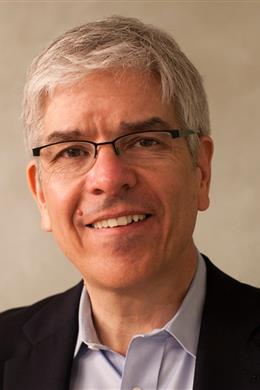
Paul Romer
Paul Romer is an economist, policy entrepreneur, and founder of the Urbanization Program at New York University Stern School of Business. This urbanization project conducted applied research on how policy makers in developing countries can utilize the rapid growth of cities to create economic opportunities and carry out systematic social reforms. Professor Romer is currently a professor at New York University and the director of the Marlon Institute of Urban Management at New York University. The Mullen Institute works with citizen innovators to improve urban management and deepen basic understanding of cities. Prior to his tenure at New York University, Professor Romer taught at Stanford Business School. There, Professor Romer conducted an entrepreneurship that had little connection to his major. He founded an educational technology company called Aplia, dedicated to promoting students' learning and increasing their classroom participation. So far, students have submitted over 1 billion answers to homework questions on Aplia's website. Prior to working at Stanford University, Professor Romer taught in the economics departments of the University of California, Berkeley, the University of Chicago, and the University of Rochester. Currently, he also serves as a researcher at the National Bureau of Economic Research and the American Academy of Arts and Sciences. At the same time, he is a non local scholar at the Global Development Center in Washington D.C. and the Macdonald Laurier Institute in Ottawa, Ontario, Canada. In 2002, Professor Romer was awarded the Recktenwald Award in recognition of his intellectual role in maintaining economic growth. Professor Romer is a board member of the Carnegie Foundation for Promoting Teaching. He is also a member of the board of directors of Community Solutions, a national non-profit organization dedicated to strengthening community building and providing homes for homeless people. Professor Romer obtained a Bachelor's degree in Mathematics from the University of Chicago. After pursuing graduate degrees at Massachusetts Institute of Technology and Queen's University, he obtained a PhD in Economics from the University of Chicago.
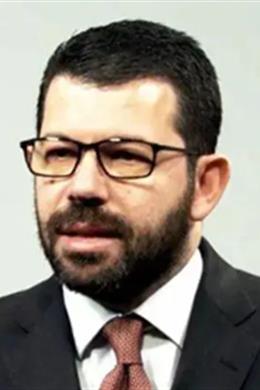
Paul Sironi
IBM Financial Technology Thought Leader, Ant Financial Services Consulting Expert, and Digital Era Business Model Transformation Advisor Paul Siloni has worked at IBM as an analyst in the FinTech and Digital Investment Analysis departments. With ten years of risk management experience, he has become a thought leader in this field. Provide advice to the management of financial institutions, entrepreneurs, and others on issues related to the transformation of business models in the digital age, and have visited China multiple times to provide consulting advice to financial technology companies such as Ant Financial Services. Member of the IBM Industry Society, a leading global financial technology platform. His best-selling book, Financial Technology Innovation, is a representative work in the field of intelligent investment advisory and financial technology innovation
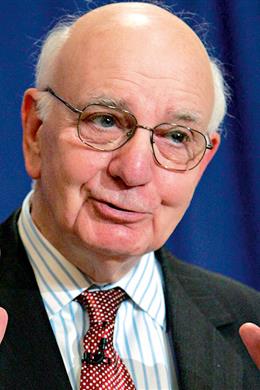
Paul Volcker
Topics include globalization and the financial world, globalization and the international financial system, global markets and emerging economies, and the opportunities and responsibilities of the United States' foreign policy at the turn of the century. Paul Volcker served as an economic advisor to then US President Barack Obama until 2011, leading the US President's Economic Recovery Advisory Committee. During the 2008-2010 financial crisis, Volcker severely criticized major banks, believing that their response to the crisis was insufficient and that they should strengthen supervision. Specifically, he called for the dissolution of the largest banking group in the United States and believed that it was necessary to re implement most of the provisions of the Glass Steel Act, which aimed to prevent commercial banks from engaging in investment banking activities such as securities trading. Currently, Volcker serves as the head or consultant of many companies and non-profit organizations. Volcker served as the Chairman of the Federal Reserve Board from 1979 to 1987 and was highly praised for his outstanding achievements in ending long-term high inflation and restoring sustained economic growth. At the beginning, President Jimmy Carter appointed him as Chairman of the Federal Reserve for a four-year term. After the end of his first term, President Reagan reappointed him as Chairman of the Federal Reserve in 1983. After the end of his second term, Volcker resigned from public office and joined James Wolfensen Investment Company as chairman. The company mainly provides investment banking services to domestic and foreign companies. In 1996, James Wolfensohn Investment Company merged with Bankers Trust Company, and Walker, as Chairman and CEO of James Wolfensohn Investment Company, also retired. Throughout his career, Volcker worked for the federal government for 30 years, serving five presidents - John F. Kennedy, Lyndon Johnson, Richard Nixon, Jimmy Carter, and Ronald Reagan. Prior to becoming the Chairman of the Federal Reserve in 1979, Volcker served as the President of the New York Federal Reserve Bank for over four years, with the New York Federal Reserve Bank being the main operating department of the Federal Reserve. In his early years, Volcker served twice in the US Treasury Department, serving as the Deputy Secretary of the Treasury responsible for financial affairs from 1969 to 1974. As the Deputy Minister, he is primarily responsible for researching and implementing the Treasury's debt management and federal credit policies. During the transition from the Bretton Woods fixed exchange rate system to a more flexible floating interest rate system that began to prevail in the early 1970s, he represented the United States in international currency negotiations. In the domestic financial sector, among other measures, Volcker has also initiated treasury bond auctions, which are now quite common not only in the United States but also in many other countries. After leaving Washington in 1987, he became Professor Frederick Schultz of International Economic Policy at Princeton University and is now an honorary professor. Volcker also took the initiative to assume the position of chairman in a newly established civil public service committee. The committee mainly studies the issues that arise in attracting, motivating, and retaining the talents needed to maintain the effective operation of the government. Both of these activities reflect Volcker's interest in improving the professionalism and efficiency of public services. Recently, Volcker served as a newly established director of the International Accounting Standards Board
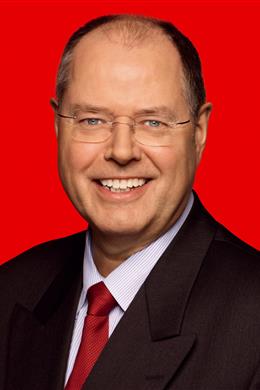
Pel Steinbruck
During the Great Coalition government led by German Chancellor Angela Merkel's cabinet from 2005 to 2009, Pelstein Bruck was an official in the German government. He is responsible for making some difficult and unpopular decisions during the economic crisis to mitigate the long-term impact of the crisis. Although he released an almost balanced budget plan in 2008, government debt still rose to a new record level. In 1993, Peer Steinbr \u00fc ck of Schleswig Holstein became the Minister of Economy, Technology, and Transportation of the State of Schleswig Holstein. After studying economics, he worked in the German Federal Government and the Prime Minister's Office, and served as the Minister of Economy and Infrastructure in North Rhine Westphalia in 1998, as well as the local Minister of Finance in 2000. Afterwards, he became the Chief of Staff of Johannes Rau, Governor of North Rhine Westphalia in North Rhine Westphalia. One of Pelstein Bruck's main achievements was the introduction of the tax identification number policy during his tenure as Federal Treasury Secretary, which has been widely discussed for many years. From 2002 to 2005, Peir Steinbr \u00fc ck served as the Governor General of North Rhine Westphalia in the state of North Rhine Westphalia. He also leads a coalition government composed of the Social Democratic Party SPD and the Green Party. After the 2005 German Bundestag elections, the Social Democratic Party (SPD) and the Christian Democratic Union (CDU) formed a grand coalition government under the leadership of new Chancellor Angela Merkel, while Steinbrueck became Germany's finance minister.
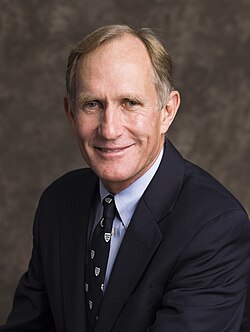
Peter Agre
诺贝尔化学奖| (2003) | b. 1949年
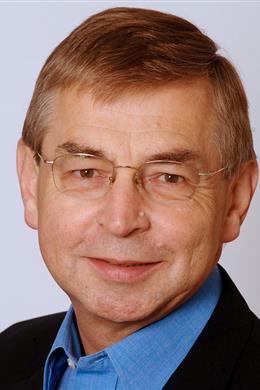
Peter Cochran
As an innovator, senior manager, and change promoter, Peter Cochran has decades of work experience in both industry and academia, known for his groundbreaking works and distinctive thinking. He rejects specialization and supports a holistic strategy that takes into account the connections between technological progress, company and social needs, as well as the challenges faced by individuals and organizations. Cochran's involvement in the technology industry spans various fields such as telecommunications, computing, security, materials, manufacturing, logistics, banking, energy, defense, and healthcare, including the development and deployment of sensors, artificial intelligence, big data, small data, cloud computing, analytics, and automated immune technology. Currently, Cochran is a consultant to the Qatar Computing Research Institute, the Ministry of Defense, and Chorus New Zealand. Cochran is a founding board member of the startup eBookers and a major investor in Shazam Entertainment. Between 1998 and 2012, he helped start and fund 25 startup companies. As a professional manager, Cochran not only manages manufacturing factories, but also establishes a large-scale research and development and consulting team. In addition, he also works for major companies and government departments, including Cisco, Rolls Royce, Ford, the Commonwealth Scientific Committee, Ernst&Young, HSBC, the Department of Defense (UK), and the Department of Defense (US). Peter Cochran is a technical expert, entrepreneur, and writer. As an experienced professional, he has over 40 years of management, technical, and operational experience. He has always been committed to establishing a company at the operational level, creating and applying new technologies, products, and management systems, promoting company change, and expanding new businesses. His work focuses on problem-solving, creating wealth through the application of new technologies and business solutions. He has worked with governments, businesses, and many major international institutions. As the Chief Technology Officer, CEO, and Director of a British American company, he has invested £ 1 billion in creating and managing a team of 2500 people. At the same time, he is also a visiting professor, consultant, and member of the off campus examination committee at major universities in the European Union and the United States. In addition to actively working as a consultant and speaker, he has also shown great interest in investing in startups. Before becoming the Research Director and Chief Technology Officer, Peter underwent a transformation from a regular employee to a research and development engineer at BT. He has a team of 1000 people engaged in research related to fiber optic, fixed, and mobile networks. Peter reports directly to the board of directors and is responsible for supporting future IP, e-commerce, e-retail, e-logistics, and many other emerging businesses. Dr. Peter played a crucial role in achieving full digitization and full optical connectivity at British Telecom in the 1970s. In addition, he also helped BT reduce its staff size from 242000 to 110000 in the early 1990s. Peter graduated from the University of Nottingham Trent and the University of Essex. He was a recipient of the Queen 39; s Award for Innovation&Export in 1990 and holds honorary doctorates at Essex, Nottingham Trent, Robert Gordon, and Brunel. In 1990, he was awarded the Order of the British Empire (OBE) for his contributions to international exchanges.
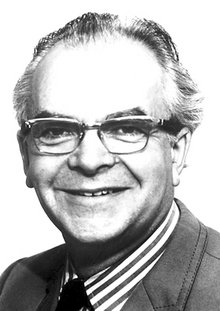
Peter D. Mitchell
诺贝尔化学奖| (1976) | 1920-1992
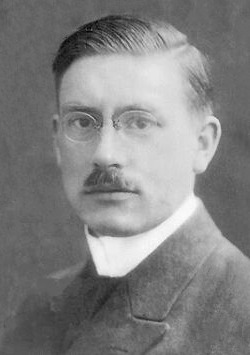
Peter Debye
诺贝尔化学奖| (1930) | 1884-1966 |荷兰 美国
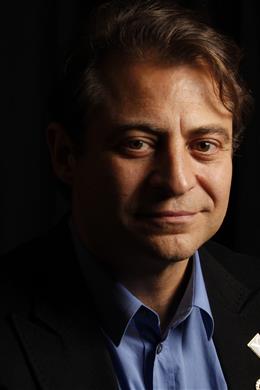
Peter Diamandis
Peter Diamantis was born in the Bronx, New York. His parents are both Greek immigrants working in the medical industry. Since a very young age, Demandis has shown a strong interest in space exploration. At the age of 8, he began to teach his family and friends about space. At the age of 12, Dementis won first place in the Estes rocket design competition because he designed a launch system that could simultaneously launch three rockets. Di Mantis graduated from Massachusetts Institute of Technology in 1983 with a Bachelor's degree in Molecular Genetics. Subsequently, he entered Harvard Medical School to pursue a PhD in medicine. In 1986, Dementis gave up his medical degree and returned to Massachusetts Institute of Technology to pursue a master's degree in aerospace. He conducted research at NASA Johnson Space Center, MIT Man Vehicle Laboratory, and MIT Whitehead Biomedical Research Institute. In 1987, Dementis co founded the International Space University with Todd Holly, Walter Anderson, and Robert Richards. Until 1989, he served as the managing director and chief operating officer of the university. Today, the International Space University, headquartered in Strasbourg, France, has grown into a university worth more than 30 million dollars. Di Mantis co founded Microsat Launch Systems in 1989, later renamed International Microspace Company, and served as the CEO of the company. In 1991, Di Mantis founded Constellation Communications, which received funding to deploy an equatorial ring consisting of 10 satellites, mainly providing communication to Brazil and Indonesia. Di Mantis served as a director of the company until 1993. In 1994, Di Mantis was inspired by reading Charles Lindbergh's St. Louis spirit and founded the X Prize Foundation. He is the chairman and CEO of the foundation. In May 1996, Dementis launched a space exploration award with a prize of up to $10 million - a reward for non-governmental organizations that could build a manned rocket and send it back and forth to space twice within two weeks, aimed at inspiring innovation in new private manned space technology. The award was announced on May 18, 1996 in St. Louis, Missouri. In the early stages of award setting, Di Mantis did not have funds, but he did what entrepreneurs often do to create a pie, giving people promises and dreams. He spent several years raising funds and ultimately obtained investment from an Iranian woman named Anusheh Ansari. This $10 million competition attracted 26 teams from 7 countries. On October 4, 2004, the $25 million private spacecraft SpaceShip-1, designed and manufactured by Lutan and invested by Microsoft partner Paul Allen, won the $10 million Ansari X Award. It is worth mentioning that SpaceX founder Musk met with Demandis in 2001 and was inspired to create another milestone in space exploration in the future. And Amazon CEO Bezos also started exploring his own space exploration business after meeting with Demanti. The X Prize Foundation has approximately 50
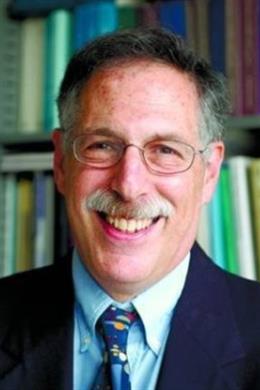
Peter Diamond
Peter Diamond, a 2010 Nobel laureate in economics and a professor at the Massachusetts Institute of Technology's Graduate School of Economics, is a member of the American Academy of Arts and Sciences. He is renowned for his groundbreaking research in the field of optimal taxation, which is widely applied in the field of public policy. Due to their contribution to the analysis of markets with search friction, they jointly won the 2010 Nobel Prize in Economics. He has made important contributions to many fields, including government debt and capital accumulation, capital markets and risk sharing, tax system optimization, pairing of buying and selling in the labor market, and social insurance issues. In 1963, at the age of 23, Diamond obtained a doctoral degree in economics from Massachusetts Institute of Technology and was hailed as a \prodigy\ by economics guru Paul Samuelson. In 1994, Diamond was awarded the Irwin Plein Nemmers Prize by Northwestern University. At the time of the award, the President of Northwestern University stated that \Professor Diamond's research has opened up new research fields for other economists, and few scholars have been able to do it even once, while Diamond has done it three times.\ In 1997, Diamond was awarded the title of Professor at the Massachusetts Institute of Technology, which is the highest honor at the Massachusetts Institute of Technology. During his more than forty years of academic career, he led the trend of macroeconomic research, continuously opened up new research fields, and established research standards and directions for other economists. Diamond is also a founding member of the National Academy of Social Insurance, a member of the National Academy of Sciences, and a member of the Society of Economic Metrology
Peter Goodman
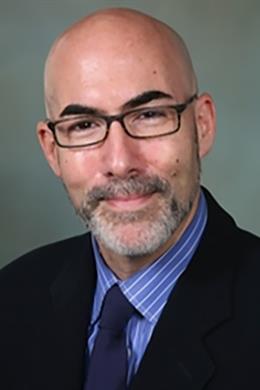
Peter Goodman is a New York Times European Economic correspondent headquartered in London. As an award-winning journalist, Goodman has conducted research projects, closeups, and analysis columns on over 30 countries throughout his career, covering various topics, including the Iraq War and the recession of the US economy during the Great Depression. Previously, Goodman was the global editor in chief of the International Business Times, headquartered in New York. He built a traditional staff focused on collecting information into an excellent team focused on original reporting. While sending journalists to Beirut, Istanbul, Shanghai, Moscow, and Mexico City, he also oversees over 200 journalists and editors from the London, Bangalore, and Sydney press offices. From 2010 to 2014, Goodman was the business executive and global news editor of the Huffington Post. He is responsible for overseeing the original coverage of international, business, economic, and technological news on the website, and managing more than 30 journalists and editorial teams distributed in the United States and around the world. After 20 years in the newspaper industry, Goodman joined the Huffington Post in 2010. This is a milestone in the history of media development, marking the collapse of the high wall between printing and digitization, allowing Goodman to examine the massive acquisitions of media by technology giants from an insider's perspective. As a science and technology reporter of the Washington Post in the late 1990s, Goodman has a cutting-edge view of the Internet foam. During his five years as the head of the Shanghai bureau of the Washington Post and an Asian economic journalist, he documented how China emerged as a global power and reported on the Middle East, Europe, and Latin America. As a national economic journalist for the New York Times from 2007 to 2010, Goodman was one of the earliest American journalists to realize and warn that a recession could worsen into the Great Depression. Goodman is the author of the 2009 Times Weekly Catalogue on the End of PAST DUE Monetary Easiness and the Recovery of the US Economy. The book was selected by the New York Times Book Review as the title of the editor's choice and was selected as one of Bloomberg's top 50 business books. Goodman speaks Mandarin Chinese and Indonesian.
Peter Lynch
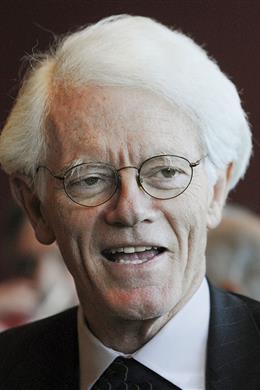
Peter Lynch is the world's most outstanding professional stock investor and a wealth gathering giant in the Wall Street stock market. The investment return rate he achieved during his tenure at the Magellan Fund has been unparalleled in the history of the stock market. The fund has also become the most successful fund in the world. Peter Lynch was born in 1944 and began investing at the age of 15 to earn tuition fees. In 1968, he graduated from the Wharton School of Business at the University of Pennsylvania with an MBA degree. In 1969, Lynch entered Fidelity Corporation, the world's largest investment fund management company. From 1977 to 1990, he served as the manager of the Magellan Fund under Fidelity Corporation. During these 13 years, he increased the assets under management of the Magellan Fund from $20 million to $14 billion, with an average annual compound interest rate of 29%, which was almost unparalleled. As a result, the Magellan Fund became the world's largest fund under asset management at that time, and its investment performance ranked first. In 1990, Peter Lynch voluntarily resigned and returned to his family, and began to summarize his investment experience. He successively wrote about Peter Lynch's successful investments, defeating Wall Street, and teaching you financial management, which caused a sensation on Wall Street. Compared to most financial professionals on Wall Street, Peter Lynch, known as the stock angel, is gentle and even a bit shy, but these cannot conceal his legendary experiences and wisdom displayed in the stock market. Peter Lynch is known as the first wealth manager by the most famous Time magazine in the United States, and he is also known as the leading fund manager and investment superstar. Newberg, the father of American mutual funds, believes that Buffett and Lynch are the two greatest investors in modern society. Along with Soros, he wanted to use the term 'genius' to describe them. However, if asked to choose who is the most perfect, overall, I would only choose Peter Lynch. His character can be called number one; He is like the Hercules in Greek mythology, a divine figure on Wall Street. Another thing I admire is that he knows when to quit and return to his family.
Peter Mandelson
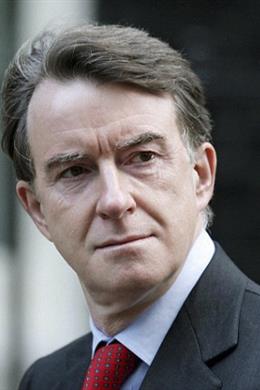
Peter Mandelson, a British Labour politician, is seen as one of the key figures in reshaping the Labour Party into the New Labour Party in the 1990s, along with Tony Blair and Gordon Brown. Mandelson was appointed as the UK Minister of Trade and Industry in 1998, responsible for setting the national minimum wage standard and overseeing the implementation of the New Deal to strengthen regional economic development. During his tenure, he submitted the Millennium Bug and e-commerce draft to Congress, and drafted a government competitiveness white paper - Establishing a knowledge-based economy. In 1999, he was appointed as the UK Secretary of State for Northern Ireland, during which he restored local government power in Northern Ireland. Mandelson officially became the UK EU Commissioner in 2004 and served as the European Commission Trade Commissioner until 2008, responsible for representing EU member states in negotiations with other trading partners. In 2009, Mandelson was appointed as the Minister of Commerce for Business Enterprise and Regulatory Reform, also known as the Minister of Commerce. He served as the First Secretary of State, Chairman of the Trade Commission, and Speaker of the Privy Council, and was promoted to the House of Lords as a lifelong aristocrat. Afterwards, his power as Minister of Commerce, Enterprise and Regulatory Reform was expanded, and his position was renamed as Minister of Business Innovation and Skills BIS. He was also appointed as Deputy Prime Minister of the UK. After stepping down in 2010, Mandelson began serving as the chairman of Global Council, an international strategic consulting firm, and as a senior advisor to investment banks. He also served as the president of Policy Network, an international think tank. Mandelson has served as a TV host and producer, with a graceful demeanor, well dressed, meticulous, and full of personal charm.
Peter Thiel
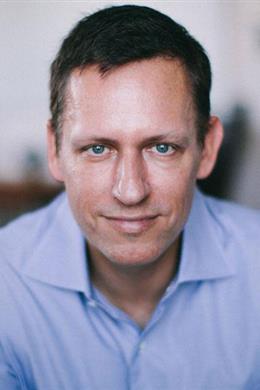
He is the godfather of Silicon Valley investment, a billionaire, a chess master, a practicing lawyer at top law firms in New York, and the founder of two Silicon Valley technology companies. He is a star venture capitalist, hedge fund manager, derivatives trader, co author of best-selling books ranging from 0 to 1, teacher at Stanford Business School, public speaker, and Silicon Valley thinker. At the age of 6, Thiel began playing chess, and at the age of 12, he ranked 7th in the Under 13 category in the United States. He continued to participate in international chess tournaments until his thirties, and still plays lightning fast games online every 5 minutes to this day. The life motto stuck on his chess set is born to win. He is also very good at mathematics, and when he was attending a public school in San Mateo, he ranked first in a math exam across California. A middle-class family gave him an elite education, and he has always been a top student. In high school, a friend sent him a note that said, 'You will definitely be admitted to Stanford.'. Sure enough, he went to Stanford for his undergraduate degree and then obtained a Juris Doctor's degree from Stanford Law School. After graduation, he entered a top law firm in New York and had a life that many people envied. But in that large law firm in New York, he encountered the law of siege because it was a place where everyone outside wanted to come in and everyone inside wanted to escape. In early 1996, Thiel made a significant change and left New York to come to Menlo Park. He raised $1 million from family and friends to start his own hedge fund Thiel Capital. It wasn't until 1998 that Peter Thiel and his partner founded the electronic payment company Infinity, realizing the enormous value that most people overlook in electronic currency. In 1999, the company transformed and released PayPal, providing electronic transfer services built on top of the US banking system. In 2000, Elon Musk founded XCom, which was also engaged in electronic payments, next to PayPal. However, at that time, competition between the two sides gradually intensified, and Peter Thiel's engineers even had to design a bomb to blow up Musk's company. Fortunately, Peter Thiel discovered and promptly stopped it. Peter Thiel rationally realized that blind competition could be harmful to both sides. He took an unusual path and decided to set up a company with Musk at a ratio of 5050. In fact, thanks to Peter Till's foresight, the combined PayPal successfully survived the Internet foam in 2000. In 2002, PayPal was acquired by eBay, and Pettier cashed out $55 million and renamed Thiel Capital Clarium Capital Management, entering the hedge fund industry. Peter Thiel and his colleagues practice discovering truths that others have not discovered, not following the usual path, and practicing the concept of reverse investment. When others are selling, they buy Japanese government bonds, but when others are looking down on the energy industry, they buy in large quantities. In the summer of 2008, Clarium's assets exceeded $7 billion, increasing sevenfold within six years. He is also investing in industry names