Technology & Finance
126 位演讲者
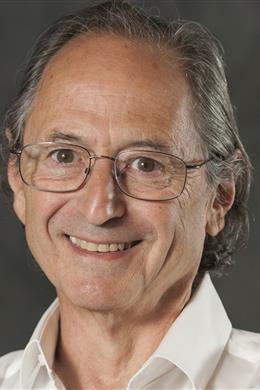
Michael Levitt
Michael Levitt is an American British Israeli biophysicist. In addition, he has been serving as a professor of structural biology at Stanford University in the United States since 1987. Currently a member of the National Academy of Sciences in the United States from 2013 to present. In 1983, Levitt was elected as a member of the European Molecular Biology Organization EMBO. In 2001, he was elected as a member of the Royal Society of England. Afterwards, they jointly won the 2013 Nobel Prize in Chemistry with Martin Karplus and Arieh Warshel for developing multi-scale models of complex chemical systems. In 2014, he was awarded the Delano Prize in Computational Biology. In 2015, he became a member of the International Society for Computational Biology (ISCB). Levitt was one of the earliest researchers to conduct DNA and protein molecular dynamics simulations, and developed the first software for this purpose. Currently, Levitt is renowned for developing macromolecular structure prediction methods and has participated in many key evaluation CASP competitions on protein structure prediction techniques. During this period, he criticized the ineffectiveness of molecular dynamics in improving protein structure. Levitt is also committed to simplifying protein structure representations for analyzing protein folding and stacking, as well as developing scoring systems for large-scale sequence structure comparisons.
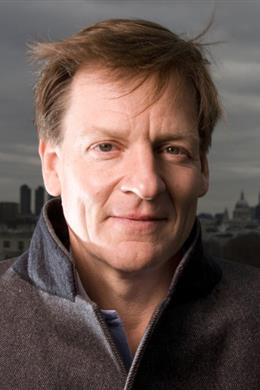
Michael Lewis
Michael Lewis is a contemporary American reportage writer and financial journalist who graduated from Princeton University and the London School of Economics. I majored in art history at university and obtained a Master's degree in Economics from the London School of Economics. Then, I worked as a bond trader at the London branch of the investment bank Solomon Brothers. His best-selling books include The Liar's Playing Card, Leaving the World Behind, The Wisdom and Weakness of Winning in the Adversity of the Magic Ball, and the Course of the Game. The liar's playing cards and leaving the world behind were both rated by Forbes as the 20 most influential business books of the 20th century. Currently, he is a contributing editor for Vanity Fair.
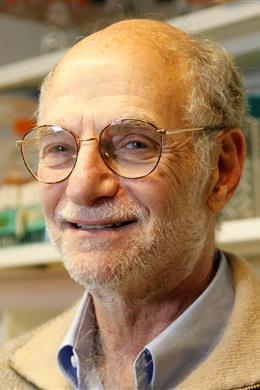
Michael Rosbach
On October 2, 2017, Michael was awarded the 2017 Nobel Prize in Physiology or Medicine. On October 2, 2017, the 2017 Nobel Prize in Physiology or Medicine was announced, and Jeffrey C Hall, Michael Rosbash, and Michael W Young jointly won the awards. The reason is the discovery of molecular mechanisms that control circadian rhythms. Life on Earth has long adapted to the rotation of this planet. For many years, we have known that various living organisms, including humans, have a biological clock that can help us predict and adapt to the cycle patterns of each day. But how does this biological clock actually work? Jeffrey CHall, Michael Rosbash, and Michael W Young have explored and successfully elucidated the internal workings of the biological clock. Their discovery explains how plants, animals, and humans adapt to their own biological rhythms and stay in sync with the rotation of the Earth. The three winners used fruit flies as model organisms to isolate a gene that can control daily biological rhythms. They demonstrated through research that a protein encoded by this gene accumulates continuously at night and then undergoes decomposition during the day. In addition, they also discovered other related protein components in this biological process, revealing the mechanism by which cells manage this self-sustaining operation. We now know that the biological clocks of other multicellular organisms, including humans, all operate in the same mechanism. With extraordinary precision, the biological clock allows our body to adapt to various daily changes. It is responsible for regulating various important bodily functions such as behavior, hormone levels, sleep, body temperature, and metabolism. When there is a brief conflict between the external environment and the biological clock, our health will be affected. For example, when we cross multiple time zones by plane, there may be a situation where the time difference cannot be reversed. In addition, if there is a chronic disharmony between lifestyle and the rhythm required by the biological clock, it can affect the occurrence of various diseases in the body. Michael Rosbash was born in Kansas City, Missouri, USA in 1944. He is a member of the National Academy of Sciences and currently a professor of biology at Brandeis University and a researcher at the Howard Hughes Institute of Medicine. I obtained a doctoral degree in biophysics from the Massachusetts Institute of Technology in 1970 and worked as a postdoctoral researcher at the Institute of Animal Genetics at the University of Edinburgh from 1972 to 1974. Afterwards, he has been teaching in the Department of Biology at Brandeis University, serving as an assistant professor from 1973 to 1980, an associate professor from 1980 to 1986, and a professor since 1986. In 2012, he was awarded the Peter Gruber Endowed Chair in Neuroscience.
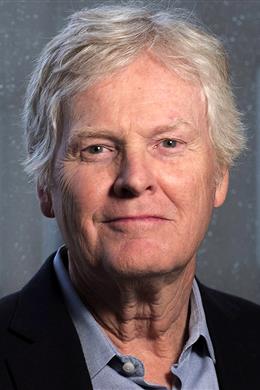
Michael Young
On October 2, 2017, Michael Yang was awarded the 2017 Nobel Prize in Physiology or Medicine. On October 2, 2017, the 2017 Nobel Prize in Physiology or Medicine was announced, and Jeffrey C Hall, Michael Rosbash, and Michael W Young jointly won the awards. The reason is the discovery of molecular mechanisms that control circadian rhythms. Life on Earth has long adapted to the rotation of this planet. For many years, we have known that various living organisms, including humans, have a biological clock that can help us predict and adapt to the cycle patterns of each day. But how does this biological clock actually work? Jeffrey C Hall, Michael Rosbash, and Michael W Young have explored and successfully elucidated the internal workings of the biological clock. Their discovery explains how plants, animals, and humans adapt to their own biological rhythms and stay in sync with the rotation of the Earth. The three winners used fruit flies as model organisms to isolate a gene that can control daily biological rhythms. They demonstrated through research that a protein encoded by this gene accumulates continuously at night and then undergoes decomposition during the day. In addition, they also discovered other related protein components in this biological process, revealing the mechanism by which cells manage this self-sustaining operation. We now know that the biological clocks of other multicellular organisms, including humans, all operate in the same mechanism. With extraordinary precision, the biological clock allows our body to adapt to various daily changes. It is responsible for regulating various important bodily functions such as behavior, hormone levels, sleep, body temperature, and metabolism. When there is a brief conflict between the external environment and the biological clock, our health will be affected. For example, when we cross multiple time zones by plane, there may be a situation where the time difference cannot be reversed. In addition, if there is a chronic disharmony between lifestyle and the rhythm required by the biological clock, it can affect the occurrence of various diseases in the body. Michael W Young was born in Miami, Florida, USA in 1949. He is a member of the National Academy of Sciences and currently serves as the Vice President and Professor of Academic Affairs at Rockefeller University in the United States. I obtained a doctoral degree in genetics from the University of Texas at Austin in 1975. From 1975 to 1977, I received postdoctoral training at Stanford University School of Medicine and joined Rockefeller University as a professor in 1978. Since 2004, I have been awarded the Richard and Jeanne Fisher Chair.
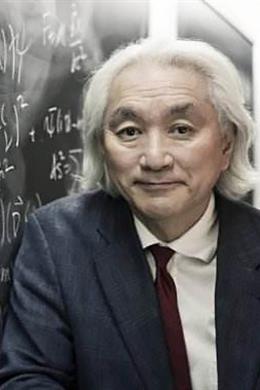
Michio Kaku
Dr. Calais Daoxiong is a world-renowned theoretical physicist and the founder of superstring theory. The superstring theory is a key to unlocking the profound truth of all things that Einstein had been pondering but couldn't solve. Calais Daoxiong's idol since childhood was Einstein. He adhered to Einstein's spirit of exploring the principles of all things and was hailed as Einstein's second. Calaiso was born into a Japanese immigrant family in San Jose, California. Since childhood, living in two cultures has given Calais and Daoxiong more opportunities to think than his peers. Why is this happening? How do we handle it in the United States? What would be different in Japan? His love for Einstein transformed him from an ordinary student to a physics genius. Out of curiosity, Calais began to learn everything he could about Einstein. The proposal of superstring theory has brought about a groundbreaking change in the entire viewpoint of physics. Calais Daoxiong traveled around the library, laboratory, and places where he could find all of Einstein's works. Soon after, he realized that the story that attracted him was more exciting than any novel, and more important than anything he could think of. He decided to delve into this secret. In order to achieve this goal, he aspires to become a theoretical physicist. He finished reading all the books on unified field theory in the library during high school, and later entered Harvard University and obtained a doctoral degree in physics from the University of California, Berkeley. During this time, he understood Einstein's main task, which was to perfectly combine general relativity and quantum field theory. However, Einstein, a great scientist, spent 40 years not completing this work. In Einstein's calculations, general relativity and quantum field theory were not self consistent with each other, so if we want to unify the two, we must have a larger theoretical framework. More physicists have followed Einstein's footsteps, with Calais Dojo being one of them. In 1984, he and several other scientists proposed the superstring theory, stating that we originally believed that the particles that make up matter did not exist, only the motion of strings in hyperspace. Various particles are just different vibration modes of strings. All interactions occurring in nature, including matter and energy, can be understood through the splitting and binding of strings. Under the theory of superstring, the two topics that Einstein had studied were perfectly combined without any loopholes. The entire physics has undergone tremendous changes, and many of the things we have learned in the past have become mistakes. Calais Daoxiong became the founder of superstring theory, and more young physicists began to invest in this new research field. As an internationally renowned physicist, Calais not only positions his work in scientific research, but also values the popularization of science. He has published popular science books including Beyond Time and Space, Parallel Universe, Beyond Einstein, and Incredible Physics, allowing more readers to understand and fall in love with physics. In the book, Calais Dojo is not like a highly knowledgeable physics professor, but rather like a science fiction enthusiast. He cited many classic cartoons and science fiction films in the incredible physics, including Star Trek and Air Force Gordon, and then guided from them
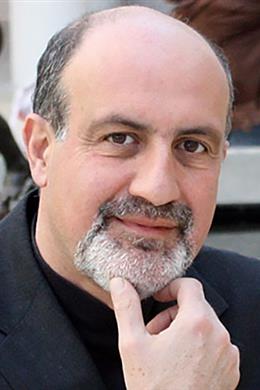
Nassim Taleb
Known as the father of the Black Swan, Nassim ranked 40th among the 50 most influential business thinkers in Crainer Dearlove in 2009, holding senior positions at several major banks, focusing on complex derivative transactions, including overseeing currency derivatives at UBS and fixed income derivatives at Credit Suisse in New York. He is currently a member of several hedge fund boards. Since 2000, Nassim has consulted on risk management for several major institutions, seven of the largest banks and investment banks, and two of the largest reinsurance companies. And he is famous for his two best-selling books, The Random Rich Fool and The Black Swan. The reason why he is called the father of the black swan is due to the black swan theory invented by Nassim. Nassim believes that financial markets are unprepared for unexpected events, and even star funds such as long-term capital management companies overlook the possibility of human disasters. And the occurrence of these events is not controlled by the financial market, and various dangers always exist, and disasters may occur at any time. In addition, there are many labels on Nassim's body - after the famous Lebanese family - the parents' families are prominent political and academic families; Self study to achieve success - Although he has a high degree, he did not become obsessed with mathematical statistics when he was young. According to him, mathematical statistics are mainly self-taught; Mastering multiple languages - he can speak French, English, Arabic, Spanish, Italian, and even understand ancient Greek, Latin, Aramaic, and Hebrew; A successful and unconventional trader, in his early 20s, he began working as a trader. When the market crashed in 1987, 27 year old Nassim had already achieved financial freedom and provided protection for traders from the Black Swan incident. He has made a lot of money in every major crash in recent decades; Nassim, a cancer survivor, developed throat cancer in the 1990s but has since recovered; Bestselling author - He has written two books that are highly popular worldwide, The Fool Who Becomes Rich Randomly and The Black Swan; Scholar Nassim is currently the most revered risk management theorist and a distinguished professor at New York University. He has been a member of the Hall of Fame for Derivatives Trading Strategies since 2001.
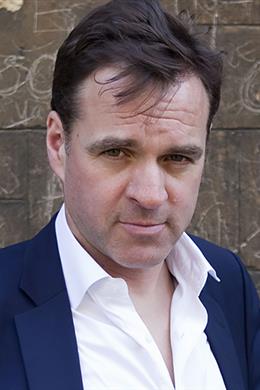
Neil Ferguson
Niall Ferguson, a Scottish British, is one of the most famous historians in the UK. He is Professor Lawrence A. Tisch of the History Department at Harvard University, Senior Researcher at Jesus College at Oxford University, and Senior Researcher at the Hoover Institution at Stanford University. He is an authority on the study of the Rothschild family history. He is one of the few experts who can span the bachelor's, financial, and media fields. In 2004, it was named one of the 100 people who have influenced the world by Time magazine. Neil has currently written a large number of television films, among which the rise of currency won the 2009 International Emmy Documentary Award. His work Civilization 2012 and top financiers have also been filmed as television documentaries. His first book, Paper and Tie, was nominated for the Historical Works Annual Award. In 1998, he published The Compassion of War, which received worldwide acclaim. In the same year, his other book, the Rothschild family, won the Wordsworth Award, the Wingate Literature Finalist Award, and the National Jewish Book Award in the United States. In 2001, he published Money Relations: Money and Power in the Modern World, 1700-2000. A year later, he became a researcher at the Hoover Institute. His other works include Virtual History 1997, the rise and fall of the British Empire, the lessons of world order and global power 2003, the rise and weakening of the giant America in 2004, and the conflict of the 20th century and the decline of Western power in 2006.
Nicholas Weber
Nicholas Weber is one of the top business thought leaders in the United States. As a senior partner of Larson Science Limited, Nicholas collaborates with Fortune 500 companies around the world to help them lead the industry in innovation and strategy. Unlike many other advisors, Nicholas is not a theorist. Nicholas Weber has obtained over 40 patents granted by the United States Patent and Trademark Office for a series of groundbreaking technologies, including the world's smallest medical implant and a wide range of industrial, consumer, and wearable technologies. Nicholas Weber is often referred to as a missionary of innovation. Nicholas' keynote speech mainly explores the role of disruptive innovation in different business fields: talent management, future technology, and customer experience. For example, the healthcare sector is the theme of large-scale disruptive innovation. Drugs, medical devices, clinical delivery methods, and everything in the entire medical system is rapidly being disrupted. Clinical consultations are gradually being replaced by low-cost and convenient applications created through game mechanics and socialization. Nicholas also links disruptive innovation with how to attract and retain versatile new century talents. Most executives rely on new century stakeholders to help them stay on track in emerging technology fields. Unfortunately, new leaders must understand the trajectory of change on their own, as it involves technology, social groups, connectivity architecture, and disruptive innovation. Leaders cannot lead what they do not understand. Nicholas explained how to attract talents from the new century and how to create an innovative culture that leads the future. There are many complex variables in future technology. But we have aggregated several known trends to help some business organizations understand how technology will drive their future. Nicholas often explores the impact of digital universalization, 3D printing, drones, nanotechnology, and other enabling factors such as fundraising, crowdsourcing, open innovation, and the power of highly influential social networks created through game mechanics and socialization. Nicholas explains in the node code of his new book how old-fashioned customer classification and customer service programs are gradually being replaced by disruptive innovators who use game mechanics, high connectivity, and socialization to destroy competition.
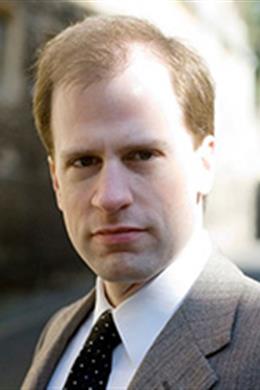
Nick Bostrom
Nick Bostrom is a famous Swedish philosopher who proposed that if we introduce super intelligence before solving control problems, the future development of artificial intelligence research would pose a significant threat to human survival. Bostrom warned that in addition to artificial intelligence taking over the world and intentionally exterminating humanity, even if given a harmless task, super artificial intelligence will be optimized, leading to the extinction of humanity. He said that although artificial intelligence brings us many benefits, solving control problems is still a top priority. Some critics in the field of artificial intelligence believe that artificial intelligence actually does not have such great capabilities, and this situation only occurs in long-term and extreme situations. Bostrom has published over 200 works, including the New York Times bestseller Super Intelligent Pathways, Dangers, Strategies 2014, and Observational Selection Effects in Human Bias Science and Philosophy 2002. In 2009 and 2015, he was selected as one of the top 100 global thinkers in foreign policy. Bostrom works in super intelligence and is concerned that it will pose a threat to human development in the coming centuries - similar views shared by Bill Gates and Elon Musk. Bostrom was born in Helsingborg, Sweden in 1973. He grew tired of studying when he was young and dropped out of high school in his final year to study at home. He strives to learn various disciplines, including anthropology, art, literature, and science. Despite being called a serious person, he also worked for the London Comedy Circus. He holds a bachelor's degree in philosophy, mathematics, logic, and artificial intelligence from the University of Gothenburg, a master's degree in philosophy and physics from the University of Stockholm, and a master's degree in computational neuroscience from King's College London. During his studies at the University of Stockholm, he studied and analyzed the relationship between language and reality through the philosopher Quine W V Quine. In 2000, he obtained a PhD in philosophy from the London School of Economics. He served as a professor at Yale University from 2000 to 2002 and as a postdoctoral researcher at the British Academy of Sciences at the University of Oxford from 2002 to 2005. Risky Bostrom's research focuses on the future and long-term outcomes of humanity. He introduced the concept of risk and defined it as a negative outcome that would lead to the extinction of primitive intelligent organisms on Earth or permanently curb their development potential. Bostrom and Milan Cherkovich described the relationship between the presence of risk and significant global risks in the 2008 Global Disaster Risk Report, linking the presence of risk with the observation selection effect and Fermi paradox. In 2005, Bostrom established the Institute for the Future of Humanity to study the distant future of human civilization. He is also a risk research consultant for the center. The fragility of human beings in the face of the progress of artificial intelligence, as mentioned by Bostrom in his book \Paths, Hazards, and Strategies of Super Intelligence\ in 2014, the birth of super intelligence means that humans may be heading towards extinction. Bostrom cites the Fermi paradox to prove that extraterrestrial intelligent life in the universe is a victim of its own technology. One machine is equivalent to human intelligence
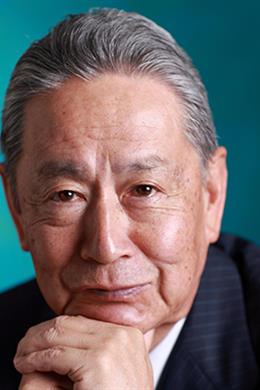
Nobuyuki Idei
Nobuyuki Idei is the former chairman of SONY and group CEO from 2000 to 2005. He currently serves on the boards of Baidu, FreeBit and Lenovo, and retired from the board of Accenture in 2015. Nobuyuki Idei is the founder and CEO of Quantum Leap, a consulting firm founded in 2006 that specializes in advising private and public institutions on the changing role of technology in the 21st century. He has served on the boards of General Motors, Yoshimoto Kogyo, and Nestle, and has held advisory positions in various organizations, such as advisor to the Bank of Japan, member of the National IT Strategy Council of Japan, and Vice chairman of the Japan Keidanren. In 1998, he was awarded the Officier by the French president. ordre national de la Legion d#39; honneur was named the 1997 Asian Person of the Year by Fortune magazine. Mr. Idei holds a Bachelor of Science degree in Economic and Political Science from Waseda University.
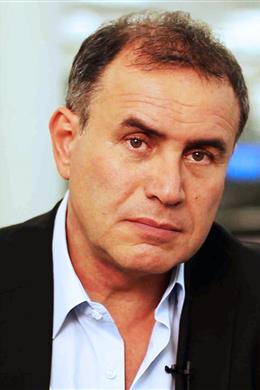
Nuril Rubini
Nouriel Roubini is a renowned macroeconomist who successfully predicted the global financial crisis and subprime mortgage crisis in 2007, known as Dr. Doomsday. Nuril Roubini served as a Senior Economist for International Affairs at the White House Council of Economic Advisers and a Senior Advisor to the Under Secretary for International Affairs of the US Treasury, helping to resolve the Asian and global financial crises. The International Monetary Fund, the World Bank, and many other renowned public\/private institutions consult with them for professional knowledge. Nuril Roubini is a professor of economics at the Stern School of Business at New York University. He is also the chairman of Roubini Macro Associates, a global macroeconomic consulting firm in New York. He has published numerous theoretical, empirical, and policy papers on global economic issues, and has co authored books on political cycle theory and empirical evidence. According to MIT Press, 1997, the International Institute of Economic Research on Emergency Relief or Contrary Response to Emerging Market Economic and Financial Crises, 2004, and Penguin Press, a crash course on crisis economics understanding the financial future, 2010. The global media is flocking to Dr. Roubini's views on global economic issues. At the same time, he is also a frequent guest in many business news programs. He has always been a prominent figure in the New York Times magazine and other top current affairs publications. Among them, the Financial Times also provided extensive coverage of his views. Dr. Rubini obtained a bachelor's degree from Bocconi University in Milan, Italy, and later studied at Harvard where he obtained a doctoral degree in international economics. Before joining Stern, he taught economics at Yale University.
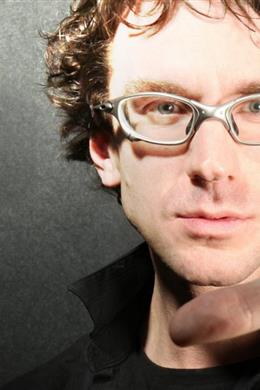
Pablo Horman
Pablos Holman is a futurist, inventor, and renowned hacker who breaks and establishes new technologies from a unique perspective. Pablo provides consulting services globally for invention and design projects that absorb new technologies - making crazy ideas more practical, and vice versa. He helped create the world's smallest computer, designed 3D printers for the famous desktop 3D printer brand MakerBot, co built a spacecraft with Jeff Bezos, created an artificial intelligence proxy system, and invented the Hackerbot robot. Currently, Pablo works for Nathan Myhrvold, former CTO of Microsoft, at the Intelligent Ventures Laboratory at the High Intelligence Invention Laboratory, where various future invention projects are underway, including fission reactors powered by nuclear waste, systems that reverse global warming, and mosquito killing laser cannons that reduce malaria infection rates. Pablo has delivered speeches on invention, innovation, cybersecurity, and future technology at several world-renowned technology summits, including the United Nations General Assembly, the World Economic Forum, the Central Intelligence Agency meeting, TEDx, and the annual hacker conference Def Con.
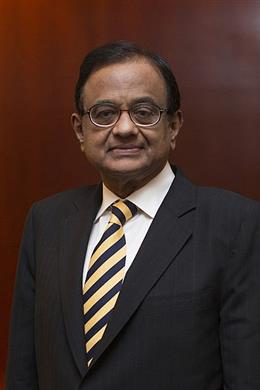
Palaniapan Chidambaram
From 2004 to 14, Paranya Panchidambaram served as the Minister of Finance of India. During this period, after the terrorist attacks in Mumbai, he served as the Minister of the Interior for three and a half years, starting from November 2008. Chidambaram is a corporate lawyer and an important member of the government led by the previous Congress. On September 15, 2014, the Indian National Assembly appointed Chidambaram as one of the 13 senior spokespersons. Chidambaram strictly controls government spending and has launched a grand tax reform plan to address the massive fiscal deficit. His practice of exempting farmers' debts has stimulated the overall demand of the Indian economy, helping India effectively avoid the impact of economic recession. After graduating from the Presidential College in Statistics at Dean's College in Chennai, he obtained a Bachelor of Laws degree from Madras University and a Master of Business Administration degree from Harvard Business School. At the same time, he also holds a master's degree from Loyola College in Chennai.
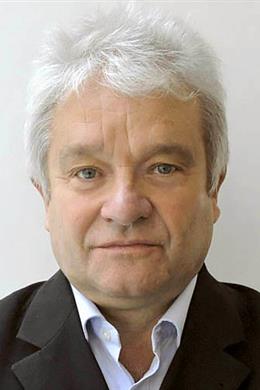
Paul Nurse
Paul Nass, British biochemist. He was awarded the Nobel Prize in Physiology or Medicine in 2001, along with Lilan Hartwell and Tim Hunt, for discovering key regulatory factors in the cell cycle. From 2010 to 2015, he served as the President of the Royal Society's National Academy of Sciences, including world-class scientists such as Hawking. In March 2017, Sir Paul began serving as the Chancellor of the University of Bristol, a top university in the UK, awarding degrees to students who graduate each year. In order to welcome Sir Paul's appointment, Buda raised a huge NASA lunar model in the Welsh Hall of the school. In January 1949, Nass was born into a working class family in England. His father was a mechanic and his mother was a cleaner. There were hardly any books at home, but at the age of 8, when he saw Soviet Sputnik 2 flying over London, he became obsessed with science. After graduating from high school, he was rejected by the university due to failing the French exam. Fortunately, a professor persuaded him to make an exception and enter the university. In 1970, Nass obtained a Bachelor's degree in Biochemistry from the University of Birmingham in the United Kingdom, and later transferred to research in yeast genetics and cell biology. In 1973, he obtained a doctoral degree from the University of East Anglia. He worked at the London laboratory of the Imperial Cancer Research Foundation and the University of Oxford, and his research team discovered the cyclic dependent kinase CDK that controls yeast cell division, indicating that humans have the same gene corresponding to this enzyme. The Karolinska School of Medicine commented that the findings of Hartwell, Nass, and Hunter have significant implications for studying cell development, especially for exploring new ways to treat cancer, as defects in cell cycle control can lead to chromosomal mutations in carcinogenic cells. This work allowed Nass and two other scientists to share the 2001 Nobel Prize in Physiology or Medicine. The research results of Paul and others will benefit most biomedical research fields. It will help to understand the instability of chromosomes in tumor cells, that is, how chromosomes or parts of chromosomes are rearranged, lost, or unevenly allocated to offspring cells. This change in chromosomes is likely caused by defects in the cell cycle regulation process. Previous research has shown that CDK molecules and cyclin genes are functionally equivalent to oncogenes that can cause tumors. Moreover, in cell cycle regulation, CDK molecules and cyclins can also act in opposition to tumor suppressor genes and oncogenes. They can inhibit excessive cell proliferation and prevent tumor formation, hence the synergistic effect of tumor suppressor gene products such as p53 and RB. These achievements in the field of cell cycle research will undoubtedly be applied to tumor diagnosis. In human tumors such as breast cancer and brain tumor, the level of CDK molecule and cyclin will sometimes increase. In the long run, this will also open up new avenues for cancer treatment, as people can design drugs that control cell growth and division based on cell cycle regulators to prevent the proliferation of cancer cells. Clinical trials using CDK molecular inhibitors for tumor treatment are currently underway.
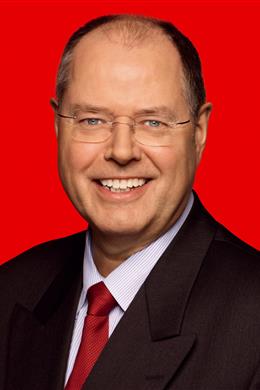
Pel Steinbruck
During the Great Coalition government led by German Chancellor Angela Merkel's cabinet from 2005 to 2009, Pelstein Bruck was an official in the German government. He is responsible for making some difficult and unpopular decisions during the economic crisis to mitigate the long-term impact of the crisis. Although he released an almost balanced budget plan in 2008, government debt still rose to a new record level. In 1993, Peer Steinbr \u00fc ck of Schleswig Holstein became the Minister of Economy, Technology, and Transportation of the State of Schleswig Holstein. After studying economics, he worked in the German Federal Government and the Prime Minister's Office, and served as the Minister of Economy and Infrastructure in North Rhine Westphalia in 1998, as well as the local Minister of Finance in 2000. Afterwards, he became the Chief of Staff of Johannes Rau, Governor of North Rhine Westphalia in North Rhine Westphalia. One of Pelstein Bruck's main achievements was the introduction of the tax identification number policy during his tenure as Federal Treasury Secretary, which has been widely discussed for many years. From 2002 to 2005, Peir Steinbr \u00fc ck served as the Governor General of North Rhine Westphalia in the state of North Rhine Westphalia. He also leads a coalition government composed of the Social Democratic Party SPD and the Green Party. After the 2005 German Bundestag elections, the Social Democratic Party (SPD) and the Christian Democratic Union (CDU) formed a grand coalition government under the leadership of new Chancellor Angela Merkel, while Steinbrueck became Germany's finance minister.
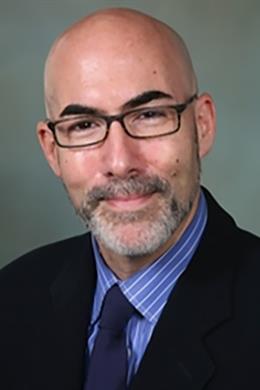
Peter Goodman
Peter Goodman is a New York Times European Economic correspondent headquartered in London. As an award-winning journalist, Goodman has conducted research projects, closeups, and analysis columns on over 30 countries throughout his career, covering various topics, including the Iraq War and the recession of the US economy during the Great Depression. Previously, Goodman was the global editor in chief of the International Business Times, headquartered in New York. He built a traditional staff focused on collecting information into an excellent team focused on original reporting. While sending journalists to Beirut, Istanbul, Shanghai, Moscow, and Mexico City, he also oversees over 200 journalists and editors from the London, Bangalore, and Sydney press offices. From 2010 to 2014, Goodman was the business executive and global news editor of the Huffington Post. He is responsible for overseeing the original coverage of international, business, economic, and technological news on the website, and managing more than 30 journalists and editorial teams distributed in the United States and around the world. After 20 years in the newspaper industry, Goodman joined the Huffington Post in 2010. This is a milestone in the history of media development, marking the collapse of the high wall between printing and digitization, allowing Goodman to examine the massive acquisitions of media by technology giants from an insider's perspective. As a science and technology reporter of the Washington Post in the late 1990s, Goodman has a cutting-edge view of the Internet foam. During his five years as the head of the Shanghai bureau of the Washington Post and an Asian economic journalist, he documented how China emerged as a global power and reported on the Middle East, Europe, and Latin America. As a national economic journalist for the New York Times from 2007 to 2010, Goodman was one of the earliest American journalists to realize and warn that a recession could worsen into the Great Depression. Goodman is the author of the 2009 Times Weekly Catalogue on the End of PAST DUE Monetary Easiness and the Recovery of the US Economy. The book was selected by the New York Times Book Review as the title of the editor's choice and was selected as one of Bloomberg's top 50 business books. Goodman speaks Mandarin Chinese and Indonesian.
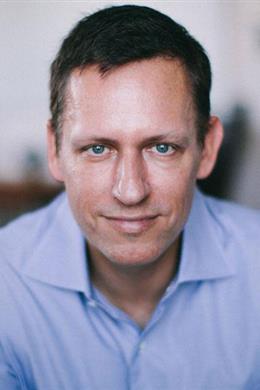
Peter Thiel
He is the godfather of Silicon Valley investment, a billionaire, a chess master, a practicing lawyer at top law firms in New York, and the founder of two Silicon Valley technology companies. He is a star venture capitalist, hedge fund manager, derivatives trader, co author of best-selling books ranging from 0 to 1, teacher at Stanford Business School, public speaker, and Silicon Valley thinker. At the age of 6, Thiel began playing chess, and at the age of 12, he ranked 7th in the Under 13 category in the United States. He continued to participate in international chess tournaments until his thirties, and still plays lightning fast games online every 5 minutes to this day. The life motto stuck on his chess set is born to win. He is also very good at mathematics, and when he was attending a public school in San Mateo, he ranked first in a math exam across California. A middle-class family gave him an elite education, and he has always been a top student. In high school, a friend sent him a note that said, 'You will definitely be admitted to Stanford.'. Sure enough, he went to Stanford for his undergraduate degree and then obtained a Juris Doctor's degree from Stanford Law School. After graduation, he entered a top law firm in New York and had a life that many people envied. But in that large law firm in New York, he encountered the law of siege because it was a place where everyone outside wanted to come in and everyone inside wanted to escape. In early 1996, Thiel made a significant change and left New York to come to Menlo Park. He raised $1 million from family and friends to start his own hedge fund Thiel Capital. It wasn't until 1998 that Peter Thiel and his partner founded the electronic payment company Infinity, realizing the enormous value that most people overlook in electronic currency. In 1999, the company transformed and released PayPal, providing electronic transfer services built on top of the US banking system. In 2000, Elon Musk founded XCom, which was also engaged in electronic payments, next to PayPal. However, at that time, competition between the two sides gradually intensified, and Peter Thiel's engineers even had to design a bomb to blow up Musk's company. Fortunately, Peter Thiel discovered and promptly stopped it. Peter Thiel rationally realized that blind competition could be harmful to both sides. He took an unusual path and decided to set up a company with Musk at a ratio of 5050. In fact, thanks to Peter Till's foresight, the combined PayPal successfully survived the Internet foam in 2000. In 2002, PayPal was acquired by eBay, and Pettier cashed out $55 million and renamed Thiel Capital Clarium Capital Management, entering the hedge fund industry. Peter Thiel and his colleagues practice discovering truths that others have not discovered, not following the usual path, and practicing the concept of reverse investment. When others are selling, they buy Japanese government bonds, but when others are looking down on the energy industry, they buy in large quantities. In the summer of 2008, Clarium's assets exceeded $7 billion, increasing sevenfold within six years. He is also investing in industry names
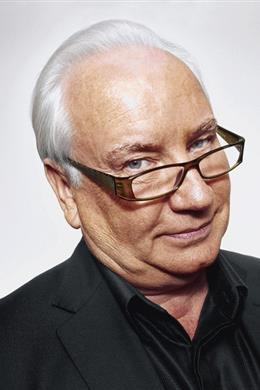
Ray Hammond
For more than 30 years, Ray Hammond has been exploring how major trends will affect society and business in the future through research, writing, speaking and broadcasting. He is a successful business leader and serial entrepreneur with hands-on experience in creating, building and leading successful businesses. In 2010 Mikhail Gorbachev awarded him the United Nations Gold Medal for his contribution to the cause of futurology. In the accompanying citation, President Gorbachev said that we are pleased to award the prize to Ray Hammond because of his constant commitment to research and his amazing speculating about the future based on scientific knowledge and sincere concern for humanity. Since 1980, Hammond has published 17 books on the future, a testament to the long-term accuracy and reliability of his predictions. Today, the future he described three decades ago is within sight. The Online Handbook, 1984 was the first to make clear the importance of the Internet and to state that search is the driving force behind online advertising and e-commerce. His seminal book, The Modern Frankenstein, 1986, was the first to predict the importance of DNA analysis, genetic engineering, cloning, and the birth of super-intelligent machines, and suggested that these technologies could become competitors to humans in the 21st century. In 1996, his international bestseller Digital Business laid out the blueprint for e-commerce and provided business plans for online retail businesses. He is the author of four futuristic novels, which are bestsellers in the United States, Britain, France, Spain, Poland, Japan and China. In addition, Intel commissioned Ray to create a short story based on Intel's research on The Morrow Project. He has given many academic lectures around the world and is a member of the Human Interaction Lab at the University of Maryland. He is a Fellow of the Royal Society of Arts and a Fellow of the World Innovation Foundation, a charity with 3,000 members, 91 of whom are Nobel Prize winning scientists. Ray Hammond is currently working on a book called Smart bodies: How digital technology will transform your health. He is currently a member of the Science Fiction Advisory Board of XPRIZE SFAC, a charitable organization founded by prominent technology figures to encourage and promote innovation in all areas of technology. On behalf of the 650 delegates, I would like to thank Ray. His speech was keen to the point, deeply humorous and inspiring, and was well received by the audience. - EuRA 2015, Porto, Portugal We promised delegates a different conference experience and Ray Hammond delivered. Power Of Three Investors Conference, Stockholm The Future of work is a challenging topic, but Ray Hammond describes the possible future of work in his inspiring talk. ——Employers#39; Network, London
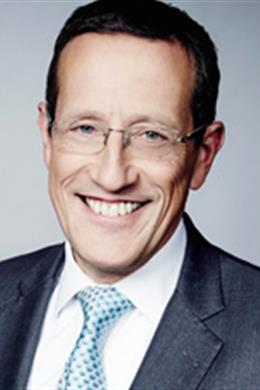
Richard Quest
Richard Quest is the chief host and renowned financial journalist of CNN International Channel, and he is the most well-known member of the CNN team. Quest's programs include Quest Means Business, CNN Business Traveler, CNN Business Traveler, CNN Marketplace EuropeCNN European Market Interpretation, and he has also hosted programs such as CNN Today and Quest. Quest Means Business breaks the monotony of commercial and financial programs, cleverly combining economics with television entertainment. Politicians and renowned entrepreneurs from various countries have appeared on the program, such as British Prime Minister Cameron, Czech Prime Minister Petnicas, European Commission President Barroso, IMF President Christina Lagarde, JPMorgan Chase CEO Jamie Damon, DreamWorks Animation CEO Jeffrey Cassenberg, Ford Motor CEO Alan Mulally, and others. Quest's unique style has made him a star figure in the field of commercial and financial broadcasting. He regularly reports on the G20 summit and attends the World Economic Forum in Davos every year. His coverage covers all financial centers and large securities markets worldwide, and he has covered all financial crises since Black Monday in 1987.
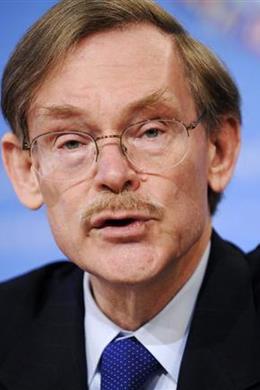
Robert Zoellick
Zoellick was born in Illinois in 1953. In 1975, he graduated from Swarthmore College in the town of Swarthmore, 17 km outside Philadelphia, Pennsylvania, USA. He graduated from Harvard University in 1981 with a Juris Doctor from Harvard Law School and a Master of Public Policy from the Kennedy School of Government. From 1985 to 1988, Zoellick served in the Treasury Department, including as counselor to Secretary James Baker, Executive Secretary of the Treasury, and Deputy Assistant Secretary for Financial Institutions Policy. He received the Alexander Hamilton Award, the highest award of the Treasury Department. He was the main negotiator at the 2+4 German Unification Conference, for which he received the Grand Cross of the Order of Chivalry from the German government. The governments of Mexico and Chile awarded him the Order of the Aztec Eagle and the Order of Merit, respectively, the highest honors available to foreign citizens. He was Professor of National Security Affairs at the United States Naval Academy during the 1997-1998 fiscal year. He became the United States Trade Representative in 2001. He has reactivated the U.S. free trade process, increasing the number of free trade agreements in the United States fivefold. He succeeded Armitage as deputy secretary of State in 2005. He participated in the negotiations on the reunification of Germany, China's accession to the World Trade Organization, and the Doha Round of World Trade Organization negotiations. During his tenure as Deputy Secretary of State, he devoted himself to developing China-Us relations and put forward a new diplomatic concept of treating China as a stakeholder, which won praise from the Bush administration and other parties around the world. During his visit to China, he embraced a giant panda in Sichuan Province and was dubbed by the US media as "Hugger Panda Pie". Zoellick resigned as deputy secretary of state in June 2006 to become an international vice president at Goldman Sachs, a prominent Wall Street investment bank, giving him the ability to manage a large international organization. Zoellick's extensive experience in economics and diplomacy was a key reason he was nominated by former U.S. President George W. Bush and eventually approved by the World Bank's executive board. From 2007 to 2012, Robert Zoellick served as the 11th President of the World Bank. Zoellick is one of the world's leading authorities on the global economy, international finance and foreign policy. As president of the World Bank, he turned around troubled situations, recapitalizing banks and providing assistance to developing countries during food, fuel and energy crises. He has modernised the bank to make it more accountable, flexible, fast and transparent, fighting corruption and encouraging good governance. Through the bank's International Finance Corporation, he has played a growing role in the private sector, and under his leadership, business has grown, equity investment has expanded, investment has become more flexible, and poor countries, especially in Africa, have received support from sovereign funds and pensions. He is currently chairman of the International Advisory Board of Goldman Sachs and serves on the international advisory boards of Temasek, Singapore's largest sovereign wealth fund, Lauride International University Alliance and Rolls-Royce. Zoellick is also a senior fellow at the Belfer Center for Science and International Affairs at Harvard's Kennedy School of Government and a board member of the National Endowment for Democracy and the Peterson Institute for International Economics.