Technology & Finance, Enterprise management
24 位演讲者

Randi Zuckerberg
Randy Zuckerberg is the founder and creative director of Zuckerberg Media Company. As an early employee of Facebook, Randy created and ran the company's marketing plan as a pioneer in social media. She led the company in implementing the US election and international political strategy, and created Facebook's live streaming feature through media collaboration during the 2008 presidential inauguration. In 2011, Randy was nominated for the Emmy Award for his innovative coverage of the 2010 midterm elections through a unique combination of online and television news coverage. Since the establishment of Zuckerberg Media, she has led several social media production activities and led the implementation of development projects for institutions such as BeachMint E-commerce, Clinton Global Initiative, Cirque du Soleil, The Tony Blair Faith Foundation, and UN Foundation. Randy has appeared in numerous news media outlets, such as CNN, Good Morning America, Today Show, Bloomberg News, ABC # 39; S World News et al. She is also a journalist for the 2011 Golden Globe Awards and the World Economic Forum in Davos. She often gives speeches on the future impact of social media on major global conferences. Recently, Randy was appointed to work at the United Nations Global Entrepreneurs Council and the World Economic Forum's Global Social Media Committee; Global Council on Social Media and the US Broadcasting Board of Governors Commission on Innovation. Her speech topics include the impact of fresh or emerging media platforms on the daily lives of modern consumers and their impact on consumer behavior. In this speech, Randy analyzed some outstanding social media platforms in the social media community, such as Pinterest, Facebook, Twitter, and the mindset of modern consumers. In addition, it also covers some youthful and exciting business development concepts: game mechanics; Crowdfunding; Personal platforms and self media brands; Changes in video and live streaming, and so on.
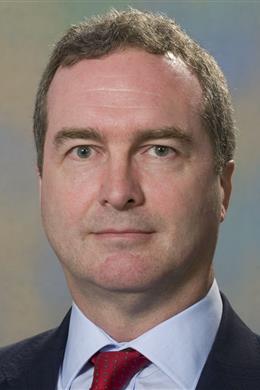
Robert Hannegan
From 2014 to 2017, Robert Hannigan served as a director of GCHQ, the largest intelligence and networking agency in the UK government. Hannigan has been working in cybersecurity and technology for a long time. He formulated the UK's first cybersecurity strategy, showcasing the UK government's ambition to create the safest living quarters and online business sector. Hannigan made great efforts to enhance the technical skills of the leadership team, and during his tenure as a director, he witnessed the biggest internal transformation of GCHQ after the Cold War. Hannigan served as the security advisor to the British Prime Minister from 2007 to 2010, providing advice on counter-terrorism and intelligence matters. As the head of intelligence, security, and recovery at the Cabinet Office of the UK government, he is responsible for providing funding and supervision to three UK intelligence agencies. For the past decade, Hannigan has lived in Belfast and, as Tony Blair's chief administrative advisor, has been involved in advancing the peace process in Northern Ireland. He is responsible for negotiating with various political parties and paramilitary personnel, and liaising with the United States, Ireland, and other governments. He is the only creative civil servant mentioned by Tony Blair in his autobiography. He has a special fondness for GCHQ's predecessor, Bletchley Park, which used to be a code cracking center and the birthplace of computers. On his first day in office at the State Administration of Communications, he criticized multiple social media companies and sparked international controversy. Hannigan made the work of GCHQ public to the media for the first time and was widely praised for uncovering the secret world of the Government Communications Administration. He has always advocated for diversity and inclusivity, which is also part of his broader campaign to improve online skills. He was the first intelligence agency leader to deliver a speech at the Stonewall Work Conference, during which he apologized to Alan Turing and other LGBT employees for their plight. Hannigan's efforts in promoting female participation in technology, BAME recruitment, and neurodiversity have been recognized. In addition, he also established the National Cyber Security Centre in the UK. As part of the Government Communications Administration, the center was officially authorized to open by Queen Elizabeth in 2017.
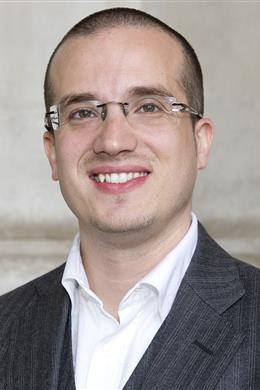
Simon Dixon
Simon Dixon, founder and CEO of the future banking crowdfunding website BankToTheFuturecom, is the author of 97 ways in which a world without banks, students, and CEOs can influence your journey to the pinnacle of banking and finance. He is an active banking reformer and a member of the UK Digital Currency Association and Crowdfunding Association, often discussing the impact of finance on the future of governments, businesses, investors, and financial institutions. He used to be an investment banker and left the investment bank in 2006 to start his own business. Before starting his career in investment banking, his educational goal was to become an economist. He started his career as a trader and later worked in corporate finance, assisting venture capitalists in exiting the London Stock Exchange. By assisting in the exit of venture capital and the listing of the company, he obtained an angel fund to start his own business, with a focus on alternative financial businesses. Simon's remarks have widely appeared in news media, including the BBC, Financial Times, Reuters, Bloomberg, and Wall Street Journal.
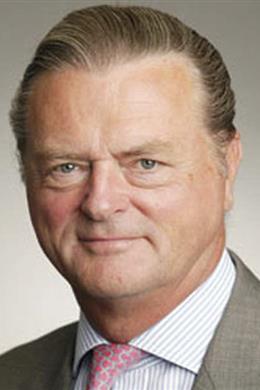
Tom Purves
Tom Purvis served as the CEO of Rolls Royce, the world's top ultra luxury sedan manufacturer, from 2008 to 2010. Prior to this, he served as the Chairman and CEO of BMW North America from 1999 to 2008, as well as the Chairman of BMW's All Americas region. Tom has extensive sales experience and is able to lead multinational companies in increasing sales revenue in a complex international competitive environment. He once led world-renowned car brands through the recession and achieved significant profits, repeatedly exceeding the company's expectations. Under his leadership, from 1999 to 2008, BMW's sales in the United States increased from 154968 units to 303190 units, an increase of 96%. Among them, the sales of micro cars increased from 0 to 54000 units in seven years. Sales in Canada, Mexico, and Latin America have all increased fourfold. Tom's most significant innovation lies in his pioneering use of event marketing and bulk sales in Saudi Arabia and the Gulf region from the mid-19th century to the late 1970s to promote sales growth. He also introduced satellite TV live streaming services to BMW in the 1980s and was the earliest pioneer to creatively apply internet communication technology to the automotive industry. In the early stages of his career, Tom served as the Managing Director of BMW's UK region and the Sales Director of Land Rover in the UK. He has continuously achieved breakthrough success in leading a large cross functional team to release new products, proposing innovative marketing strategies, and exploring new profit points to expand the market. Tom is an outstanding negotiator and diplomatic ambassador who can establish solid professional relationships with strategic partners and build consensus among organizations. Since 2011, Tom has been serving as a visiting professor in management practice at the Christian University of Canterbury in the UK and at the Business School of the University of Glasgow in the UK. Tom has extensive experience in both the automotive industry and business management, and is willing to share it.