Celebrity
107 位演讲者
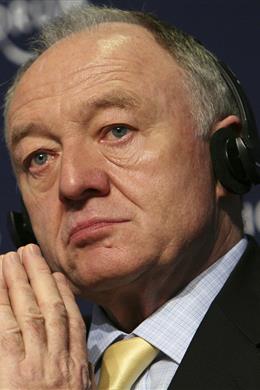
Ken Livingstone
Ken Livingstone was born in southern London in 1945 and is an authentic Londoner. Livingstone has always been an unconventional figure in British politics, known for being outspoken and outspoken. His unique left-wing style almost caused him to capsize in politics, and his relationship with Prime Minister Blair has always been tense and lax. But for decades, he remained the same. Livingstone joined the Labour Party in 1969 and began his political career, having been elected to parliament twice. In the Labour Party for more than 30 years, he has won the love of grassroots members, but is not allowed by the top leadership of the Labour Party. He is willing to engage in dialogue with the Sinn Fein Party and the Irish Republican Army, support gay organizations, support the European single currency policy, and call for the abolition of the monarchy, all of which are incompatible with the political mainstream in Britain. Due to his leftist stance, he is known as the Red Ken. Former Prime Minister Margaret Thatcher did not like him and regarded him as a troublemaker, while current Prime Minister Blair once described him as a disaster in London. From late 1999 to early 2000, there was a personal struggle between Livingstone and the Labour Party, as well as between Livingstone and Blair, surrounding his candidacy for mayor of London. Blair openly opposed Livingstone's election, saying that it was the extreme left policy he represented that kept the Labour Party out of office for 18 years. The old city of London, with a population of over 7 million, has never had its own mayor. In 1999, as soon as the ruling Labour government decided to allow democratic elections for mayor in London, Livingstone announced his readiness to run for mayor. The Labour government was concerned that Livingstone's election would run counter to the existing Labour line and hoped that he would show loyalty to the party and give up the election, but Livingstone remained unmoved. Livingstone's various signs of independence angered the Labour government, which ultimately nominated Health Minister Frank Dobson. This angered Livingstone, who decided to bypass the Labour Party and announce his candidacy as an independent candidate. After Livingstone announced his candidacy as an independent candidate, Blair simply expelled Livingstone from the Labour Party. Later, Livingstone claimed that running as an independent candidate was a political gamble he chose. Fortunately, he, who is adept at using the media to create momentum and possesses eloquence, actually won the bet without the support of political parties behind his back. After Livingstone was elected as the mayor of London in May 2000, he did not disappoint expectations and made bold reforms to London, the most important of which was to solve the transportation problems that had plagued London for many years. With the efforts of Livingstone, London has officially imposed a city entrance fee, with vehicles entering an 8-mile radius of central London being charged \u00a3 5. Although there were some opposing voices at the beginning of the announcement, it has been proven that the collection of entrance fees has indeed alleviated the long-standing traffic congestion in central London, providing a successful template for other cities to solve such problems. Due to his creative achievements in solving the traffic congestion problem in central London, Livingstone became one of the top 50 science and technology experts in 2003 among the many Nobel Prize winning Ivy League professors in the United States. During the London bombings in July 2005, his leadership skills were widely praised, and
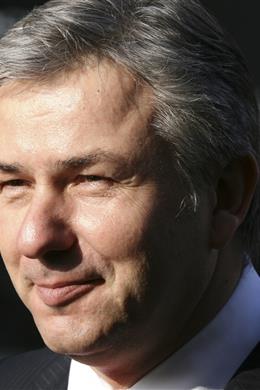
Klaus Wovelet
Klaus Wovelet, a German politician, was elected as the mayor of Berlin twice in 2002 and 2006. During his tenure, Wovelet proposed a marketing term that was poor but sexy, which was very innovative. During his tenure as mayor, Berlin was transformed into one of Europe's most fashionable and popular tourist destinations. Wovelet was born on October 1, 1953 in Berlin. Graduated from the Law Department of the Free University of Berlin in 1984. In the same year, he was elected as the youngest member of the Berlin state legislature. Since December 1999, he has been the parliamentary representative chairman of the Social Democratic Party. Elected as mayor in June 2002. When he ran for mayor in June 2001, he self proclaimed himself a homosexual, causing political turmoil. However, the citizens of Berlin were moved by his frankness and chose him as mayor. Wovelet's political career was not smooth sailing, and in his first five years in politics, few people responded to his policies. But Wovelet still made drastic cuts in public sector wages and housing subsidies to cope with Berlin's huge debt of 60 billion euros. Subsequently, Wovelet actively approached international film producers, hoping that they would come to Berlin to produce and shoot films. Under his management, Berlin gradually attracted a large number of artists, fashion designers, and writers. The tourism industry is also thriving. In September 2006, Wovelet was re elected as mayor. Wovelet is a kind and upright person with a clear political style, and has a great reputation among the public. On his first day as mayor, he came to the homeless shelter in Berlin, cooked for the homeless there, and had meals together. Afterwards, gatherings with the people became a must-have for him every month. His bold reforms transformed Berlin from a heavily polluted fog city to an environmentally friendly city with clean air, water conservation, and energy conservation. He proudly said that there is no big city like Berlin, where the number of private cars per 100000 residents is so low.
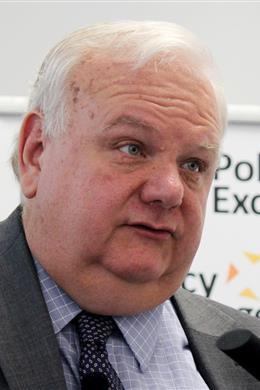
Larry Lindsay
Larry Lindsay is the President and CEO of Lindsay Group. He once held a leading position in politics, academia, and business. Before establishing the Lindsay Group, he served as the Chairman of the White House National Economic Committee and served as the President's Chief Economic Advisor during the 2000 presidential election. Lindsay served as the Director of the Federal Reserve System from 1991 to 1997, serving as a Special Assistant for Domestic Economic Policy for President Bush during his first term, and as a Senior Economist on Tax Policy for President Reagan during his first term. Professor Lindsay served as a professor of economics at Harvard University for five years and also served at the American Enterprise Research Institute. Dr. Lindsay obtained his master's and doctoral degrees from Harvard University. His paper has also been selected as an excellent doctoral thesis by the National Taxation Association.
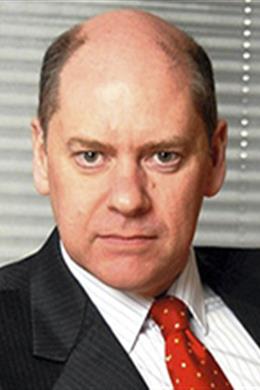
Lord Jonathan Evans
From 2007 to 2013, Jonathan Evans served as the Director of the Military Intelligence Department of the British Security Agency. As an expert on security issues, he joined the HSBC Board of Directors in 2013 and served as a non-executive director, helping the bank address financial and cybercrime issues. Lord Evans is a top spy in the UK, hailed by the Independent as a spy who emerged from the Cold War. He mainly focuses on international and domestic counter-terrorism issues, including measures to address cyber threats. As the Director General, he is a senior advisor to the UK government on national security policy and has joined the National Security Council. Evans is deeply pleased that the UK's ability to protect itself from the threat of modern Islamic terrorism has undergone a significant transformation in his work. As the head of MI5, Evans is an important advisor to the UK government in dealing with national security threats, including terrorism, cybersecurity, and espionage threats. He is also a member of the UK Prime Minister's National Security Council. He also led MI5 to carry out related work to ensure the safety of activities for the 2012 London Olympics and Paralympics. During his long career at MI5, Evans served as an investigator and operations officer for various national security threats, specializing in counter-terrorism and counterintelligence activities. On September 1, 2001, ten days before the 9\/11 attacks, he became the officer in charge of the international counter-terrorism work of MI5. Evans delivered speeches to specific audiences on the security threats and challenges faced by Western society in the 21st century. He utilized his 33 year career in the field of security services to help businesses predict security threats and take appropriate preventive measures. Evans holds a Business Guidance Certificate awarded by the UK Board of Directors and an Honorary Doctorate from the University of Bristol in the UK. He is an Honorary Citizen of Freeman in the City of London and a Senior Associate Researcher at the Royal United Services Research Institute. He is also a non-executive director of the UK National Crime Agency and an honorary professor at the University of St. Andrews. He occasionally writes a series of articles about classic cars for the Sunday Times.
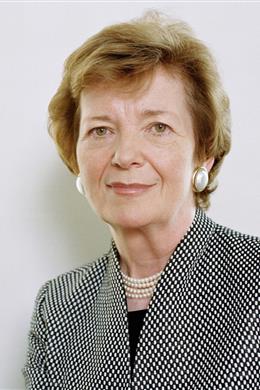
Mary Robinson
Mary Robinson, born on May 21, 1944, is an independent Irish politician, the 7th President of the Irish Republic, and the first female President in Irish history. She served as a council member at the University of Dublin from 1969 to 1989. From 1997 to 2002, she served as the United Nations High Commissioner for Human Rights. She was a scholar, lawyer, and activist before becoming the first independent candidate nominated by the Labor Party, Workers' Party, and Independent Senate in the 1990 presidential election. She was the first person in Irish history to be elected president without Republican support. She is widely recognized as a transformative figure in Ireland, and during her presidency, she opened up a conservative and low-key political environment before revitalizing it. Two months before the end of her term, she announced her resignation and took over the position of United Nations High Commissioner for Human Rights. In 1998, she visited Tibet; She criticized Ireland's immigration policy and accused the United States of using capital punishment. She extended her four-year term by one year and presided over the World Conference against Racism held in Durban, South Africa in 2001. Under continuous pressure from the United States, Robinson resigned in September 2002. After leaving the United Nations, Robinson proposed an initiative to achieve the globalization of rights and ethics, which was scheduled to be completed in 2010. The core activities of this initiative include promoting trade equity and decent work; 2. Promote the right to health and more humane immigration policies; 3. Strengthen women's leadership and encourage enterprises to take on social responsibility. The organization supports capacity building and good governance in developing countries. At the end of 2010, Robinson returned to Ireland and established the Mary Robinson Foundation - Climate Justice. She is committed to building the organization into a center for ideological leadership and education, and advocating for justice for the victims of global climate change. Those victims live in poverty, their rights are not guaranteed, they belong to the marginalized groups of society, and are often forgotten. Robinson was a member of the Council of the University of Dublin and the Director of the Institute of Human Rights and Business. Since 2004, she has become a professor of international affairs practice at Columbia University, mainly teaching international human rights courses. At the same time, she has also given lectures on international human rights at other universities. She is a member of the board of directors of the Mo Ibrahim Foundation, which supports good governance and outstanding leadership in Africa; She is also a member of the Ibrahim Prize Committee under the foundation. Since 2005, she has served as the Honorary Chairman of the European University Center for Human Rights and Democratization (EIUC). She is also the Director of IIED at the International Institute for Environment and Development, a founding member and Chairman of the World Women's Leadership Council, and a European member of the Tripartite Commission. She was awarded the Conscience Ambassador Award by Amnesty International for her commitment to promoting human rights.
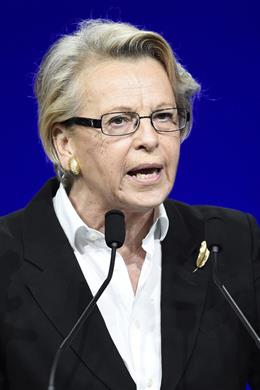
Michele Ario Mali
Michele Ario Mali is currently a member of the European Parliament and has held ministerial positions in multiple departments in France. 1986, 1988, Minister of Education, 1993, 1995, Minister of Youth and Sports, 2002, 2007, Minister of Defense, 2007, 2009, Minister of the Interior, Minister of Overseas Territories and Territorial Communities, 2009, 2010, Minister of State and Justice and Freedom, 2010, 2011, Minister of State and Minister of Foreign and European Affairs, 2010, 2011, November 14, 2010. In the new cabinet after the restructuring of the French government, one of the famous members of the Women's Army in the Sarkozy government 64 year old Michele Ario Marie succeeded Kouchner and became the first female foreign minister in French history. With her position as the first female political party leader in France, Michele established good international connections. Before entering politics, she was an associate professor of public law at the First University of Paris in France. In 2015, she won the Minister of the Year Award.
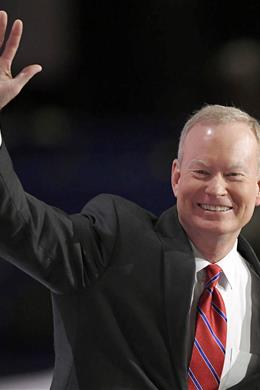
Mick Cornett
Mick Cornett is a former mayor of Oklahoma City, USA, who has been in this position since 2004. He is the first mayor in Oklahoma City's history to serve four consecutive terms, and also the longest serving mayor among the 50 major cities in the United States. In 2017, Cornett was appointed as a member of the Automation Committee of the US Department of Transportation, responsible for overseeing autonomous driving traffic policies. On February 22, 2017, Cornett announced that he would no longer seek a fifth term as the mayor of Oklahoma. One of Cornett's most notable achievements was his ability to address the severe obesity problem in Oklahoma City. He rebuilt the city around pedestrians instead of cars; He examines the city's culture and infrastructure, renovates roads and communities, and creates websites to encourage citizens to register and track their weight loss, driving a city wide diet. After the launch of the movement, although obesity still existed in Oklahoma City, Cornett had made it a public topic. During his tenure as mayor, Cornett also successfully lobbied to form Oklahoma City's first league sports team, the NBA Oklahoma City Thunder, and passed the MAPS 3 project, a $77.7 billion infrastructure project aimed at improving the quality of life in Oklahoma City. Cornett is an advocate for multiple progressive initiatives, including rapid public transportation, economic diversification, urban revitalization, and urban beautification. During his tenure, neighboring regions including the Asia region, Upper City, Capitol Hill, and Manhattan East also achieved economic revitalization. He is also the Chairman of the United States Mayor's Conference, the National Chairman of the Republican Mayor and Local Officer RMLO. He served as the Chairman of the Urban Economic Affairs Committee of the United States Conference of Mayors until 2007. On April 19, 2018, Fortune magazine released the 2018 list of the world's 50 greatest leaders, with Cornett ranking 25th. He has made significant contributions to innovation in school revitalization, public transportation, and urban improvement in Oklahoma City. One month after leading Oklahoma City's 14 year mayoral career, Cornett was rated as the number one city in the United States for entrepreneurship due to its high scores in three different areas: business environment, resource acquisition, and business costs. On September 25, 2018, Penguin Random House released its first book written by Cornett, titled 'The Next American City'. This book is described as an uplifting approach to how American cities reshape themselves and plan for the country's future through citizen engagement, creative public policies, and intelligent urban design. The next American city will focus on reshaping the changes in American urban life and the blueprint for the future.
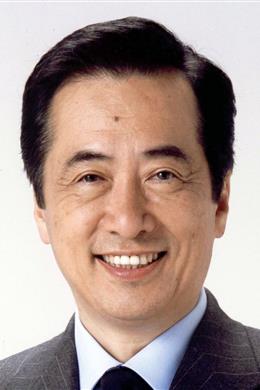
Naoto Kan
Naoto Kan, born on October 10, 1946 in Ube City, Yamaguchi Prefecture, was the 94th Prime Minister of Japan from June 2010 to September 2011, a blue collar politician and civic activist. During his university years, Naoto Kan was a leader in the school's Red Guards. In 1980, he became a member of the House of Representatives, and in 1996, he became Minister of Health and Welfare of Ryutaro Hashimoto's Cabinet. He became famous for handling the AIDS drug case. Later, he founded the Democratic Party of Japan with Yukio Hatoyama and Ichiro Ozawa, and became one of the three carriages of the Democratic Party of Japan. On September 16, 2009, he became Deputy Prime Minister and Minister of the National Strategy Bureau of Hatoyama's Cabinet. Appointed as Minister of Finance on January 6, 2010. On June 4, 2010, Naoto Kan defeated the leader of the Liberal Democratic Party, Sadichi Tanigaki, at their respective plenary meetings in the House and Senate. He succeeded as Prime Minister and pursued the policy of overthrowing bureaucrats, while also serving as the leader of the Democratic Party. On August 26, 2011, due to the tsunami and nuclear accident caused by a magnitude 9 earthquake in Japan, Naoto Kan's disaster relief command was unfavorable, and there was a serious confrontation between the two houses of parliament. Naoto Kan resigned due to the blame. He has been in power for a total of 15 months and is the first Prime Minister to serve for more than a year since Junichiro Koizumi stepped down.
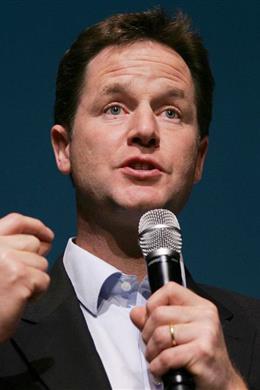
Nick Clegg
Nick Clegg, born on January 7, 1967, is a British politician born in Charlotte Saint Giles, Buckinghamshire, southern England. Formerly served as the Chairman of the Liberal Democratic Party and Deputy Prime Minister of the UK. Clegg ranks third out of four siblings; Father Nicholas Clegg CBE is the chairman of the United Trust Bank, with half Russian and half British ancestry; My mother is Dutch. When Clegg was young, he attended Westminster High School, which was one of the top high schools in the UK. During his school years, he strives to become the center of the drama stage. Friends refer to him as the acne boy. At the age of 16, Clegg went to Munich, Germany to work as an exchange student. With his mother imparting his mother tongue, he understood the five languages of English, German, Dutch, French, and Spanish. After graduating from the University of Cambridge in Social Anthropology, Clegg pursued a master's degree at the University of Minnesota and the European College in Bruges, Belgium. With his language skills and outstanding abilities, he had extensive political experience before entering the workforce. He worked as a journalist in New York, as a corporate consultant in London, wrote articles on economic reform in Budapest, and even received a Financial Times scholarship. In 1999, Clegg was elected as a member of the European Parliament and won his first important election in his political career; I spent nearly a decade in Belgium for this. In the 2005 British election, Clegg was elected as a member of parliament. In 2006, he served as the spokesperson for domestic affairs of the Liberal Democratic Party. In the 2007 Liberal Democratic Party leadership election, Clegg defeated his rival Chris Huhne with a vote of 506% and was elected as the new leader of the Liberal Democratic Party. Before the 2010 UK election, the leaders of the three major parties held a television debate. Clegg won national attention for his outstanding performance in the UK's first television campaign debate. After the election, he will become the most senior Liberal Democratic Party member since World War II. On May 11, 2010, the Office of the British Prime Minister confirmed that Liberal Democratic Party leader Craig would serve as Deputy Prime Minister, and that the party would hold five cabinet positions, which would ensure that the new Prime Minister Cameron Conservative government became a complete coalition government. According to British media commentary, as leaders of two different political parties, the joint debut of Cameron and Clegg gives reason to believe that the marriage between the Conservative Party and the Liberal Democratic Party can last. In May 2015, Clegg participated in the UK House of Commons election. Although Clegg was elected as a member of parliament in his own constituency, his party unfortunately suffered a disastrous defeat and he subsequently resigned as party leader. In October 2018, Facebook announced that it had appointed former British Deputy Prime Minister Nick Clegg as the company's global affairs director. At this point, Clegg also became the highest ranking European politician serving in Silicon Valley.
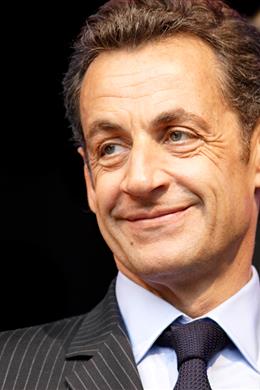
Nicolas Sarcozy
Sarkozy was born on January 28, 1955 in Paris and graduated from the Paris School of Politics with a Master's degree in Law. Sarkozy was elected as the chairman of the ruling party, the People's Movement Alliance, in November 2004. He was re appointed as the Minister of the Interior in May 2005, and on May 6, 2007, he was elected as the ninth and sixth president of the Fifth Republic of France. He officially took office on May 16.
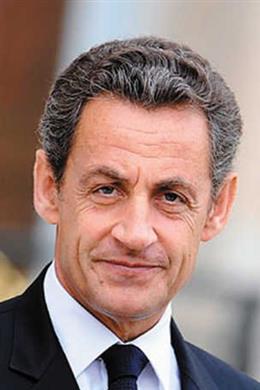
Nicolas Sarkozy
Former President of France, former Chairman of the French Republican Party, and Chairman of the People's Movement Alliance, a centre-right political party. At the age of 28, he became the youngest mayor in French history and visited China six times during his tenure
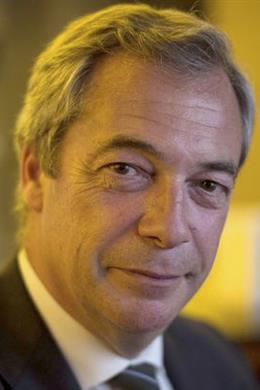
Nigel Farach
Nigel Farage was born on April 3, 1964, as a British politician. After the Conservative Party signed the Maastricht Treaty, also known as the European Union Treaty, in 1992, Nigel Farach left the Conservative Party and became a founding member of the British Independence Party. He served as the leader of the UK Independence Party from 2006 to 2009 and from 2010 to 2016. Since 1999, he has been a member of the European Parliament representing the southeast of England. In 2013, Ferrari ranked second in the Daily Telegraph's poll of the top 100 most influential right-wing figures in the UK, after British Prime Minister David Cameron. In 2014, The Times named him the Outstanding British Person of the Year. He is famous for delivering passionate and sometimes controversial speeches in the European Parliament. He strongly criticized the euro in the European Parliament. In fact, after the 2015 British general election, Farach resigned in May 2015, but due to the lack of approval from the Independent Party, he continued to serve as the party leader a few days later. In 2016, Ferrari supported the UK to secede from the EU through a referendum. On July 4, 2016, Nigel Farach once again announced his resignation as the leader of the British Independence Party. His departure has added further suspense to the already complex British political scene. Farage was exceptionally intelligent and reckless, leading the British Independence Party from having nothing to becoming the third largest party in the UK in a unique way, and ultimately achieving his ambition of witnessing the UK's referendum to leave the EU.
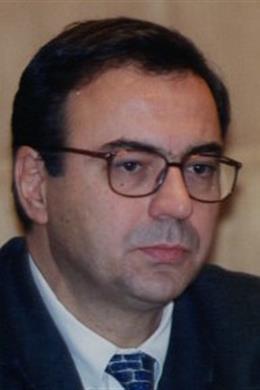
Nikos Christodolakis
Nikos was a former Greek Minister of Economy and Finance from 2001 to 2004. He is currently a professor of economics at the University of Athens in Economics and Business AUEB and a member of parliament. During his tenure, Nikos was appointed as the President of the European Union Council of Finance Ministers ECOFIN. He also chaired the European Group, including attending international conferences of the International Monetary Fund and the World Bank. He has served as the Minister of Energy, Industry, Trade, Tourism, and Research and Development. Previously, he was an economic advisor to then Prime Minister Simitis. During his career, he gave lectures on economics at Charles University in Prague and also served in the Advanced Research Office of the Department of Applied Economics at the University of Cambridge in the United Kingdom. Nikos is a regular speaker at international economic and financial conferences.
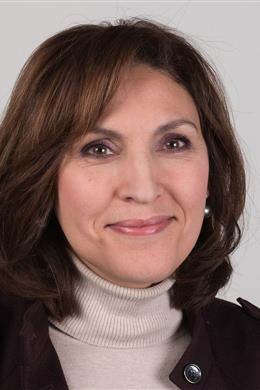
Nora Berra
From 2009 to 2012, Nora Bella served as the Minister of Elderly Affairs and Minister of Health in France. She was appointed by President Sarkozy as the head of one of the most successful healthcare systems in the world. Her career began in Lyon Public Hospital, where she dedicated nearly 20 years as a doctor to fight against AIDS. Afterwards, she entered the public service sector, initially as an elected representative of Lyon in 2008, and later as an elected representative of the European Parliament from 2009 to 2014. In 2010, she was appointed as the Minister of National Health. As the Minister of Elderly Affairs of the Ministry of Social Affairs, Bella has focused her work on population aging, by developing an innovative and comprehensive political approach to make people believe that population aging is also an opportunity for social and economic development. Bella, as the Minister of Health, has successfully dealt with some important medical crises and, in the process, maintained the confidence of French citizens in their healthcare system. She has carried out a series of institutional reforms, including the launch of major public health projects, in order to better respond to the challenges of the 21st century in the French healthcare system. In addition, she has also implemented a new model of hospital financing.
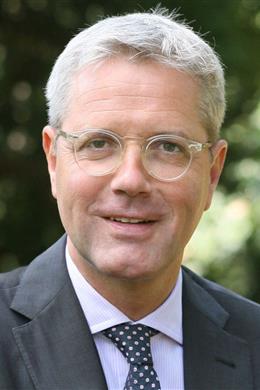
Norbert Lettgen
Norbert Lettgen, born in 1965, is a senior politician of the Christian Democratic League in Germany. He is one of the most eloquent and highly praised political figures in German politics. From 2009 to 2012, Lettgen served as the Federal Minister of Environment, Nature Conservation, and Nuclear Safety. After graduating in 1984, Norbert Lettgen studied law at the University of Bonn. He passed the judicial examination in 1989 and 1993, and engaged in legal practice in Cologne. In 2001, he obtained a doctoral degree in law from the University of Bonn. Letgen began his political career in high school. In 1982, he joined the CDU as the only student. From 1992 to 1996, he became the chairman of the Junge Union, a youth organization of the Christian Democratic League in North Rhine Westphalia, Germany. In 1994, he was elected as a member of the West German Parliament. From 2001 to 2009, he served as the legal policy spokesperson and chief parliamentary secretary for the CDU\/CSU parliamentary group. In 2009, he rose to a high political position with his keen mind and analytical thinking - Angela Merkel appointed him as the Federal Minister for the Environment, Conservation of Nature, and Nuclear Safety, the highest political position he has held to date. Starting from November 2010, he became the Vice President of the German Christian Democratic Union and the President of the Northern Rhine Westphalia Christian Democratic Union. Without a doubt, Norbert Lettgen is a truly outstanding and talkative orator. His speech on the financial crisis at the West German Parliament in October 2008 was named the best political speech of the year.
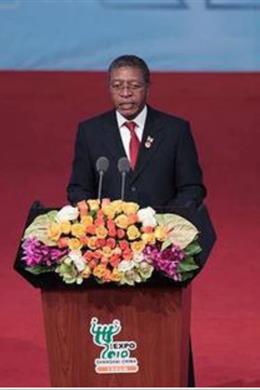
Pacalita Mosisili
The Kingdom of Lesotho, also known as Lesotho, is located in southeastern Africa, on the western slope of Drakens on the eastern edge of the South African Plateau., As a landlocked country, it is known as China because its territory is completely surrounded by South Africa. It is the largest country in the world and the country of China., The main religions are Protestantism and Catholicism, with a land area of 30344 square kilometers and a total GDP of 229.1 billion US dollars. In 2016, with an international exchange rate and a population of 2.2 million, the official languages are English and Sesuto. The capital, Maseru, is situated at an altitude of 1500 meters. The population is approximately 2.68 million, with an urban population of approximately 150000. The highest temperature throughout the year is 33 \u2103, and the lowest temperature is -3 \u2103. The natural resources of Lesotho Mining are mainly diamond mining, with a small amount of coal, lead, quartz, agate, and uranium. It contains a mining output value of 76.4 billion Malotti in 2007. The diamond industry has developed rapidly and has become a new economic growth point. In 2014, a 198 carat white diamond was discovered at the flagship mine in Lesotho. Former Prime Minister, Pakalitha Mosisili, born in 1945, reigned on March 17, 2015, June 16, 2017, under the Democratic Congress of Lesotho,
Pascal Lamy
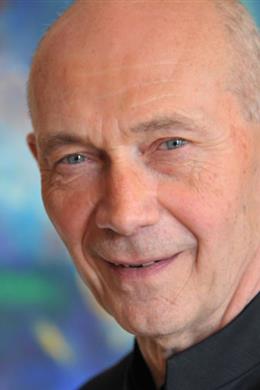
Pascal Lami served as the Director General of the World Trade Organization (WTO) from September 2005 to September 2013. Lamy is currently the honorary chairman of Notre Europe, a renowned think tank on European integration. Lamy was born in France. He has received a good education and has attended several well-known political and economic colleges, including HEC, the Paris Higher School of Business, and ENA, the French National School of Administration. From 1981 to 1983, Lamy served as an advisor to former French Minister of Economy and Finance Jacques Del \u00f3 re, and later served as the Deputy Director of the Private Office of former French Prime Minister Pierre Maurois. After Del \u00f3 l became the President of the European Commission in 1985, he once again recruited Rami under his command. From 1985 to 1994, Rami served as the office director of Delor and represented Delor at the G7 Western Conference. From 1994 to 1999, Lamy joined Credit Lyonnais as the CEO. From September 1999 to November 2004, Lamy served as a member of the European Commission responsible for trade affairs. Lamy has won praise from developing countries for advocating for developed countries to eliminate trade barriers and relax their market access to developing countries. From September 2005 to August 2013, Lamy served as the Director General of the World Trade Organization for two consecutive terms. Lamy believes that the most important achievement of the WTO is to include China, which will benefit more countries from the opening up of the Chinese market. The growth of the Chinese economy is beneficial to everyone. At present, he is also involved in the work of the think-tank of the Institute of Europe Jacques Delors College, serving as the chairman of the World Tourism Ethics Committee, the chairman of the Future Generation Committee of Oxford Martin College, the vice chairman of the European Progress Research Foundation, and participating in various projects of the Global Ocean Commission, the United Nations AIDS Programme and related international affairs. He is also the Chairman of the Board of Directors of the Louvre Musician and Ancient Orchestra Mark Minkowski, a member of the Board of Directors of the National Political Science Foundation and Thomson Reuters Founder AG, an adjunct professor at the Paris High School of Business, and a strategic advisor to the Humboldt Wadelina University of Governance at the Simone Veil Governance Center in Europe. Lamy is the author of several books and reports on global governance, Europe, and international trade. His published works are for the future present and the Geneva Consensus.
Paul Keating
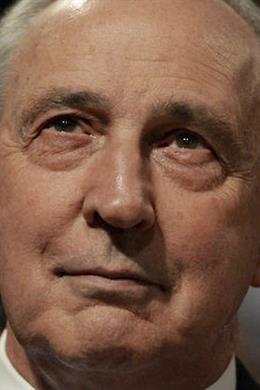
Paul Keating was the former Prime Minister of Australia from 1991 to 1996. From 1983 to 1991, Keating was appointed as Minister of Finance. During his tenure, he implemented economic reforms that promoted the development of the Australian economy, including reforms in the financial sector, adjustments to the Australian dollar exchange rate, tax reform, and the abolition of a series of trade protectionism barriers. From December 1991 to March 1993, Keating was appointed as Prime Minister, marking the fifth time in the history of the Labour Party that he held this position. As Prime Minister, Keating continued to implement economic reforms, including the establishment of a national training institution, the establishment of a national pension plan to increase national savings, the establishment of a labor market, and training reforms to address Australia's long-standing unemployment problem. At the same time, the Keating government also issued laws recognizing the rights of indigenous Australians to land and enacting laws to protect the disappearing races. Keating advocates for institutional reforms to develop Australia. During his tenure, Keating established the Australian Mandatory Private Savings Plan Pension Plan, which increased savings from 400 million to 1 billion within a year. He founded the Asia Pacific Economic Organization Leaders' Meeting, which is an important component of the political architecture of the Asia Pacific region. The focus of the Keating administration's foreign policy is on the Asian region. Keating actively established the Asia Pacific Economic Organization and the Asia Pacific Economic Cooperation Forum, and initiated the Asia Pacific Economic Cooperation Leaders' Meeting to facilitate the achievement of regional trade opening agreements. In March 1996, following the Labour Party's defeat in the election, Keating was appointed to serve in parliament. He turned his interest to national and international affairs, and during his tenure, he frequently visited China and other Asian countries. Keating emphasized in his book that Australia's foreign policy and development have a significant impact in the Asia Pacific region. His works were translated into Japanese and Chinese and published by the Chinese Academy of Social Sciences. He is the main spokesperson at international business and economic conferences. As a political commentator, he also writes articles for newspapers and international journals, commenting on economic and social issues. Keating frequently visits China and the Asian region and is the main spokesperson for major domestic and international conferences. He has rich experience in international finance, politics, and diplomacy, and has a keen insight into contemporary global affairs. He also has a strong interest in architecture, urban design, and music.
Peter Mandelson
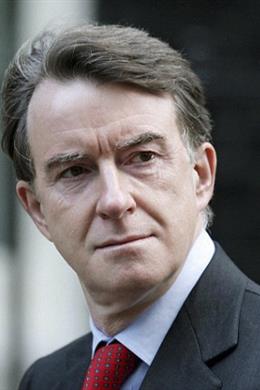
Peter Mandelson, a British Labour politician, is seen as one of the key figures in reshaping the Labour Party into the New Labour Party in the 1990s, along with Tony Blair and Gordon Brown. Mandelson was appointed as the UK Minister of Trade and Industry in 1998, responsible for setting the national minimum wage standard and overseeing the implementation of the New Deal to strengthen regional economic development. During his tenure, he submitted the Millennium Bug and e-commerce draft to Congress, and drafted a government competitiveness white paper - Establishing a knowledge-based economy. In 1999, he was appointed as the UK Secretary of State for Northern Ireland, during which he restored local government power in Northern Ireland. Mandelson officially became the UK EU Commissioner in 2004 and served as the European Commission Trade Commissioner until 2008, responsible for representing EU member states in negotiations with other trading partners. In 2009, Mandelson was appointed as the Minister of Commerce for Business Enterprise and Regulatory Reform, also known as the Minister of Commerce. He served as the First Secretary of State, Chairman of the Trade Commission, and Speaker of the Privy Council, and was promoted to the House of Lords as a lifelong aristocrat. Afterwards, his power as Minister of Commerce, Enterprise and Regulatory Reform was expanded, and his position was renamed as Minister of Business Innovation and Skills BIS. He was also appointed as Deputy Prime Minister of the UK. After stepping down in 2010, Mandelson began serving as the chairman of Global Council, an international strategic consulting firm, and as a senior advisor to investment banks. He also served as the president of Policy Network, an international think tank. Mandelson has served as a TV host and producer, with a graceful demeanor, well dressed, meticulous, and full of personal charm.
Peter Trascott
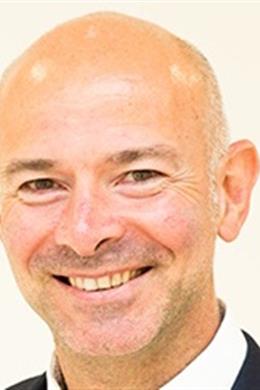
Peter Trascott is a former British Minister of Energy and an expert on contemporary Russia and the former Soviet Union. From 2006 to 2007, Peter Trascott was appointed as the former Minister of Energy of the United Kingdom, the spokesman of the Ministry of Trade and Industry of the House of Lords, and the spokesman of the Ministry of Foreign Affairs and Defence. From 1994 to 1999, he was appointed as the MEP of the European Parliament, spokesperson for the Ministry of Foreign Affairs and Defense. At the same time, he is also a member of the delegation of the European Parliament to handle relations with the Russian Federation. Peter Trascott was responsible for drafting a large number of foreign and defense security policies. From 1999 to 2000, he was appointed as a visiting researcher at the Public Policy Research Institute due to his expertise in defense and security in the former Soviet Union and the Soviet Union. Now, as an associate researcher in research on national defense and security issues, he is employed by the Royal Joint Services Research Institute. His main works include Russia First 1997, European Defence 2000, Kursk 2002, Publications Progress 2004 and The Ascendance of Political Risk Management 2006 Peter Trascott, as a political commentator, often appears on BBC, CNN and Sky TV. He is currently employed as an advisor and non-executive chairman by multiple European and Russian energy companies, mining companies, and public affairs companies.