Celebrity
107 位演讲者
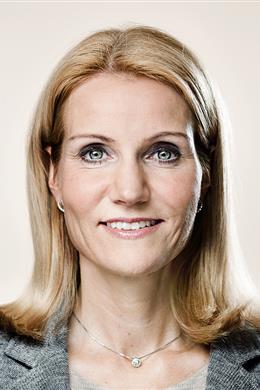
Heller Toning Schmidt
Helyton Schmidt was a Danish politician and the first female Prime Minister of Denmark, serving from 2011 to 2015. From 1999 to 2004, Tony Schmidt was a member of the Danish European Parliament. In 2005, she was elected as a member of the Danish Parliament and leader of the Social Democratic Party. In terms of economy, Tony Schmidt advocates balancing economic development and social welfare, increasing government investment to stimulate the economy, increasing taxes on the wealthy, creating job opportunities, and promoting economic recovery. In diplomacy, Tony Schmidt advocates for expanding cooperation and exchanges with China, stating that Denmark and emerging economies such as the BRICS countries are engaged in closer mutually beneficial cooperation. After his political career ended, Tony Schmidt joined Save the Children International in 2016, becoming the organization's second CEO. She is responsible for humanitarian and development projects that benefit 55 million children in 120 countries. Tony Schmidt has been deeply involved in national, European, and global affairs. As a member of the council, she continues to provide her professional knowledge and insights to several influential international advisory groups and think tanks. These groups include; The International Crisis Group, the United Nations Advisory Group on the Global Strategy for Each Child, the European Advisory Group of the Global Development Center, and the European Council on External Relations. Tony Schmidt holds a Master's degree in Political Science from the University of Copenhagen and a Master's degree in European Studies from the Bruges European College. She was born in Copenhagen and is fluent in English and French.
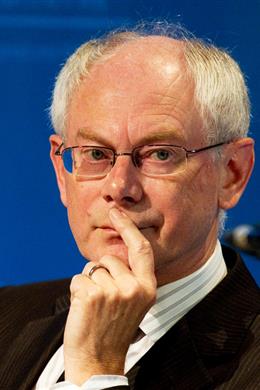
Herman Van Rompuy
Herman Van Rompuy, former permanent president of the European Council. Graduated from the Department of Economics at the Dutch Catholic University of Leuven in 1971. From September 1993 to July 1999, he served as the Deputy Prime Minister and Budget Minister of the Belgian Federal Government. In July 2007, he was elected as the Speaker of the Belgian House of Representatives. In 2008, under the authorization of King Albert II, Van Rompuy became the Prime Minister of Belgium. On November 19, 2009, the EU Special Summit was held in Brussels, Belgium, and Van Rompuy was elected as the first permanent president of the European Council. On January 1, 2010, he officially took office and became the first president of the European Union. Van Rompuy was elected mainly due to his extensive experience in economic affairs and outstanding performance in handling party factional conflicts. Herman Van Rompuy graduated from the Department of Economics at the Dutch Catholic University of Leuven in 1971. I worked in the research department of the Belgian Central Bank from 1972 to 1975. He served as the Vice Chairman of the Youth Organization of the Dutch Christian Democratic Party, the predecessor of the Dutch Christian People's Party, from 1973 to 1975, and became a member of the National Party Department of the Dutch Christian People's Party in 1978. In the late 1970s, Van Rompuy began working in the offices of several Belgian cabinet ministers. From 1980 to 1988, he served as the director of the research center of the Dutch Christian People's Party and became one of the important leaders of the party nationwide. During this period, Van Rompuy participated in the formation negotiations between former Belgian Prime Ministers Martens and De Ana, and served as the chairman of the Dutch speaking Christian People's Party from 1988 to 1993. In September 1993, Van Rompuy joined the De Ana government as Deputy Prime Minister and Budget Minister. During his six years in charge of budget affairs, he adopted effective economic policies and significantly reduced Belgian government bonds, earning widespread support and praise. After 1999, Van Rompuy served as a member of the Belgian House of Representatives. During his tenure as an opposition member of the Belgian House of Representatives, Van Rompuy was known for his cautious approach to politics and his expertise in handling international issues. He was elected as the Speaker of the House of Representatives in July 2007. On December 19, 2008, Belgian Prime Minister Evlettem resigned after being pointed out by the Supreme Court that there were signs of government intervention in the judicial process of the Futong split case. Subsequently, King Albert II requested Van Rompuy to actively mediate the issue of cabinet formation, which ultimately led to the agreement of the leaders of the political parties in the two regions to reopen negotiations on cabinet formation. For a long time, there have been conflicting forces between the Dutch speaking and French speaking regions of the Belgian federal government. After taking office as Prime Minister, Van Rompuy, with his cautious and steadfast work style and excellent coordination skills, united the Belgian government unprecedentedly, and was widely supported by the Belgian people and political circles, known as the person who created miracles. In addition, Fan Longpei usually enjoys writing blog posts and literature, especially Japanese short poem haiku. He often writes haiku in Dutch, mostly about praising nature. He enjoys rural life and is known as a minimalist saint in Belgium. His widely circulated haiku says that at six o'clock in the morning, birds bring spring, and I hear it.
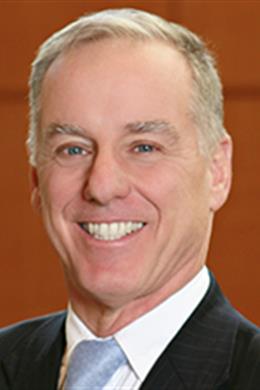
Howard Dean
Governor Howard Dean is a former chairman of the Democratic National Committee, a presidential candidate, and a medical doctor who is currently a part-time independent consultant focusing on health care, early childhood development, alternative energy, and grassroots political expansion around the world. Dean is a featured guest on The MSNBC News network and is a frequent guest on programs such as Lawrence O 'Donnell. The Last Word with Lawrence O#39; Donnell. He also guest-hosted Countdown with Keith Olbermann and The Rachel Maddow Show, among other shows. He also serves on the Board of the National Democratic Institute, focusing on regional developments in Southeast Europe and China. Dean began his career in public service in 1982, when he transitioned from a full-time medical practitioner to an elected representative in the U.S. state of Vermont. Dean served as governor for 12 years, the second longest serving governor in the state. Dean was well respected on both sides of the political spectrum, having also served as National Governors of the National Governors Association while governor of Vermont; Democratic GovernorsAssociation, Democratic Governors Association #39; Association and the New England Governors Conference New England Governors#39; Chairman of the Conference. In 2003, Dean stepped down as governor of Vermont to run for president, where he implemented some innovative fundraising strategies, such as using the Internet. As Chairman of the Democratic National Committee, Dean created and pursued the 50-State strategy and developed 21st century campaign tools. Dean is credited with helping Democrats to historic victories in 2006 and 2008. Under his leadership, significant resources were devoted to revitalizing the party, building and strengthening the organizational tools, technical capabilities, and infrastructure necessary for electoral success, thereby laying the foundation for long-term Democratic victories. Before entering politics, Dean graduated from Yale University in 1971 with a bachelor's degree in political science; He received his Bachelor of Medicine degree from Albert Einstein College of Medicine in New York in 1978.
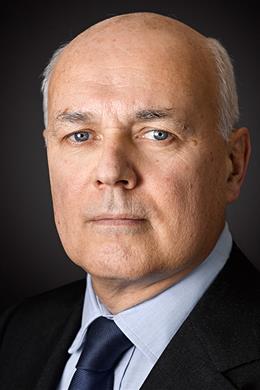
Iain Duncan Smith
On April 1, 1992, Ian Duncan Smith was first elected as a member of Parliament for the London constituencies of Chingford and Woodford Green. During his tenure in parliament from 1992 to 1997, he opposed the Maastricht Treaty, believing that its passage would trigger a series of other treaty changes over a period of time, affecting the relationship between the UK and the EU, and ultimately rendering the UK's EU membership untenable. He was one of the members of numerous special committees at that time. From 1997 to 2001, he served as Shadow Secretary of State and Secretary of Defense in the Department of Social Security. From 2001 to 2003, he served as the leader of the Conservative Party; Since 2003, he resigned from his position as the leader of the Conservative Party and established the Social Justice Center (CSJ), an organization dedicated to addressing the problems faced by the lowest income group in society. The most important in his series of reports is breaking through the cost of ending social collapse in the UK. In his report, he proposed five ways to alleviate poverty and how to achieve social justice and improve the quality of life of the impoverished population through conservative approaches. It is worth mentioning that in 2013, the Social Justice Center published an article titled \Combating Modern Slavery in the UK\. After the article was published, Theresa May subsequently formulated relevant laws. In 2010, Duncan Smith became the Minister of Employment and Pensions, and later resigned after a dispute with the Chancellor of the Exchequer over a decision to reduce disability benefits by over \u00a3 1 billion. During his tenure as Minister of Employment and Pensions, he implemented the most significant welfare reform plan in modern times, transforming the welfare and pension systems, and providing employment services and support. The most important reforms he introduced were the integration of six unemployment and disease subsidies into the universal welfare measures, the first employment plan to help unemployed individuals in the private and voluntary sectors return to work, and the simplification of the single-layer pension system of the national pension policy. Prior to the Brexit referendum held on June 23, 2016, he was a leading figure of the Brexit faction and appeared multiple times in media reports and public debates. At present, he is working together with everyone to ensure that the UK successfully completes the Brexit process and builds new bilateral relations based on maintaining friendship and cooperation. Before entering politics, he served in the Scottish Guard from 1975 to 1982. During this period, he served in military service in Northern Ireland and Rhodesia\/Zimbabwe. After retiring from the military, he first worked at GUC and later became a director of a real estate company and publisher Jane's Information Group.
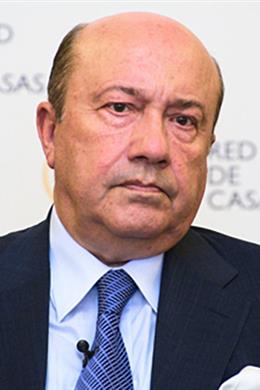
Igor Ivanov
Igor Ivanov is the Chairman of the International Affairs Committee of the Russian Federation and also serves as a professor at the Moscow State Institute of International Relations. Previously, he also served as the Secretary of the Russian Federal Security Council from 2004 to 2007. Ivanov has participated in many United Nations General Assembly work and international conferences, especially in the negotiations on Bosnia and Herzegovina affairs held in the state of Ethiopia. Ivanov has performed outstandingly as the negotiation host. During the Soviet era, Ivanov graduated from the Moscow State Foreign Language Teachers College in 1969 and later served as an assistant researcher at the Institute of World Economy and International Relations of the Soviet Academy of Sciences. From 1973 to 1986, he successively worked at the First European Department of the Soviet Ministry of Foreign Affairs and the Embassy in Spain. From 1986 to 1991, he served as Deputy Secretary General, First Deputy Secretary General, Secretary General, and member of the Ministry of Foreign Affairs of the Soviet Union. After the dissolution of the Soviet Union, Ivanov was recalled from Madrid to Moscow in 1994 as the First Deputy Minister of Foreign Affairs, responsible for European affairs. Since 1998, he has served as the Minister of Foreign Affairs of the Russian Federation. In 2004, he was appointed as the Secretary of the Russian Federation Security Council. In 2000, Ivanov began publishing articles in the Moscow Times and later became a member of the Advisory Committee of the Hague Institute for Global Justice in 2011. He has published many books and articles on Russian foreign history and policy. He currently serves on multiple boards of directors, such as the Nuclear Threat Initiative (NTI), the United Nations Foundation, and the Luxembourg Nuclear Disaster Prevention Forum. In addition, he is also a consultant at the Institute of Contemporary International Relations at Tsinghua University.
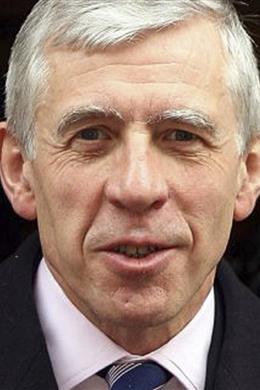
Jack Straw
John Straw is a British politician who served as a member of parliament for the Blackburn constituency from 1979 to 2015. From 1997 to 2010, Straw served in the cabinet under two administrations of Tony Blair and Gordon Brown. He held two major traditional positions of state, namely as the Home Secretary of the UK from 1997 to 2001 and as the Foreign Secretary under the Blair administration from 2001 to 2006. From 2007 to 2010, he served as Chief Justice and Minister of Justice during Gordon Brown's presidency. He was once praised by the Guardian as the great beast of British politics;. From 1997 to 2010, Jack served in the cabinet of the Labour government consecutively. In February 2015, due to allegations of misappropriation of cash, he voluntarily withdrew from the Labour Party of Parliament but remained a member of the party. Jack denies any wrongdoing or violation of parliamentary rules, and actively cooperates with the parliamentary standards commissioner to review himself. He also voluntarily withdrew from the parliamentary Labour Party during the commissioner's investigation. In May 2010, after the Labour Party lost power, Jack temporarily served as the Deputy Prime Minister and Justice Minister of the Shadow Cabinet, and planned to leave parliament after the subsequent Labour Party Shadow Cabinet elections in 2010. Jack's first position in the shadow cabinet was as an education spokesperson since 1987. During his tenure, he called on the local education authorities to grant Islamic and Orthodox Jewish private schools the right to opt out of the national system and still receive public funds. After the 1997 election, he was appointed as the Minister of the Interior, proposing the 2000 Act on the Right to Investigate, increasing the powers of the anti-terrorism police, and proposing the abolition of the right to jury trials in certain circumstances. These policies have won praise from Margaret Thatcher, who once claimed that I believe in Jack Straw's judgment and that he is a very upright person. Jack was appointed as Foreign Secretary in 2001, succeeding Robin Cook. He played an important diplomatic role in the 9\/11 terrorist attacks in New York and the issues of Afghanistan and Iraq. Initially, he was accused of retreating behind the scenes of the Tony Blair government in the UK government's anti-terrorism war prosecution. In late September 2001, he became the first senior British government minister to visit Iran since the Islamic Revolution in 1979. Jack successfully helped Kashmir avoid an armed conflict crisis in 2002, and he is also a knowledgeable speaker on issues related to India and Pakistan. On October 13, 2005, Straw responded to a series of questions raised by a personal panel of the public during the BBC News Night Iraq special program, in response to the public's widespread concern about the withdrawal strategy of the British army, the Iraq rebellion, and the moral legitimacy of the unavoidable war. Straw repeatedly reiterated his position that in his view, the invasion decision was the right approach, but he said he was not sure that the situation was that way. As a foreign minister, he has also been closely involved in the decision-making process of many major European affairs, such as the 2005 EU budget agreement negotiations and all decisions related to the EU economy. In the same year, Jack also worked for T\u00fcrkiye
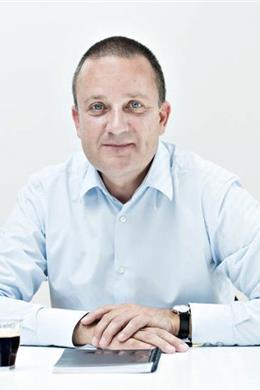
Jacob Schaff
When Schaff was appointed as the Director General of the Danish Security and Intelligence Agency, he was only 40 years old and was the youngest person to hold this position. Shortly after joining the intelligence agency, he experienced a manga crisis. A manga about the Prophet Muhammad was published in a Danish newspaper, and Denmark became the primary target of Al Qaeda and its affiliated terrorist organizations and networks. The threat of terrorism has become very serious and poses a serious threat to Denmark's national security. Faced with the threat of terrorism, the Danish Security and Intelligence Agency DSIS has made significant adjustments in its capabilities and strategies, and since 2007, it has successfully identified, prevented, and combated many specific activities that threaten Denmark and its international interests. Due to the uncertain and complex nature of the threat factors that affect national security, national security agencies not only need to grasp real-time dynamics, but also need to take the initiative and make continuous progress. Due to the serious threat of terrorism faced by Denmark, the Danish Security and Intelligence Agency (DSIS) quickly developed a comprehensive strategy to combat extremism, adopted a series of strong measures to respond to specific terrorist activities, and conducted effective investigations and prosecutions of terrorists. Implementing a new legal framework, establishing public-private partnerships, and ensuring greater openness and transparency in external communication have become important elements of the reform of the Danish Security and Intelligence Agency (DSIS). Today, the Danish Intelligence Agency is recognized as one of the best in its class. During his tenure as the Director General of the Danish Intelligence Agency, he has been engaged in public speaking activities and continuously interviewed by the media. After resigning from the position, he now has more opportunities to share his experience around the world. Currently, he works as a consultant at the Danish Ministry of Justice and is also an executive director of CERTA Intelligence and Security, a non listed public limited liability company in Denmark that conducts intelligence, analysis, and security work. It was established in 2014 and is headquartered in Copenhagen.
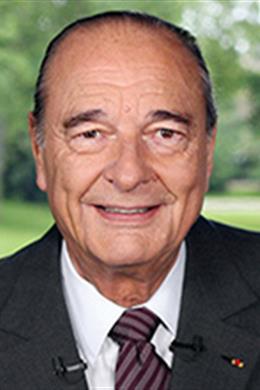
Jacques Chirac
Jacques Chirac was elected as the President of France in 1995 after serving as the Mayor of Paris for 18 years. Encouraged by Charles de Gaulle, Chirac entered French politics in the 1950s. Throughout his entire career, he held various senior government positions, including two prime ministers from 1974 to 1976 and from 1986 to 1988. In 1995, he ran as a conservative candidate and successfully succeeded Fran \u00e7 ois Mitterrand as president. In 1997, Chirac caused a commotion due to the dissolution of parliament, and a series of opposition activities subsequently weakened his power. However, in the 2002 general election, he ran against the controversial nationalist Jean Marie Le Pen and easily won re-election. As the President, he has been criticized for his inaction on domestic policies, wavering on foreign policy issues, and political scandals involving fraud and corruption. In 2003, his popularity soared domestically due to his strong opposition to George Bush's decision to invade Iraq. However, the public was deeply dissatisfied with his domestic policies, which ultimately led to negative consequences. By 2006, his supporters had significantly decreased. In March 2007, Chirac announced that he would not seek a third term.
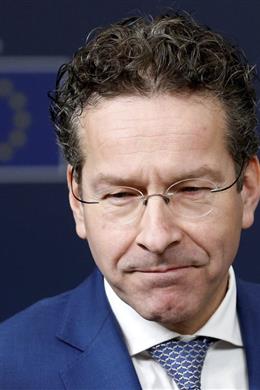
Jay Desselbloom
Jermaine Desselbloom, a Dutch politician, served as the Chairman of the Eurogroup from January 21, 2013, and as the Chairman of the Council of the European Stability Mechanism from February 11, 2013. As a member of the Labour Party, he was appointed as the Minister of Finance of the Netherlands on November 5, 2012, for a term ending on October 26, 2017. He served as a member of the House of Representatives from 2000 to 2002, 2002 to 2012, and 2017. Daisel Bloom studied agricultural economics at Wageningen University from 1985 to 1991 and was elected as a member of the Wageningen City Council from 1994 to 1997. Dessel Bloom was born on March 29, 1966 in Eindhoven, the Netherlands. His parents are both teachers. He grew up as a Roman Catholic and went to a Roman Catholic elementary school and a Catholic high school in Eindhoven from 1978 to 85. He studied at Wagningen University from 1985 to 1991 and obtained a degree in Agricultural Economics Engineer in 1991, majoring in Business Economics, Agricultural Policy, and Socio Economic History. Daisel Bloom later engaged in business economics research at Cork University in Ireland, but he did not graduate from this university. Daisselblum's interest in politics began in 1983, when large-scale protests against the US Pershing cruise missile attracted hundreds of thousands of young Dutch people to join the left-wing movement. In 1985, he joined the Dutch Labour Party. From 1993 to 1996, he worked for the Labour Party parliamentary group. From 1994 to 1996, he was a member of the Wagningen City Council. From 1996 to 2000, he worked at the Ministry of Agriculture, Nature, and Fisheries - under Minister Jozias van Aartsen and State Secretary Geke Faber. From 2000 to 2012, Dessel Bloom was elected as a member of the Labour Party's House of Representatives. In the 2002 general election, the Labour Party suffered a major defeat, and after that, Desserbloom briefly interrupted his campaign. Due to Peter Rehwinkel's resignation, he re entered the House of Commons in November of the same year. In 2007, Deselle Bloom led a parliamentary survey on education reform. He focused on youth care, special education, and teachers. After Job Cohen resigned from his position as Labour Party leader and parliamentary leader on February 20, 2012, Dessel Bloom became the interim parliamentary leader. The term of office expires on March 20, 2012, when Diederik Samsom was elected as the next leader of the Labour Party. On November 15, 2012, Dessel Bloom was appointed by Queen Beatrix of the Netherlands as the second Minister of Finance in the L \u00fc tte Cabinet. In December 2013, Dutch media nominated Dessel Bloom as the Politician of the Year for 2013, stating that he was intelligent, balanced, and adept at seeking compromise. In response, he said he was surprised by the award because he was not working on the front line. On January 21, 2013, Deselle Bloom took over as the chairman of the Eurogroup from Juncker, with Spain being the only country that did not support his candidacy. He later joined the Eurogroup in July 2015
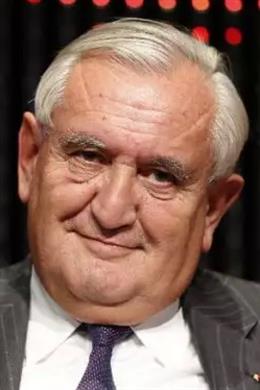
Jean Pierre Lafarlane
Jean Pierre LaFarlane, who served as the Prime Minister of France from 2002 to 2005, is currently the political think tank Initiative for Initiatives and Dialogue; The chairman of the dialogue. Lafarlane graduated from the Assas School of Law at the University of Paris and the European School of Management (ESCP-EAP) at the Higher School of Business in Paris. He has served as a lecturer at the Paris School of Political Science and the general manager of the Bernakriev Communication Company. Lafaran was elected as a councilor of the city of Poitiers in 1977 and entered politics. In 1986, he was elected as a councilor of the Poitiers Charang Region and served as the chairman of the regional council from 1988 to 2002. He served as a member of the European Parliament from 1989 to 1995, was elected as a senator in 1995, and was re elected in 1997. Lafarlane was appointed as the Vice Chairman of the Liberal Democratic Party in 1997. After joining the Presidential Majority Alliance in November 2002, he was renamed the People's Movement Alliance. In May 2002, he was appointed as the Prime Minister of the government by President Chirac. In March 2004, the ruling right-wing political party in France suffered a disastrous defeat in local council elections. In order to take responsibility, Lafarlane submitted his resignation to President Chirac. But after accepting Lafaran's resignation, Chirac immediately appointed him as the new Prime Minister. Resigned as Prime Minister in May 2005. In April 2003, Lafarlane became the first Western leader to visit China despite danger during the SARS pandemic. During his reign, whenever there were twists and turns in Sino French relations, he always took orders in the face of danger and served as the firefighting captain of Sino French relations.
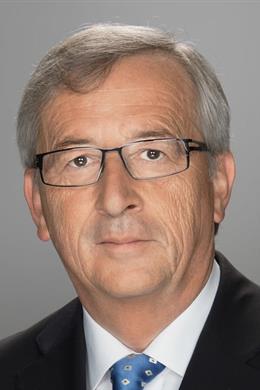
Jean-Claude Juncker
Jean Claude Juncker is an evergreen tree in Luxembourg politics, one of the designers of European integration, and also the first chairman of the Eurogroup. On November 1, 2014, he officially took over from Barroso and was elected as the new President of the European Commission. Juncker was born on December 9, 1954, into a working-class family in the western part of Luxembourg, in the town of Leipzig et al. He completed his middle school studies in Qingquan Middle School in Belgium, returned to China in 1974 to participate in the middle school graduation examination, and entered the Law School of the University of Strasbourg in France the next year. Juncker served as the Secretary of State for Labor and Social Insurance from 1982 to 1984, the Minister of Labor and Ministerial Budget Representative from 1984 to 1989, and the Minister of Labor and Finance from 1989 to 1995. Juncker was born as a financial expert, and for more than 10 years in charge of budgeting and finance, he has been insisting on implementing fiscal tightening policies and limiting public debt. Starting from January 20, 1995, he served as the Prime Minister and Minister of State, Labour, Employment, and Finance of Luxembourg. In December 1996, international media regarded Juncker as a Dublin hero. In 1997, Juncker participated in the EU's formulation of the Stability and Growth Pact budget regulations. The regulation aims to support the monetary union and the euro budget, prevent government budget deficits in member countries of the eurozone, thereby increasing the borrowing costs of the entire eurozone. At that time, Germany and France were seriously at odds, and Juncker mediated, which made Germany and France make key concessions on economic and monetary union, thus making the EU pipeline project smoothly carried out. On January 21, 2013, the Eurozone Finance Ministers' Meeting decided to appoint Dutch Chancellor of the Exchequer, Jean Claude Juncker, to replace Luxembourg Prime Minister, as the new chairman of the Eurogroup. From 2005 to 2013, the Chairman of the Eurogroup was always held by Luxembourg Prime Minister Juncker. During this period, the eurozone experienced a sovereign debt crisis. Juncker has always worked hard to avoid a split in the eurozone. Speaking of stepping down, Juncker claimed to be relieved on January 21st. He put forward a farewell message, hoping that the eurozone can reach an agreement on assisting Cyprus as soon as possible. On July 10, 2013, Luxembourg Prime Minister Juncker announced his resignation and submitted his resignation to Grand Duke Henry. He also proposed holding an early general election to resolve the current political crisis. On March 7, 2014, Juncker was elected as a candidate for the presidency of the European Commission. On that day, the European People's Party elected him as the next president of the European Commission in Dublin, Ireland. Numerous heads of state, including Germany, France, Poland, Italy, and Spain, have expressed support for it; On the other hand, its biggest competitor, Martin Schultz, the candidate for the next European Commission presidency of the European Socialist Party, announced his withdrawal from the election on June 21, 2014. In the May 2014 European Parliament elections, Juncker's European People's Party won 221 seats in the 2014 European Parliament, maintaining its position as the largest party in the European Parliament. The EU summit decided at the end of June to nominate Juncker as the candidate for the presidency of the European Commission, which was submitted to the European Parliament for vote, but this nomination was opposed by the UK and Hungary. Although 2 out of 28 EU member states oppose the nomination of Juncker as the chairman of the European Commission
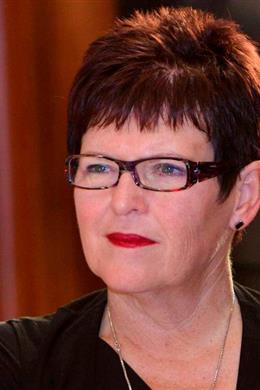
Jenny Shipley
Jenny Shipley, the 36th Prime Minister of New Zealand and also the first female Prime Minister of New Zealand. Jenny Shipley served as the leader of the National Party until December 2001. After retiring from politics, she ran her own consulting company and served as a consultant for several companies, while also participating in the business of other companies. Jenny Shipley has been a member of the New Zealand National Party since 1975 and has been serving as a leader at the grassroots level for a long time. She has done many practical things for the local community. In 1987, she was successfully elected as a councilor for the Ashenburg constituency. After being elected as a member of parliament, Shipley was appointed as the Minister of Social Welfare and spokesperson for the Ministry of Health in the shadow cabinet of the National Party. During her tenure, she actively solved many important issues for women. Hippley quickly rose to prominence in the shadow cabinet due to his outstanding work performance, and the unnoticed frontline legislator was quickly promoted to the 11th position in the ruling National Party. Jenny Shipley served as Minister of Social Welfare and Minister of Women's Affairs after the victory of the New Zealand National Party led by James Brendan Borg in the 1990 election, and as Minister of Health in 1993. During her tenure, she was a controversial figure, with numerous measures such as cutting social welfare and reforming the healthcare system causing controversy. With increasing dissatisfaction within the National Party with its leader James Borg, Jeanne Shipley successfully gained the support of most party members during her overseas visit in December 1997, forcing James Borg to resign and succeeding him as Prime Minister of New Zealand. Although she led New Zealand through the controversial parliamentary election crisis and the Asian economic crisis during her tenure as Prime Minister, and achieved an economic growth rate of 4%, laying the foundation for later New Zealand's economic success. But Jenny Shipley's government is still a very unstable one. Especially during this period, the relationship between the National Party and its coalition partner, the New Zealand Priority Party, continued to deteriorate. On August 14, 1998, Winston Peters, the leader of the New Zealand Priority Party, was ultimately excluded from the government cabinet, marking the end of cooperation between the two parties. The rupture of the alliance has also caused trouble for the priority party. Party leader Winston Peters, with the support of more than half of his party's lawmakers, stopped supporting the Jeanne Shipley government. However, there are still many priority party members who have withdrawn from political parties and become independent legislators, or are attempting to form their own political parties. Jenny Shipley never followed half of the members of the Priority Party and successfully obtained enough votes to maintain the National Party government. Jenny Shipley served as the leader of the National Party until December 2001, when Bill Ingley took over his position. Jenny Shipley retired from Congress and officially withdrew from the political stage. After retiring from politics, she ran her own consulting company and served as a consultant for several companies. She also participated in the business of other companies, helping New Zealand education institutions and private companies improve their performance and open up international markets. She has made several business visits to China, making outstanding contributions to the economic, tourism, and commercial cooperation between China and New Zealand. On March 29, 2015, Jenny Shipley became a member of the Boao Forum for Asia.
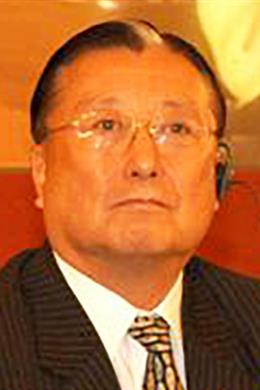
Jin Xuezhu
Jin Xuezhu is the former Executive Secretary of the United Nations Economic and Social Commission for Asia and the Pacific. He is also the chairman of the Asia Pacific Economic Conference held annually in Seoul, South Korea. Every time, leaders of countries from various regions around the world attend this forum to express their opinions and ideas. He has extensive experience in both the public and private sectors, as well as in the international civil service. His career in government service includes serving as an ambassador for international economic affairs in Korea, serving as a secretary to the Minister of Commerce and Industry, and working as a senior researcher with the Korea Institute for International Economic Policy. During the Kim Jong il administration, the background of the banking industry was represented by the Bank of Korea, the Bank of Korea, in London. The highlights of his private sector career include Executive Director and Chairman of Daewoo International Steel Company in New York, as well as Chairman of Hanyi Bank Research Institute in Seoul. In the 1980s, he served as the Deputy Secretary General of the United Nations and as the Chief Planner for two Pacific island developing countries, as well as the Chief Technical Advisor for Vanuatu and Solomon Islands. He revitalized the Colombo Plan for Economic and Social Development, consisting of 24 members in the Asia and Pacific region, emphasizing key cooperation in human resource development and cooperation.
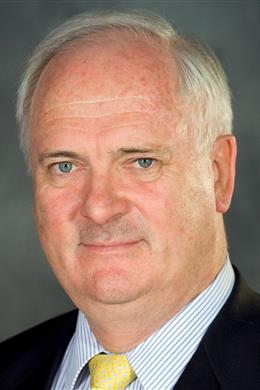
John Bruton
John Broughton was the former Prime Minister of Ireland, who successfully transformed the Celtic Tiger into one of the fastest growing economies in the world. In the year before he took office in 1993, Ireland's economy grew by 27%; During his tenure from 1994 to 1997, Ireland's annual economic growth rate was 87%, reaching a peak of 111% in 1997. Bruton was also deeply involved in the peace process in Northern Ireland, promoting the 1998 Good Friday agreement and ending a 30 year long violent conflict. During his tenure as Prime Minister, Bruton successfully served as the rotating president of the European Union for one year in 1996 and helped to ultimately reach the Stability and Growth Pact to manage a single European currency, the euro. On September 11, 1996, Bruton delivered a speech at a joint meeting of the United States Congress. He was the 30th head of state or government to deliver a speech here since 1945, and may be the only President of the European Council to attend the joint meeting. In addition, he has also represented the presidents of the European Union and the United States, the Prime Ministers of Canada, Japan, China, and South Korea at summit events multiple times. Before being appointed as the EU Ambassador to the United States from 2004 to 2009, John Bruton served as the main member of the EU Constitutional Treaty Drafting Conference, which was signed in Rome on October 29, 2004. He strongly supports allowing the public of 27 EU member states to directly elect the President of the European Commission, giving the public a more direct say in choosing EU leaders. From 1999 until his appointment as ambassador, he was one of the ten vice presidents of the European People's Party, which brought together leaders of 74 European political parties, many of whom held government positions in their country. He delivered a speech to the business and political leaders of New Zealand, South Africa, Chile, Canada, Argentina, Mexico, Peru, Colombia, Costa Rica, Ukraine, T\u00fcrkiye, the United Arab Emirates and many EU member countries on the topic of global, European and Irish economic development. From 2004 to 2009, John served as the EU Ambassador to the United States, during which he met with current and former US presidents, visited governors, mayors, business leaders, and students from over 20 states, and told them that EU expansion would promote US economic development and create employment opportunities for the United States. Bruton met with over 250 members of Congress in Washington to discuss the main progress made by the European Union, as well as the relationship between the EU and the United States in trade, counter-terrorism, public health, energy, environment, and promoting global peace, democracy, and human rights. In 1969, at the age of 22, John Broughton was first elected as a member of the United Party to the Irish Parliament and became the leader of the party in 1990. In 1994, the party became a member of the government party. He served as the Minister of Finance of Ireland from 1981 to 1982; 1986-1987, Minister of Industry and Energy 1982-1983, Minister of Trade, Commerce, and Tourism 1983-1986, and Secretary of Parliament 1973-197
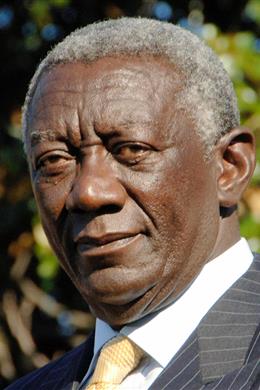
John Kufuor
John Kufuor, former President of Ghana, transitioned from a country long plagued by coups and military dictatorship to a democratic state and served as Chairman of the Community of West African States from 2003 to 2005 and Chairman of the Union of 53 African States from 2007 to 2008. In 2001, Kufuor defeated Jerry Rawlings, who had been in office for 20 years, and was elected as the President of Ghana until 2009. During Kufuor's tenure, he implemented a series of reform measures in education, health, and infrastructure construction. His domestic policies mainly focus on fiscal and monetary policies, aiming to stabilize the already stagnant domestic economy. His vision for Ghanaian society is to encourage entrepreneurship, creation, and innovation, in order to create wealth for Ghanaians and respond to the social challenges they face. Kufuor hopes to prioritize the development of social and economic issues in five areas: national management, agricultural modernization and rural development, private sector participation, enhancing social services, and vigorously developing infrastructure. Kufuor has served as the President of the Community of West African States and the Chairman of the Union of 53 African countries. In addition, he facilitated several world-renowned peace talks on Sierra Leone's civil war peace talks; Peace negotiations on violent political conflicts in the Ivory Coast; Facilitate the former Liberian President's exile to Nigeria, thereby preventing Liberia from falling back into civil war; The establishment of the Election Commission in Kenya was facilitated and incorporated into the new constitution of 2010, addressing the potential crisis that may arise after Kenya's elections. President Kufuor currently serves as the Chairman of the Interpeace Council, an organization with over 300 peacemakers leading 16 peace building action plans in Africa, Asia, Europe, the Middle East, and Central America. He is also a member of the Madrid Club, the world's largest former head of democracy club. In 2008, Kufuor was awarded the Chatham Institute Award. This award recognizes his tireless efforts and selfless dedication to peace on the African continent during his presidency of the African Union in 2007, particularly his active coordination in resolving conflicts in Ghana's neighboring countries - Liberia and the Ivory Coast region.
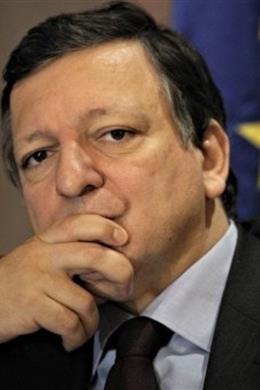
Jos Manuel Barroso
Jos \u00e9 Manuel Barroso, Chairman of Goldman Sachs International, joined Goldman Sachs International in 2016 after ending his illustrious political careers in the European Union and the Portuguese government. In 1999, Barroso was elected as the President of the Portuguese Social Democratic Party and became the leader of the opposition party. In 2002, he was elected as the Prime Minister of Portugal and was appointed as the President of the European Commission in 2004. Barroso served two consecutive terms as Prime Minister and played an important role in passing the Lisbon Treaty, responding to the financial crisis, and expanding EU member states. From 2002 to 2014, the number of EU member states increased from 15 to 28. During his tenure as Prime Minister, he saved public financial expenses, promoted the privatization of Portuguese state-owned enterprises, and attempted to improve the relationship between the European Union and the United States. Barroso excels in diplomacy, and even the opposition party appreciates his outstanding performance as Portuguese Foreign Minister. His interest in foreign policy has been formed from a very early age and has always accompanied his political career. Barroso studied law and political science in Lisbon, Florence, and New York before graduating with economics and sociology at the University of Geneva. He served as an assistant professor at the University of Lisbon, with a focus on international politics; Later, he conducted research in the Department of Political Science at Georgetown University in Geneva and Washington, D.C., and obtained a Ph.D. in philosophy. After returning to Portugal, he served as the head of the Department of International Relations at the University of Porto since 1980. On June 29, 2004, the European Council nominated Barroso as the President of the European Commission, and on July 22 of the same year, the nomination was passed in the European Parliament elections. On July 9, 2009, the European Council once again nominated Barroso as the candidate for the presidency of the European Commission from 2009 to 2014. In 2012, Barroso won the Nobel Peace Prize on behalf of the European Union and jointly delivered an acceptance speech with the President of the European Council. Barroso is a visiting professor at Georgetown University, a visiting professor of international economic policy at Princeton University, and a policy researcher at Woodrow Wilson College.
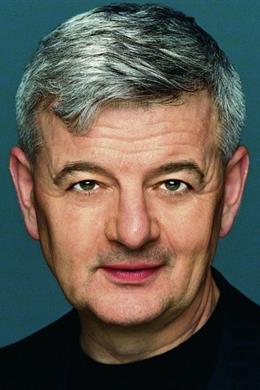
Joschka Fischer
Professional topics include international relations, nuclear issues, Europe, government and politics, foreign policy, environment and sustainability. Joschka Fischer was a former German Prime Minister and Minister for Foreign Affairs from 1998 to 2005. He pushed the Green Party to the center of German politics and led it to participate in national and federal government affairs for the first time. Fischer's tenure as Foreign Minister was an important period in the history of German diplomacy. He witnessed Germany's first military operation in the Kosovo War after World War II, as well as its deployment of troops in Afghanistan and joint intervention with NATO. Fischer took the lead in expressing the government's opposition to launching the Iraq War. In 2003, he and the foreign ministers of Britain and France held EU3 talks with Iran on their nuclear program. In 1994, Fischer began to participate in federal politics and became the co chairman of the Green Party's federal parliamentary group. He later joined Schroeder's cabinet in 1998. In 2005, Schroeder left the government department and became a senior independent researcher at the Liechtenstein Institute and a visiting professor at the Woodrow Wilson School of Public and International Affairs at Princeton University. Afterwards, he continued to actively participate in international diplomatic affairs and has been serving as a senior strategic advisor to the Albright Group since 2008. He is also a member of the Spinelli Group and currently serves on the Board of Directors of the International Crisis Group, as well as co chair of the European Committee on Foreign Relations.
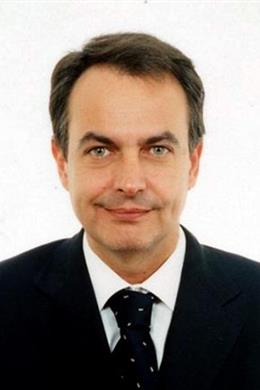
Jose Luis Rodriguez Zapatero
He became the youngest member of the House of Representatives in 1986, was elected general secretary of the Socialist Party in 2000, and became Prime Minister of Spain in April 2004. In 2015, he was invited to China to attend the International Forum of Cities on the Silk Road Economic Belt
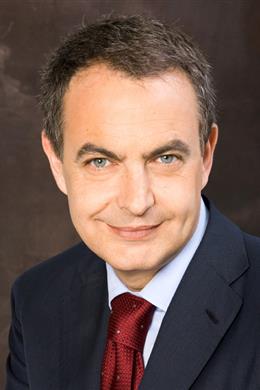
Jose Luis Zapatero
Jose Luis Zapatero graduated from the Law Department of the University of Leon in Spain with a Bachelor of Laws degree. Zapatero joined the Workers' Socialist Party (PSOE) in 1979 and became the youngest member of the House of Representatives in 1986. Since then, he has been elected four times in a row. Zapatero grew up in Leon and began receiving secondary education at the religious school Disc \u00ed pulas de Jes \u00fa s in September 1966. In September 1970, he entered Quot; Colegio Leon \u00e9 squeot; Reading was the only private boarding school in Leon at that time. He later entered the University of Leon to study law and graduated in 1982. After graduation, Zapatero served as a professor of constitutional law at the University of Leon. In 1986, he was elected as a member of parliament. Zapatero decided to run for party secretary general at the 35th party congress in June of that year. He proposed an updated and more central route policy, known as Nueva V \u00ed a. On June 25, 2000, Zapatero announced his intention to run for party secretary general in a speech in Leon, which included establishing a society that accepted all foreigners; Prioritize education and job creation; Give parents more time to take care of their children and the elderly; Vigorously promoting culture; Transforming Spain into a respected country and helping others in need; Help proactive and enterprising citizens, give more space for political diversity, and promote deeper values. These views have led to the title of Zapatero's dark horse candidate. His opponents accuse him of inexperience, but his supporters believe that it has the image of a reformer and that he is the only member of parliament among the candidates. Finally, Zapatero won by a small margin of 995 votes and obtained 414; Opponent Jos \u00e9 Bono received 405 votes. Zapatero won the 2004 general election and became the Prime Minister of Spain in April 2004. Afterwards, he won the 2008 general election and was re elected as Prime Minister of Spain. During his reign, he first withdrew Spanish troops from Iraq, reopened discussions on the issue of autonomous regions, and dealt a blow to the Spanish terrorist organization ETA. Secondly, he revised a series of social laws, such as the Marriage Law and the Same Sex Marriage Law. On July 3, 2005, Spain became the first country in the world to grant homosexuals the right to fully marry and adopt children.
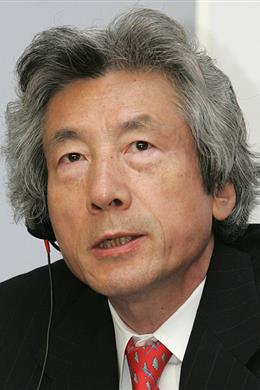
Junichiro Koizumi
Junichiro Koizumi is a Japanese politician who served as the Prime Minister of Japan from 2001 to 2006. In 2009, he retired after serving in parliament. As a maverick leader of the Liberal Democratic Party (LDP) in Japan, Junichiro Koizumi is hailed as an economic reformer, focusing on Japanese government debt and postal privatization reforms. In 2005, he led the Liberal Democratic Party to win the largest majority of seats in modern Japanese history for the first time. Junichiro Koizumi has received international attention for his deployment of the Japanese Self Defense Forces in Iraq. His visit to the Yasukuni Shrine has caused diplomatic tension between Japan, China, and South Korea. He is the third longest serving Prime Minister in Japanese history. Junichiro Koizumi was born into a political family and studied economics at Keio University. He joined politics in 1970 and became a member of the Liberal Democratic Party. Two years later, he was elected as a member of parliament. In 1988 and 1996-1997, he served as the Minister of Health and Social Security. As a grassroots leader in the Liberal Democratic Party, Junichiro Koizumi strongly opposes the deeply rooted conservative leadership within the party. In 2001, he was elected as the Chairman of the Liberal Democratic Party, and soon after, he took over as the Prime Minister of Japan from Mori Hiro. Junichiro Koizumi is an interesting political figure who promises to revive the Japanese economy, amend the constitution, privatize government enterprises, modernize the political system, improve relations with neighboring Asian countries, and eliminate fascism within the Liberal Democratic Party. However, achieving these goals was not an easy task, and his reforms were hindered by the deep-rooted bureaucratic class and internal interest groups within the Liberal Democratic Party. Soon, this government largely continued the governance style of previous prime ministers. But he did reduce public spending, relax regulations, and even visited North Korea in 2002, achieving the establishment of diplomatic relations between Japan and North Korea. In 2005, his postal privatization reform failed, partly due to members of the Liberal Democratic Party's parliament, which led to early elections. He obtained the vast majority of seats in the House of Representatives, and the reform plan was subsequently passed. In 2006, he resigned as Chairman of the Liberal Democratic Party and Prime Minister of Japan. The Japanese government he led was the third longest serving government after the war.