Celebrity, Technology & Finance
23 位演讲者
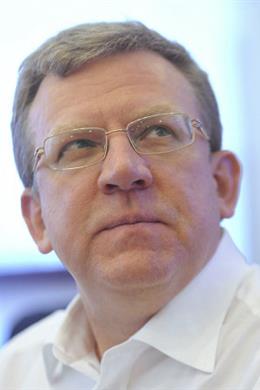
Alexei Kudrin
Aleksekudrin served as Russia's Minister of Finance from 2000 to 2011 and was the longest serving Minister of Finance in post Soviet Russia. He also served as Deputy Prime Minister from 2000 to 2004 and has been serving as Deputy Prime Minister again since 2007. During his tenure as Minister of Finance, Kudrin was widely praised for his prudent fiscal management, commitment to tax and budget reforms, and support for the free market. Under his leadership, the Russian government repaid most of the foreign debt accumulated in the 1990s, making Russia one of the countries with the lowest external debt among major economies. The accumulation of export revenue has led to Russia's stability during the 2008-2009 global financial crisis exceeding many economists' predictions. As Minister of Finance, Kudrin has received multiple global awards, including the 2010 Minister of Finance Award from the European Monetary Journal. He has been serving as the Dean of the School of Arts and Sciences at St. Petersburg State University since his resignation. In May 2018, Putin nominated Kudrin as the Director of the Russian Audit Office. On May 22, the State Duma approved it with 264 votes, and Kudrin officially took office.
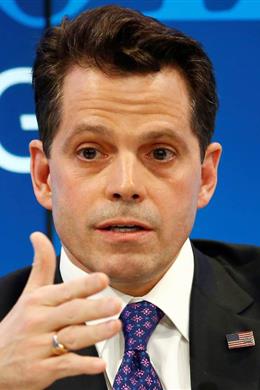
Anthony Scaramucci
President Trump appointed Wall Street financier Scaramucci as the director of the White House Communications Office. On July 25, 2017, Anthony Scaramucci, who had not yet officially joined, began working. A few days after taking office, in an interview with The New Yorker magazine, Scaramucci made strong negative remarks about several members of the Trump administration, which sparked controversy. Ten days after the announcement of the appointment, on the proposal of the new White House Chief of Staff, John Kerry, President Donald Trump dismissed Scaramucci from his position. From 1989 to 1996, Scaramucci worked in Goldman Sachs' investment banking, funds, and private wealth management departments. After leaving Goldman Sachs Group, he founded Oscar Capital Management and in 2005, established SkyBridge Capital, an investment company. In June 2017, he was named Chief Strategic Officer of Export Import Bank. In 2016, Scaramucci became one of the 16 members of the Executive Committee of President Trump's Transition Group and served as the short-term Director of the White House Communications Office in July 2017. Scaramucci has published a total of three books, namely the Little Book of Hedge Funds, Farewell! Goodbye Gordon Gekko, the Wall Street crocodile, and Hopping Over the Rabbit Hole, where Skipping Rabbit Hole was a bestseller for the 2016 Wall Street Journal. In 2016, Scaramucci ranked 85th among the 100 most powerful figures in the global financial industry in Value Magazine. In 2011, he was awarded the Ernst&Young Entrepreneur of the Year Award, which belongs to the New York Financial Services category. Scaramucci is a member of the Association for Foreign Relations, Vice Chairman of the Kennedy Center Enterprise Foundation, a member of the Board of Directors of the Brain Oncology Foundation and a business executive organization serving national security, and a member of the United States Olympic and Paralympic Foundation. From 2007 to 2012, he was a member of the New York City Financial Services Advisory Committee.
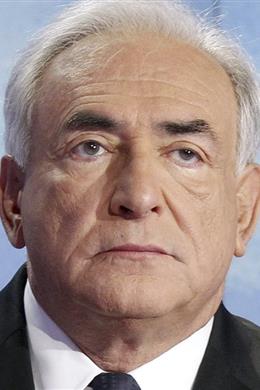
Dominique Strauss Kahn
Kahn is a French economist, lawyer, politician, and a member of the Socialist Party of the French Social Democratic Party. He was previously the Minister of Finance of France and the 10th President of the International Monetary Fund. Currently, he is the managing partner of Parnasse International. In 1986, Kahn was elected as a member of the Socialist Party for the first time as a member of Parliament and quickly demonstrated exceptional talent in handling economic and financial affairs. In 1991, then French President Mitterrand appointed Kahn as the Minister of Industry and Domestic Trade of France. Six years later, the Socialist Party won the election and France entered the era of Chirac's rule, while Kahn was appointed as the Minister of Finance by then French Prime Minister Dominique de Villepin, becoming the most influential minister. In order to enrich the national treasury, Kahn vigorously advocated for corporate privatization and promoted the initial public offering of large enterprises such as France Telecom and Air France. When Kahn took control of the French economy, the French economy achieved brilliant achievements, with a significant increase in gross domestic product and a continuous decline in unemployment and fiscal deficit. It is particularly worth mentioning that the measures he took led to the creation of 300000 jobs in France in 1998, which is also the highest level in the French job market in nearly 30 years. Before officially using the euro as the unified currency of the eurozone, Strauss-Kahn's correct measures to tighten the French fiscal budget earned him unanimous praise from the outside world. At the mint in Bordeaux, southwestern France, then French Minister of Finance, Kahn personally initiated the coinage mechanism to create the first euro coin. This is undoubtedly the most glorious page of Kahn's personal political career. During his tenure as French Finance Minister from 1997 to 1999, the French economy was one of the fastest-growing economies in the European Union, and he won praise for his budget tightening measures in France before using the euro. This may be one of the reasons why Jean-Claude Juncker, the chairman of the Eurogroup, supports Kahn as the IMF president. The success of the euro was greatly attributed to Kahn, as he successfully managed to keep the French fiscal deficit within the prescribed range. Since then, Kahn has been active in enhancing political cooperation among countries within the eurozone. When the euro was introduced in early 1999, sovereigns complained about losing their currency rights. At that time, French Finance Minister Strauss Kahn replied that it was not right. The currency rights after the war were in the hands of the United States. After the euro was introduced, we will work with our European partners to regain currency sovereignty. After Kahn resigned as French finance minister in 1999, the Financial Times claimed that the eurozone had lost one of its most influential policy makers. After Kahn left, I don't know who can take on the leadership responsibility. From 2000 to 2007, Kahn taught economics at the Paris School of Political Science. Richard Crowne, Dean of the Paris School of Political Science and Chairman of the French National Foundation for Political Science, also highly praised Kahn. He stated that Kahn is an experienced politician who has established extensive network relationships worldwide.
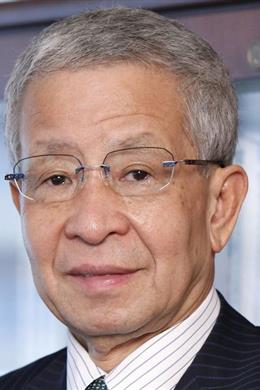
Dr. Shinawara Yingzi
Since 2010, Shinawara Yingzi has been serving as a professor at Aoyama College University in Tokyo. He served at the Japanese Ministry of Finance for more than 20 years, particularly famous for serving as the Deputy Minister of Finance to handle international affairs. He has extensive and valuable experience in government departments, particularly in the field of international finance. He is renowned internationally for his outstanding ability in policy formulation and consensus building, and has been awarded the title of Mr. Yen for his impact on the money market. He is the main advisor of the Democratic Party of Japan and an influential ideological leader in Japanese politics. He often participates in Japanese television programs and is reported by several well-known media outlets in the United States, Japan, and Europe, including The Economist, The Wall Street Journal, The Washington Post, Nikkei News, USA Today, Bloomberg\/Businessweek, Forbes, BBC, CNBC, and more. In addition, he also serves as the President of the Indian Institute of Economic Research. Dr. Shinwon Yingzi obtained a PhD in Economics from the University of Michigan and worked as an economist at the International Monetary Fund, which further enhanced his knowledge and abilities in international finance. He is an associate professor of economics at the School of Policy at Saitama University in Japan and a visiting associate professor of economics at Harvard University's Department of Economics. He has received multiple awards, including the Taylor Award from the University of Michigan and the Bintang Mahaputra Utama Award from the Government of the Republic of Indonesia.
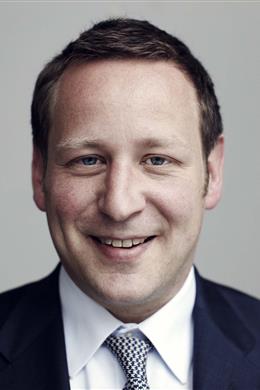
Ed Vaizy
Edwitzer is the longest serving Technology Minister in the UK, serving in the David Cameron administration from 2010 to 2016. During his tenure as Minister, Weize witnessed the rapid coverage of fixed and mobile broadband, and helped the UK become a leader in technology investment by collaborating with Google and Facebook, and supporting the development of the entrepreneurial ecosystem. Under his efforts, the development speed of the UK's creative industry is three times faster than the overall economic development. Wieser was the longest serving Minister of Culture in the UK from 2010 to 16, during which one of his main tasks was the National Museum. He supported the free opening of museums, revolutionized British cultural heritage, and released the first cultural policy white paper in over 50 years. He also introduced a tax deduction policy to support the development of theaters, museums, and orchestras. Weize is not only a member of parliament, but also an advisor to LionTree and multiple technology startups, among which LionTree is the first digital new media TMT acquisition agency in the United States.
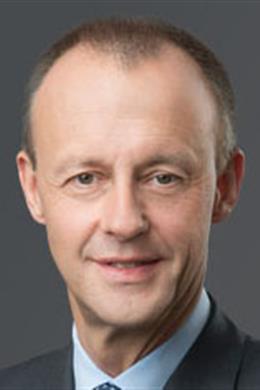
Friedrich Mertz
Friedrich Mertz is one of Germany's top lawyers and politicians. He is a partner of Meiyabo International Law Firm, mainly responsible for the company's business in Germany. His focus is on corporate legal affairs, including mergers and acquisitions, banking, finance, and regulatory enforcement. As a politician, he served as a member of the European Parliament from 1989 to 1994, a member of the German Bundestag from 1994 to 2009, and the President of the Christian Social Union\/Christian Social Union from 2000 to 2002. Before joining the law firm Meier&Bohr, Mertz was a partner of two German law firms in Cologne from 1989 to 2004 and provided services to the German Chemical Association in Frankfurt\/Bonn from 1986 to 89; He also served as a district judge in Salbruken from 1985 to 86. Mertz is a member of many supervisory boards, including Deutsche Bank AG, Deutsche Bahn AG, Axa AG, and HSBC Trinkaus Burkhart AG. In addition, he has served as an executive director for BASF Antwerp and Stadler Railway Company, and has served on advisory committees for Dortmund Football Club and commercial banks. Since 2009, Mertz has served as the Chairman of Atlantisk Br \u00fc cke International Network and a member of the European Tripartite Commission. He is one of the founding members of the New Social Economy, New Social Market Economy, and Frankfurt Future Think Tank.
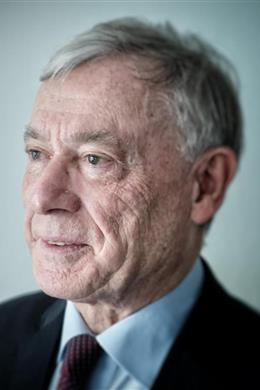
Horst Koehler
Horstkler, former President of Germany, widely respected politician, and economist, has made many contributions to Germany's economic development. He first served as president in 2004 and was re elected in 2009. Kohler was born in Skelbelshoff during the German occupation of Poland. He is the seventh of eight brothers and sisters in his family. In 1945, he moved with his family to the then Democratic Germany. In 1953, the whole family moved to a refugee settlement in Federal Germany. Kohler was the only child of eight who received a higher education and obtained a PhD in Economics and Political Science from the University of Tibingen in 1969. Afterwards, he entered the Tibingen Institute of Applied Economics as an assistant researcher in economics, which began his career. In 1976, Kohler left the research institute and joined the Federal Ministry of the German Economy. In 1981, he joined the German Christian Democratic Union. In October 1982, after Kohl from the Christian Democratic Union became the Prime Minister of West Germany, Kohl served in the Ministry of Finance and became one of Kohl's most trusted economic advisors. During this period, German politicians gave Kohler evaluations of political independence, stability, humility, and pragmatism. This is also the main reason why he was later nominated by German Chancellor Schr \u00f6 der from the Social Democratic Party to serve as the President of the International Monetary Fund. He served as the Deputy Minister of Finance of Germany from 1990 to 1993, the President of the German Savings Bank Association from 1993 to 1998, and the President of the European Bank for Reconstruction and Development in September 1998. During this period, Keller became a heavyweight figure in the international economic community. He represented Germany in the negotiations on the Maastricht Treaty on the European Economic and Monetary Union. He was responsible for negotiating with Russia on compensation for the withdrawal of former Soviet troops from eastern Germany, and served as Prime Minister Kohl's personal representative several times in the preparations for the G7 summit. Since May 2000, Kohler has served as the eighth President and Chairman of the Executive Board of the International Monetary Fund. On May 23, 2004, he was elected as the 9th Federal President of Germany after World War II. At that time, most observers believed that this should be the pinnacle of Keller's career. In 2007, Kohler publicly criticized German corporate executives for their generous salaries. In the summer and autumn of 2008, a global financial crisis erupted and spread. As a well-known expert and former senior manager in the financial field, Keller has repeatedly criticized international financial giants for being too greedy and seeking only profit, and the regulatory system in the financial industry is also too lax and laissez faire. On March 4, 2009, Kohler resigned from the position of Managing Director of the International Monetary Fund after accepting his presidential nomination, overturning people's predictions and seeing his ambition to climb new heights. On May 23, 2009, in the first round of voting at the 13th Federal Assembly, Keller once again defeated the same challenger, Ms. Schwann, and successfully re elected as the President of the Federation. Keller announced his resignation on May 31, 2010. After resigning, he continued to hold high-level positions in the United Nations Senior Expert Group on the Post 2015 Development Agenda and the Palace Motion Group.
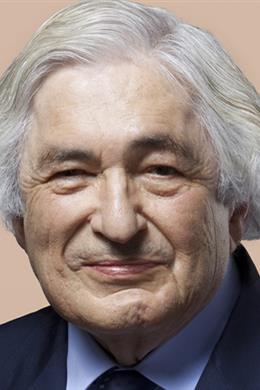
James Wolfensohn
James Wolfensohn is a former President of the World Bank, Chairman of Wolfensohn Private Investment Limited, and advisor to multiple businesses and governments. Previously, he was the Chairman of Citigroup's International Advisory Committee. In 1960, Wolfensohn brought only $300 from Australia to study at Harvard Business School in the United States. Entering Harvard University for further education was undoubtedly the first turning point in Wolfensohn's life. At the elite Harvard Business School, with two bachelor's degrees in literature and law from the University of Sydney, Wolfensohn began to shift his focus to studying finance. From graduating from Harvard Business School until the early 1980s, Wolfensohn remained unknown but down-to-earth in the financial industry in different countries. He first worked in the Australian economy and investment industry. In 1967, he arrived in London and became a senior manager of the Henry Schroder Investment Banking Group. Three years later, he returned to New York and became the head of Schroder's New York business unit. In 1976, he transferred to Solomon Brothers in the United States as the manager of its investment bank. The professional wisdom accumulated by Wolfensen in nearly 20 years of financial industry experience has finally been unleashed and exploded at Solomon Brothers. In 1980, Chrysler, located in Detroit, faced a survival crisis. Solomon Brothers provided critical loans to solve its long-term funding shortage and rescued it from the brink of bankruptcy. In this loan arrangement, Wolfensen played a crucial role, to the extent that the New York Times reported on his outstanding performance on the front page. More importantly, the New York Times' report made him famous and sparked the attention of Robert Quot, then the President of the World Bank; McNamara's attention. To some extent, Wolfensohn's success as the president of the World Bank opened a door. In 1981, he resigned from Solomon Company and founded James Quot himself; Dquota; Wolfensen Corporation. Wolfensen's company prospered and prospered on Wall Street, and was later acquired by Bankers Trust, a US bank. In this process, Wolfensen quickly accumulated wealth, and by the late 1980s, he had become a true millionaire. With the material support of millionaires, Wolfensohn began to focus on poverty and carry out various charitable activities. In March 1995, Clinton nominated Wolfensohn to replace Lewis Preston, who had retired due to illness, as the ninth President of the World Bank. From then on, Wolfensohn's life opened a new page, standing at the center of the global financial stage. During his ten-year tenure as the President of the World Bank, Wolfensohn brought significant changes to the operation of the world's largest development institution, refocusing the Bank's focus on its true goal of overcoming global poverty and helping the world's poor live a better life. Wolfensohn always insisted that the world should not be divided into rich and poor countries; Poverty in a region means that poverty is everywhere. For this reason, Wolfensohn made poverty eradication the most important task during his tenure as President of the World Bank
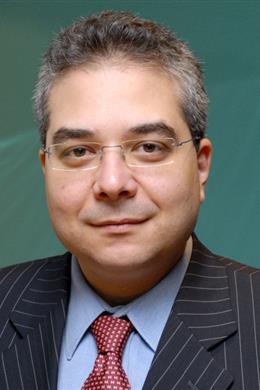
John Scakinakis
John Fakinakis provides consulting services to global businesses on the future of oil and oil policy, regional economy, privatization, fiscal management, macro fiscal planning, and debt management. Sfarkinakis is currently the Director of the Economic Research Department at the Riyadh Gulf Research Center. Previously, he served as the Middle East Director of the Riyadh Anshi Group, Chief Investment Strategist for the family investment company MASIC, Chief Economic Advisor for the Saudi Ministry of Finance, and General Manager and Chief Economist for Central and North East Africa at Credit Agricole, a French bank, Chief Regional Economist at Saudi British Bank and Chief Regional Economist at Samba Financial Group. He also served as an advisor to the Saudi Arabian Ministry of Economy and Planning, an economist at the United Nations Development Programme and the World Bank. He holds a doctoral degree in economics from Harvard University. He often publishes articles in the Financial Times, New York Times, Wall Street Journal, and Bloomberg News.
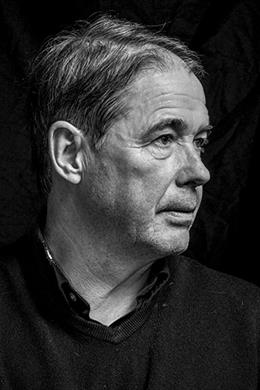
Jonathan Porritt
Jonathan Polit is the co founder of the Future Forum, a renowned sustainability writer, critic, and broadcaster. The Future Forum was established in 1996 and has now developed into a leading sustainable development charity in the UK, with 20 employees and over 100 partner organizations, including world-class companies. In addition, he is also the co head of the Prince of Wales Business and Sustainability Project, which provides seminar services for executives worldwide. He is a non-executive director of Wessex Water and Willmott Dixon Holdings, and a trustee for the Ashden Sustainable Energy Award. He actively participated in the work of multiple non-governmental organizations, including Patron, Chair, and Special Advisor. Previously, he was the Chairman of Friends of the Earth from 1984 to 90, the Co-Chairperson of the Green Party, the Chairman of UNED-UK from 1993 to 96, the Chairman of the Southwest Sustainable Development Roundtable from 1999 to 2001, the Director of WWF from the UK from 1991 to 2005, and the Board Member of the Southwest Regional Development Agency from 1999 to 2008. In 2009, Pollitt stepped down from his position as chairman of the UK Sustainable Development Commission, and for the previous nine years, he had provided high-level advice to multiple government ministers. In January 2000, Jonathan was awarded the British Empire Second Class Sir CBE: Commander of the British Empire for his contributions to environmental protection. In February 2012, Jonathan was appointed as the honorary president of Kiel University in the UK.
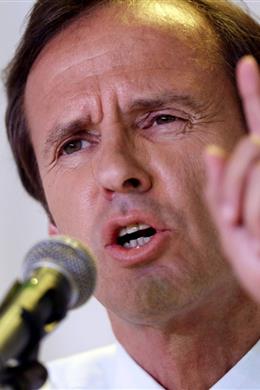
Jorge Quiroga
From August 7, 2001 to August 6, 2002, Jorge Fernando Kiro Galamires served as the President of Bolivia. Jorge was a 1981 graduate of Texas A&M University with a degree in Industrial Engineering and was the first head of state trained by the university. He claims to be a corporate hippie and holds a Master's degree in Business Administration from the University of St. Edward, during which he joined the International Business Machines Corporation. Like many Bolivian presidents, he also has European Spanish ancestry. In 1997, he was elected as the Vice President of Bolivia, and at the age of 41, he became the youngest Vice President in Bolivian history. After former President Hugo Banzer Su \u00e1 rez resigned due to deteriorating health conditions, Jorge took office as Acting President on July 1, 2001, and was sworn in on August 7 to complete his five-year term. In 2005, Jorge ran for president as a candidate for the New Center Right Alliance of the Social Democratic Party. His main opponent was the left-wing president Evo Morales, who led the socialist movement Movement Towards Socialism. In the end, Morales won the election, and Jorge ranked second with 286% of the vote. Kiroga was awarded the World Future Leader Award by the World Economic Forum in Davos. He is also an advisor to the World Bank and the International Monetary Fund, and a member of the Madrid Club, which is composed of over 80 former presidents and prime ministers of democratic countries, committed to promoting democratic leadership and governance.
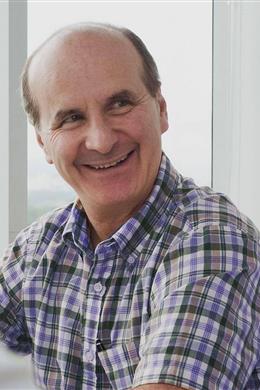
Jose Maria Figueres Olsen
From 1994 to 1998, Jos \u00e9 Maria Figueres served as the President of Costa Rica. When elected, he was only 39 years old and was the youngest president in modern Latin American countries. At present, his work mainly revolves around the issues of innovation and competitiveness as the main driving force of the new global economy. As the chairman of the Carbon Warfare Room, he helps develop market-oriented solutions to mitigate climate change conditions. He is also a member of the United Nations Secretary General's Advisory Group on Energy and Climate Change and serves as the head of the Organization of American States Electoral Observation Mission. Before becoming president, he served as Minister of Foreign Trade and Minister of Agriculture. He opened up the connection between sustainable development and technology. As President, with Intel's landmark $500 million investment in 1997, he led Costa Rica to rise as a world leader in environmental protection, ecotourism, and ICT services. After resigning as president, he helped create and lead the United Nations Information and Communication Technology ICT Task Force. In 2000, he joined the World Economic Forum and became its first CEO in 2003. Currently, Jos \u00e9 Maria Figueres has delivered speeches on the global challenges facing the world in business and international affairs, as well as how to make changes through innovation and effective leadership. Jose Maria Figueres is recognized as a world-class speaker and host. He has always been the keynote speaker of many world-renowned conferences and forums. He often provides insights on future trends in an educational and thought-provoking manner. His current positions include the Chairman of the Carbon Warfare Room, the Chairman of the Global Equity Action of the United Nations Secretary General's Climate and Energy Advisory Group, the Trustee of the International Relations and Dialogue Foundation, a member of the Clinton Global Initiative, and a member of the Earth Council Geneva.
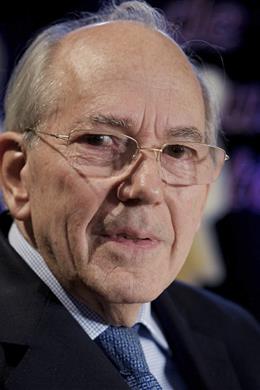
Mi chel Camdessus
Michel Condesau is the Honorary President of the Bank of France and former President of the International Monetary Fund. In January 2010, President Sarkozy appointed Condesau as the head of the reform team for the French public finance balance system. In September 2009, Mr. Condesau was appointed as the Special Commissioner for French Extra Allowances; From 2008 to 9, he served as the Chairman of SFEF at Societe Generale in France. Michel Condesu became the President and Chairman of the Executive Board of the International Monetary Fund on January 16, 1987. On May 22, 1996, the Executive Board of the International Monetary Fund unanimously elected Condesau as the Managing Director of the Fund for the second consecutive term of five years, starting from January 16, 1997. Since 1974, Michelle has been serving as the Minister of Finance at the Ministry of Finance, and from 1982 to 1984, she served as the President of the Paris Club and the Chairman of the Monetary Committee of the European Economic Community. In 1984, Michel was appointed as the Vice President of Bank of France and became the President in November of the same year. Prior to becoming the 7th President of the International Monetary Fund, Condezzo served as the President of the Bank of France. Michelle Condesu is the Honorary Chairman of Semaine Societes de France, Chairman of the African Commission established by Tony Blair, and a member of the Pontifical Commission for Justice and Peace. He is a member of the United Nations Secretary General's Advisory Committee on Water and Sanitation and the Chairman of the World Water Infrastructure Financing Committee. He is also a member of the Africa Progress Group APP led by Kofi Annan, which was established in 2007 as an independent authoritative institution in Africa aimed at promoting world leaders to fulfill their commitments to Africa. In June 2008, the group released a major report titled \Africa's Development Commitment and Prospects\ in London.
Mike Moore
McMoore is a former Prime Minister of New Zealand and former Director General of the World Trade Organization (WTO). His long and outstanding career in politics has made him the driving force behind significant changes in the WTO. McMoore was the youngest member of New Zealand in the 1972 parliamentary elections. He represents his country and actively participates in discussions on international trade liberalization. As the Minister of Overseas Trade and Marketing, he played a leading role in the Uruguay Round of GAAT negotiations and was a member of the longest serving Foreign Affairs and Trade Committee of the New Zealand Parliament. McMoore's tenure at the WTO coincided with a period of significant changes in the global economy and multilateral trading system. At the Third Ministerial Conference held in Seattle in 1999, he was widely praised for restoring the confidence of participants. While maintaining the organization's core focus on trade liberalization, McMoore also places special emphasis on helping poor countries effectively participate in the multilateral trading system. He actively launched measures to strengthen the image of the World Trade Organization and deepen relations with civil society. During his tenure, 10 new members, including China, joined the World Trade Organization. McMoore is an outstanding politician who has been awarded many honors. In 1999, he was awarded the highest medal of honor in New Zealand. In 2002, he was awarded the Kenya Gold Heart Medal, the Honorary Medal of the Minister of Chilean Universities, the Rotterdam Business Week Award from Erasmus University, and the Order of the Eastern Republic of Uruguay. He is also a member of the SGS board of directors. Since September 2003, he has been appointed as the Special Advisor for Operations and Development of the United Nations Global Compact. In 2010, McMoore served as New Zealand's Ambassador to the United States. McMoore's leadership skills, experience in conducting multilateral trade negotiations, and decision-making abilities are widely recognized and respected. He is a spokesperson with rich insights into cross global business.
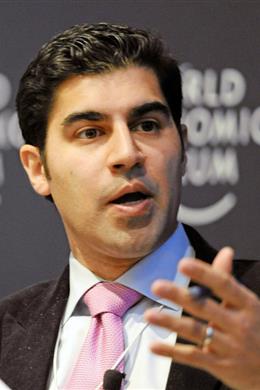
Parag Connor
Parag Connor, the world's most famous geopolitical politician, speaks in his voice about the future pattern of the world. Selected by Scholar's Magazine as one of the 75 most influential individuals of the 21st century. Connor is a foreign policy advisor to former US President Obama and a senior researcher at the New America Foundation, responsible for the foundation's global governance initiatives under its US strategic research program. He used to be a researcher at the Brookings Institution and served at the World Economic Forum in Geneva and the United States Committee on Foreign Relations. In 2007, he served as a Senior Geopolitical Advisor to the United States Special Operations Forces in Iraq and Afghanistan. He has written articles for globally renowned newspapers such as the New York Times and the Financial Times, and has appeared in programs on CNN, Al Jazeera, and other media outlets around the world. He has visited nearly 100 countries and obtained membership in the New York Explorer Club. He can speak English, German, French, Spanish, Hindi, and basic Arabic. He has won the title of one of the most informed social and political experts in the world and was named a global youth leader by the World Economic Forum in 2009. Connor is the author of an international bestseller, How the Emerging Powers of the Second World Redefine the Year of the 21st Century in 2009, which has been translated into 15 languages and distributed worldwide. The New York Times commented that Kana was a quote; Global competitors in geopolitics;. Time magazine and CNN hosts describe the fascinating and colorful portrayal of a new world by the Second World through geopolitics. In the book 'Second World', Connor predicted that China would become a superpower, foresaw the development of capitalism and sovereign wealth fund policies in Asia and Arab countries, depicted the future prosperous trade patterns of cross industry emerging markets, predicted the mature revolution and infrastructure development in Egypt and the Arab world, and raised a risk warning for the global competitiveness of the United States. In his latest book, How to Run the World, Connor explains a bold and feasible roadmap for the Second Renaissance in 2011, combining government, cities, businesses, and citizen communities to form a dynamic diplomatic system and establish a more resilient world order. Nassim Taleb praised the book as visionary, and Google Chairman Eric Schmidt said we need to pay attention to Parag's ideas. Connor has been hailed as an Alvin Toffler style global futurist of the 21st century. He has foresight in predicting geopolitical changes and crises, changing the rules of the game in the economic and technological fields to a certain extent, and foreshadowing a change in the balance of world power. In addition, his analysis of the development trends of science and technology greatly affects people's socio-economic life. Connor's unique political and social perspectives have appeared on CNN, BBC, PBS, Al Jazeera, CBS, and NPR television programs. His essays and comments appeared in the New York Times, Wall Street Journal, Financial Times, Quot; Times Quot Forbes, Newsweek, Harvard Business Review, Business Week, Quot; Foreign policy quota; And many publications.
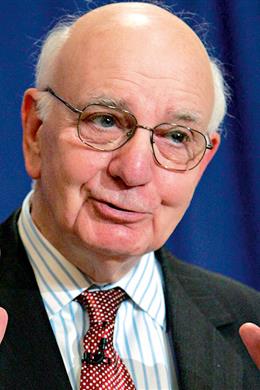
Paul Volcker
Topics include globalization and the financial world, globalization and the international financial system, global markets and emerging economies, and the opportunities and responsibilities of the United States' foreign policy at the turn of the century. Paul Volcker served as an economic advisor to then US President Barack Obama until 2011, leading the US President's Economic Recovery Advisory Committee. During the 2008-2010 financial crisis, Volcker severely criticized major banks, believing that their response to the crisis was insufficient and that they should strengthen supervision. Specifically, he called for the dissolution of the largest banking group in the United States and believed that it was necessary to re implement most of the provisions of the Glass Steel Act, which aimed to prevent commercial banks from engaging in investment banking activities such as securities trading. Currently, Volcker serves as the head or consultant of many companies and non-profit organizations. Volcker served as the Chairman of the Federal Reserve Board from 1979 to 1987 and was highly praised for his outstanding achievements in ending long-term high inflation and restoring sustained economic growth. At the beginning, President Jimmy Carter appointed him as Chairman of the Federal Reserve for a four-year term. After the end of his first term, President Reagan reappointed him as Chairman of the Federal Reserve in 1983. After the end of his second term, Volcker resigned from public office and joined James Wolfensen Investment Company as chairman. The company mainly provides investment banking services to domestic and foreign companies. In 1996, James Wolfensohn Investment Company merged with Bankers Trust Company, and Walker, as Chairman and CEO of James Wolfensohn Investment Company, also retired. Throughout his career, Volcker worked for the federal government for 30 years, serving five presidents - John F. Kennedy, Lyndon Johnson, Richard Nixon, Jimmy Carter, and Ronald Reagan. Prior to becoming the Chairman of the Federal Reserve in 1979, Volcker served as the President of the New York Federal Reserve Bank for over four years, with the New York Federal Reserve Bank being the main operating department of the Federal Reserve. In his early years, Volcker served twice in the US Treasury Department, serving as the Deputy Secretary of the Treasury responsible for financial affairs from 1969 to 1974. As the Deputy Minister, he is primarily responsible for researching and implementing the Treasury's debt management and federal credit policies. During the transition from the Bretton Woods fixed exchange rate system to a more flexible floating interest rate system that began to prevail in the early 1970s, he represented the United States in international currency negotiations. In the domestic financial sector, among other measures, Volcker has also initiated treasury bond auctions, which are now quite common not only in the United States but also in many other countries. After leaving Washington in 1987, he became Professor Frederick Schultz of International Economic Policy at Princeton University and is now an honorary professor. Volcker also took the initiative to assume the position of chairman in a newly established civil public service committee. The committee mainly studies the issues that arise in attracting, motivating, and retaining the talents needed to maintain the effective operation of the government. Both of these activities reflect Volcker's interest in improving the professionalism and efficiency of public services. Recently, Volcker served as a newly established director of the International Accounting Standards Board
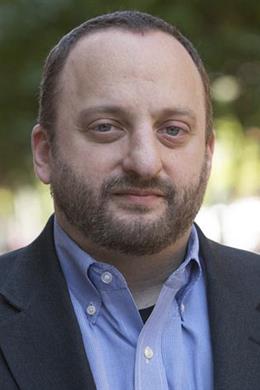
Scott Goodstein
Scott Goodstein is the CEO of a leading digital company, Revolution Messaging, known for overseeing the digital strategy operations and operations of Bernie Sanders' 2016 presidential campaign. Sanders' campaign broke all expectations of American political experts, overcoming the huge gap in popularity and support, and ultimately Sanders was not only able to compete with Hillary, but also raised more donations than Hillary. Goodstein's company organized online fundraising, digital marketing, branding, email, text messaging, website development, online videos and photos, image sharing, online stores, and social media strategies for Sandel. He also co initiated an event where artists cheered Sandel, with over 150 artists, musicians, and cultural leaders actively participating throughout the entire event. Revolution Messaging is deeply rooted in the values of progress, selectively collaborating with left-wing led issue-based movements, and providing services and support during times of crisis, such as the Water Crisis in Flint, Michigan, Ferguson Action, Lady Parts Justice, and other social justice causes. In 2008, Goodstein served as the External Online Director of Obama's external network, responsible for developing social networking platforms for the campaign and establishing the first political mobile marketing mix of SMS, RBT, mobile video, and mobile apps. Goodstein also designed lifestyle marketing strategies for the campaign, as well as street promotional materials needed in various campaign states. Before working for Obama, he worked on the Democratic Legislative Election Committee and the Democratic Congressional Election Committee, and successfully organized a series of political movements.
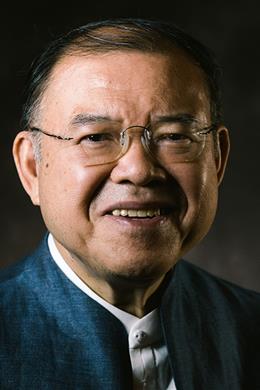
Supachai Panitchpakdi
Dr. Supachai Banibadi accepted the appointment of the United Nations General Assembly in January 2005 and began his first term as Secretary General of the United Nations Conference on Trade and Development. He was re elected in September 2009 and served until August 2013. Previously, he served as the Director General of the World Trade Organization (WTO) from 2002 to 2005, Deputy Prime Minister of Thailand from 1992 to 1995, and Minister of Commerce from 1992 to 2001. He has published multiple works, such as Education Development in Developing Countries, Globalization and Trade in the New Millennium, China and the Changing World Trade Organization, and co authored by Mark Clifford. Supachai Banibadi was born into a wealthy business family in Bangkok. When he was a child, Supachai achieved excellent academic performance. In 1960, at the age of only 14, Supachai completed high school and entered the university preparatory program. Supachai's initial ideal was to become a doctor, but in 1963, a youth training officer at the National Bank of Thailand took a fancy to the talented Supachai. His words moved Supachai, who believed that a great economist could save more lives. Supachai also gave up studying medicine and switched to economics. Afterwards, Supachai, who received a scholarship from the National Bank of Thailand, began a 10-year European study experience. During his studies at Erasmus University in Rotterdam, the Netherlands, Supachai Banibadi obtained a master's degree in econometrics and development planning, as well as a doctoral degree in economic planning and development. In 1973, Dr. Supachai completed his doctoral thesis on human resource planning and development under the guidance of the first Nobel laureate in economics, Professor Jane Dingbergen. After completing his studies and returning home, Dr. Supachai joined the Central Bank of Thailand in 1974; In 1986, he entered the political arena and was elected as a member of the Thai Parliament, serving as the Deputy Minister of Finance. In 1992, Dr. Supachai was appointed as a senator, and in the same year, he served as Thailand's Deputy Prime Minister, entrusted with overseeing the formulation of the country's economic and trade policies. During his tenure, Supachai actively participated in international political activities and represented Thailand at the signing ceremony of the Uruguay Round agreement held in Marrakech in 1994. In 1998, he served as a director and advisor at the Thai Military Bank and later became the president. In 1997, Dr. Supachai was once again appointed as Deputy Prime Minister and Minister of Commerce, at a time when the Asian financial crisis had affected Thailand. Supachai was tasked with formulating Thailand's economic and foreign trade policies, playing an important role in leading Thailand through the financial crisis. In September 2002, Supachai officially took over from Moore as the first Asian to serve as the Director General of the World Trade Organization. During his tenure, he performed outstandingly, especially in promoting the Doha Round process, making contributions to the economic development of developing countries and the achievement of the United Nations Millennium Development Goals. He adhered to his promise at the beginning of his tenure and sought equal trade rights for developing countries. After becoming the Director General of the World Trade Organization, Supachai was very friendly to China, and he has repeatedly praised China's performance after its accession to the WTO. In addition, he is concerned about some regional agreements, such as the Asia Pacific Economic Cooperation (APEC) and the Association of Southeast Asian Nations (ASEAN)
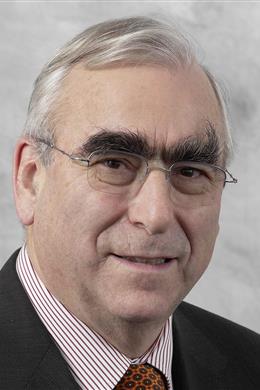
Theo Weigel
From 1989 to 1998, Theo served as Germany's finance minister and played an important role in the process of European currency unification and the formation of the euro. The topics of his speech include the future of Europe, Germany's role in the European economy, and the opportunities and challenges brought by globalization. Theo was a politician and lawyer who served in the German government from 1989 to 1998, during which significant changes occurred in Germany and Europe. He became a member of parliament in 1973 and joined Prime Minister Kohl's cabinet in 1989 as the Federal Minister of Finance of Germany. Immediately after the outbreak of the East German Peace Revolution, the disintegration of the Soviet Union, and the acceleration of European integration process. As a political party leader and government minister of the Christian Social Union, Theo played an important role in promoting the reunification of Germany, ensuring that Russia signed an agreement, and that Germany, after assuming reunification, remains a member of NATO. During the same period, Theo and Foreign Minister Genscher signed the Maastricht Treaty, which promoted political and monetary unity in Europe. Theo is an important driving force behind the Stability Pact of the EU Stability and Growth Pact, and without his unwavering determination, a single European currency may never have become a reality.
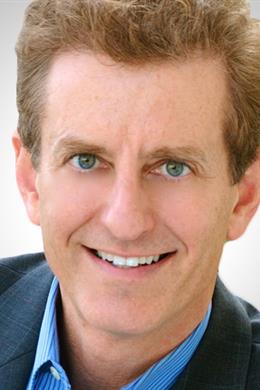
Todd Bucholtz
Todd Bushholtz is an international economist, hedge fund manager, recipient of the Harvard University Annual Teaching Award, and former White House Director of Economic Policy. Todd Bushholtz is often invited to write news opinions on the impact on financial markets. He works as a commentator in various television and radio programs. He is a frequent guest of ABC American Broadcasting Company, PBS American Public Broadcasting Company, and CBS Columbia Broadcasting Company, and hosts a special program with Todd Bushholtz on CNBC's Financial Channel. Todd Bushholtz has written many highly acclaimed bestsellers, many of which have been successful as case studies for subsequent speeches. His book has been translated into over a dozen languages and used as a textbook in universities around the world, including Harvard University, Duke University, and Princeton University. He has served as an advisor to the White House, Microsoft, Allstate, Goldman Sachs, IBM, SAP, and Toyota. Bushholtz conducts research on economics, business, and entrepreneurship in the context of global society, and has written articles for the New York Times, Wall Street Journal, Washington Post, Forbes, and Reader's Digest.