Biography
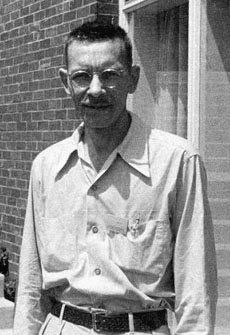
Alfred Day Hershey (December 4, 1908 – May 22, 1997) was an American Nobel Prize –winning bacteriologist and geneticist . Hershey was born in Owosso, Michigan to Robert Day and Alma Wilbur Hershey. He earned a B.S. in chemistry in 1930, and Ph.D. in bacteriology in 1934 from Michigan State University . Shortly after, Hershey accepted a faculty position at Washington University in St. Louis , [ 1 ] [ 2 ] serving as an instructor of bacteriology and immunology from 1934 to 1950. At Washington University, Hershey worked closely with department head Jacques Bronfenbrenner to investigate bacteriophages, or phages — viruses that infect and replicate inside bacteria. [ 3 ] Hershey's work on the factors impacting the virus' ability to infect its targets brought him to the attention of fellow phage researchers Max Delbrück and Salvador Luria . Fields: Bacteriology, genetics, DNA
About the Lasker Award
The Lasker Awards have been awarded annually since 1946 to living persons who have made major contributions to medical science or who have performed public service on behalf of medicine. They are administered by the Lasker Foundation, founded by advertising pioneer Albert Lasker and his wife Mary Woodard Lasker (a medical research activist). The awards are sometimes referred to as "America's Nobels."
Quick Facts
- Award: Lasker Award - Basic Medical Research
- Added: 2026-02-07
- Source: Wikipedia
- Established: 1946
- Presented by: Lasker Foundation